
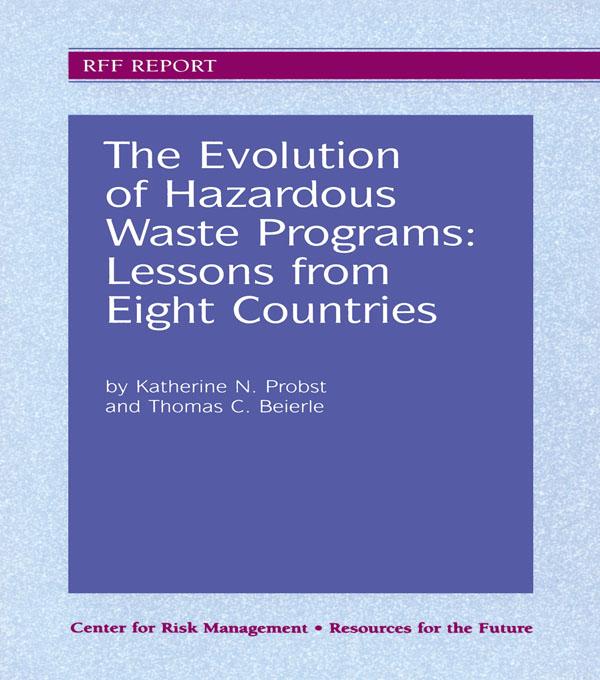
In most countries, the development of environmental programs follows a similar pattern. Early efforts concentrate on direct threats to public health, such as contaminated drinking water and air pollution. Only after these problems are addressed does the need to improve day-to-day management of hazardous wastes reach the top of the environmental agenda.
In this new report, RFF‘s Katherine Probst and Thomas Beierle compare the development of hazardous waste management programs in eight countries---the United States, Canada, Germany, Denmark, Indonesia, Hong Kong, Malaysia, and Thailand---and discuss steps taken to foster proper hazardous waste management. The authors focus on two questions: What were the major steps in the evolution of a successful hazardous waste program? What role, if any, did the public sector play in financing modern treatment and disposal facilities? Based on interviews and secondary sources, this report includes country-specific profiles that detail the steps in the evolution of each country‘s hazardous waste management program and describe the role of the public sector in facility financing.
Betaal eenvoudig met kaart, Klarna, Apple Pay of Google Pay. Niet tevreden? Je hebt altijd 14 dagen bedenktijd. Lees meer in onze voorwaarden. Heb je vragen, mail ons dan via hello@memmo.org.
Memmo maakt studeren makkelijker – waar je ook bent ter wereld. Wij brengen je cursusboeken en slimme studietools samen op één plek: samenvattingen, quizzen, podcasts en flashcards. En Ted, je studievriend die antwoord geeft op alles wat je je afvraagt. Meer dan 50.000 studenten studeren hier al – gebouwd om je sneller te laten leren en minder stress te geven.