
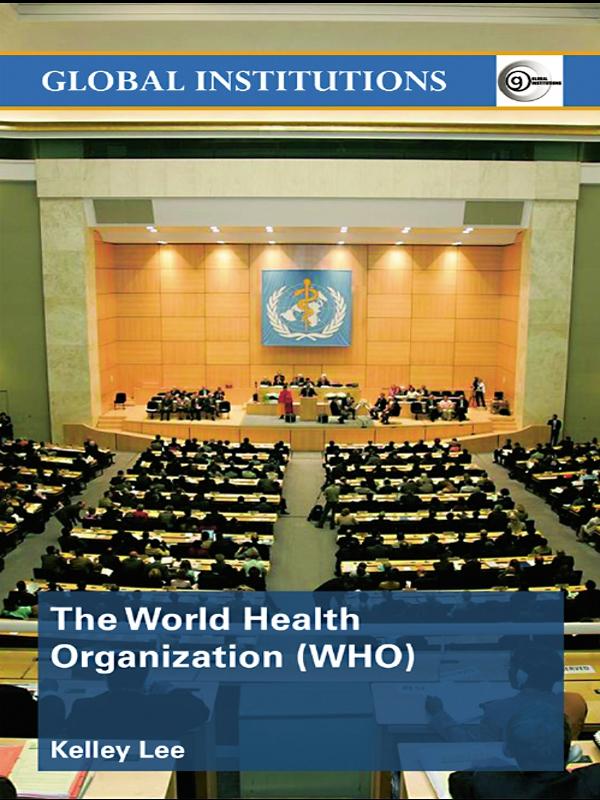
The World Health Organization (WHO), as the United Nations specialized agency for health, has been at the centre of international health cooperation for over sixty years. With origins dating from the nineteenth century, WHO’s mandate is the attainment by all people of the highest possible level of health. The huge challenge of fulfilling this objective has not only required high-level technical skills, but has led the organization to engage with a broad range of political and economic interests. WHO has enjoyed many high-profile successes such as the global eradication of smallpox and SARS, and ongoing campaigns against polio and other diseases. On other issues, such as essential drugs, tobacco control and diet and nutrition, efforts to tackle the broader determinants of health has brought the organization into contact with issues such as globalization, poverty, social justice and human rights.
Kelley Lee analyzes the WHO’s role in international cooperation, examining its changing structures, key programmes and individuals. Of particular focus are the challenges WHO has faced in recent years given the emergence of other global health initiatives and how WHO has sought to remain effective as the "world’s health conscience" within an increasingly complex global context.
Betaal eenvoudig met kaart, Klarna, Apple Pay of Google Pay. Niet tevreden? Je hebt altijd 14 dagen bedenktijd. Lees meer in onze voorwaarden. Heb je vragen, mail ons dan via hello@memmo.org.
Memmo maakt studeren makkelijker – waar je ook bent ter wereld. Wij brengen je cursusboeken en slimme studietools samen op één plek: samenvattingen, quizzen, podcasts en flashcards. En Ted, je studievriend die antwoord geeft op alles wat je je afvraagt. Meer dan 50.000 studenten studeren hier al – gebouwd om je sneller te laten leren en minder stress te geven.