
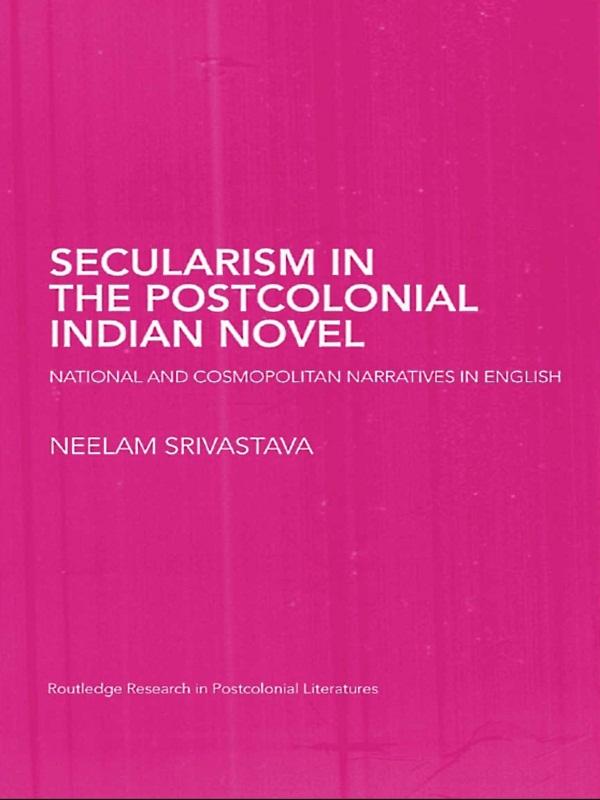
This study explores the connections between a secular Indian nation and fiction in English by a number of postcolonial Indian writers of the 1980s and 90s. Examining writers such as Vikram Seth, Salman Rushdie, Amitav Ghosh, Shashi Tharoor, and Rohinton Mistry, with particularly close readings of Midnight‘s Children, A Suitable Boy, The Shadow Lines and The Satanic Verses, Neelam Srivastava investigates different aspects of postcolonial identity within the secular framework of the Anglophone novel. The book traces the breakdown of the Nehruvian secular consensus between 1975 and 2005 through these narratives of postcolonial India. In particular, it examines how these writers use the novel form to re-write colonial and nationalist versions of Indian history, and how they radically reinvent English as a secular language for narrating India. Ultimately, it delineates a common conceptual framework for secularism and cosmopolitanism, by arguing that Indian secularism can be seen as a located, indigenous form of a cosmopolitan identity.
Betaal eenvoudig met kaart, Klarna, Apple Pay of Google Pay. Niet tevreden? Je hebt altijd 14 dagen bedenktijd. Lees meer in onze voorwaarden. Heb je vragen, mail ons dan via hello@memmo.org.
Memmo maakt studeren makkelijker – waar je ook bent ter wereld. Wij brengen je cursusboeken en slimme studietools samen op één plek: samenvattingen, quizzen, podcasts en flashcards. En Ted, je studievriend die antwoord geeft op alles wat je je afvraagt. Meer dan 50.000 studenten studeren hier al – gebouwd om je sneller te laten leren en minder stress te geven.
Misschien vind je dit ook leuk
Koop het boek0