
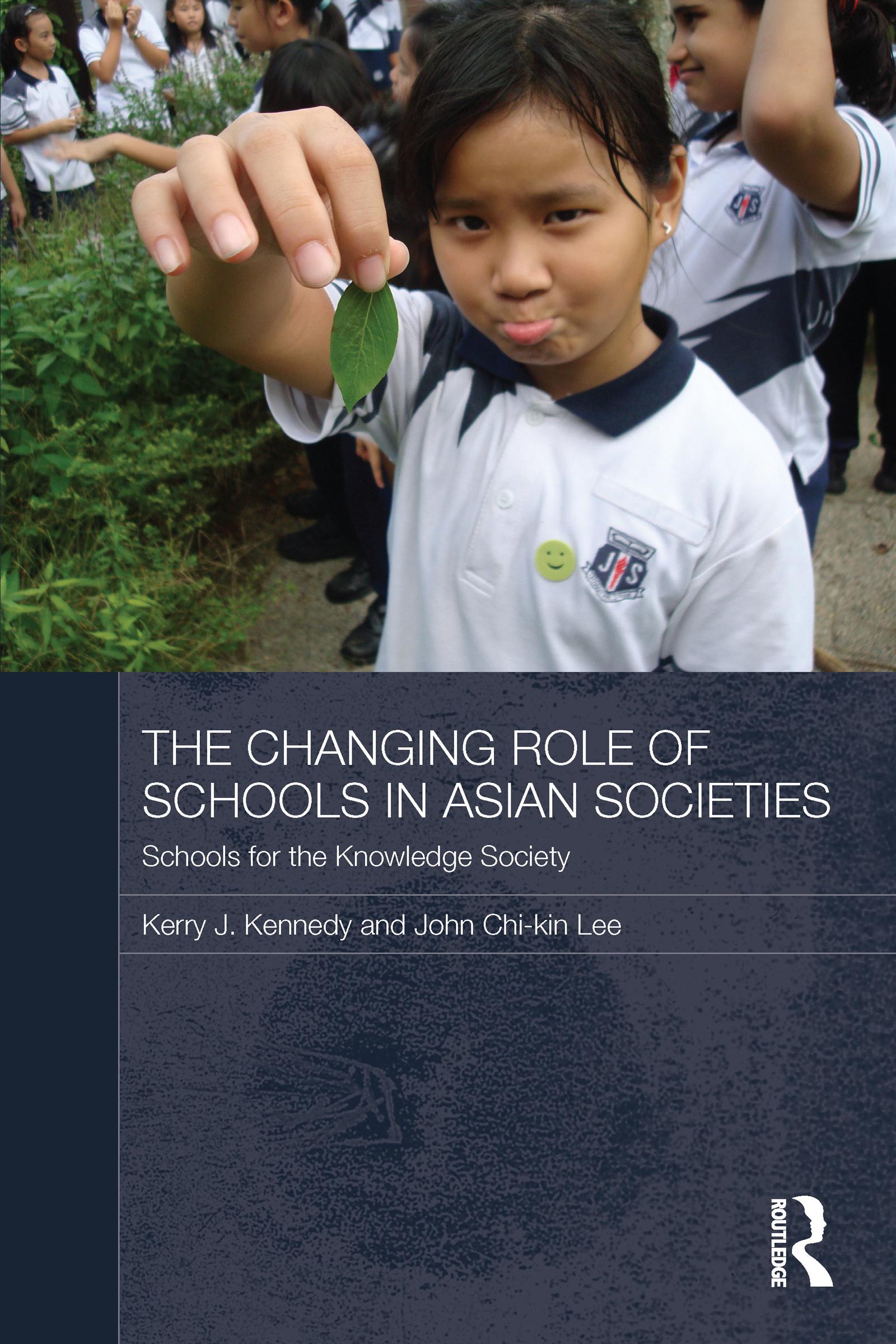
Walk into a classroom in Tokyo, New York, London or Rotterdam, and the similarities in structure, activity, purpose and style will outweigh differences in language, dress and ethnic characteristics. Learning is regulated and rationed, teaching is a process or one-way transmission of knowledge, students need to be docile and conformist, assessment needs to sift and sort the bright from the not-so-bright, and rewards will be given to those who successfully negotiate this regime. But are these the kinds of places that can meet the needs of the ‘net generation’?
The Changing Role of Schools in Asian Societies
The authors argue that the future of Asian societies depends on a transformation that requires a fundamental restructuring of schools as we know them while maintaining their long-held cultural values. This valuable insight:
- provides an overview of educational issues in Asian societies
- establishes a broad theoretical framework in which these issues can be understood
- contextualizes issues by providing country case studies
- acknowledges the important role of culture influencing educational priorities.
It should be of interest to all those working in education policy and comparative education.
Betaal eenvoudig met kaart, Klarna, Apple Pay of Google Pay. Niet tevreden? Je hebt altijd 14 dagen bedenktijd. Lees meer in onze voorwaarden. Heb je vragen, mail ons dan via hello@memmo.org.
Memmo maakt studeren makkelijker – waar je ook bent ter wereld. Wij brengen je cursusboeken en slimme studietools samen op één plek: samenvattingen, quizzen, podcasts en flashcards. En Ted, je studievriend die antwoord geeft op alles wat je je afvraagt. Meer dan 50.000 studenten studeren hier al – gebouwd om je sneller te laten leren en minder stress te geven.