
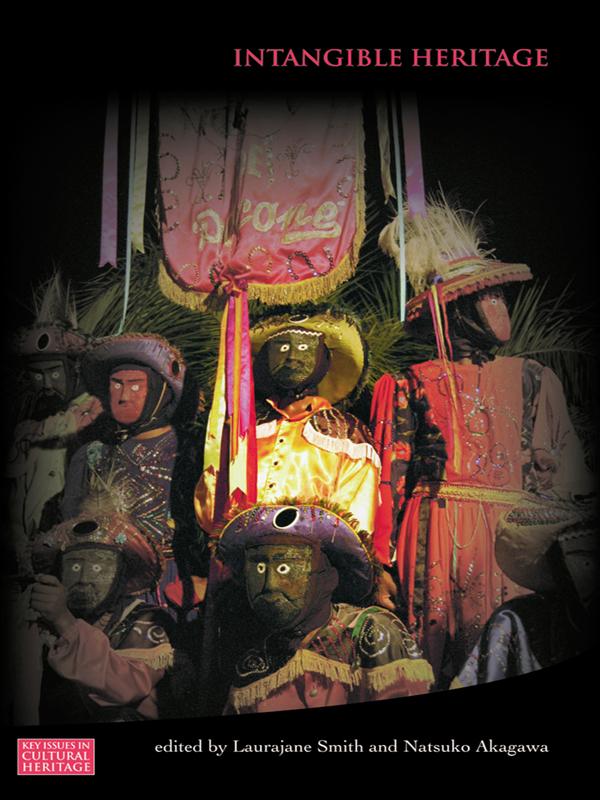
This volume examines the implications and consequences of the idea of ‘intangible heritage’ to current international academic and policy debates about the meaning and nature of cultural heritage and the management processes developed to protect it. It provides an accessible account of the different ways in which intangible cultural heritage has been defined and managed in both national and international contexts, and aims to facilitate international debate about the meaning, nature and value of not only intangible cultural heritage, but heritage more generally.
Intangible Heritage fills a significant gap in the heritage literature available and represents a significant cross section of ideas and practices associated with intangible cultural heritage. The authors brought together for this volume represent some of the key academics and practitioners working in the area, and discuss research and practices from a range of countries, including: Zimbabwe, Morocco, South Africa, Japan, Australia, United Kingdom, the Netherlands, USA, Brazil and Indonesia, and bring together a range of areas of expertise which include anthropology, law, heritage studies, archaeology, museum studies, folklore, architecture, Indigenous studies and history.
Betaal eenvoudig met kaart, Klarna, Apple Pay of Google Pay. Niet tevreden? Je hebt altijd 14 dagen bedenktijd. Lees meer in onze voorwaarden. Heb je vragen, mail ons dan via hello@memmo.org.
Memmo maakt studeren makkelijker – waar je ook bent ter wereld. Wij brengen je cursusboeken en slimme studietools samen op één plek: samenvattingen, quizzen, podcasts en flashcards. En Ted, je studievriend die antwoord geeft op alles wat je je afvraagt. Meer dan 50.000 studenten studeren hier al – gebouwd om je sneller te laten leren en minder stress te geven.