
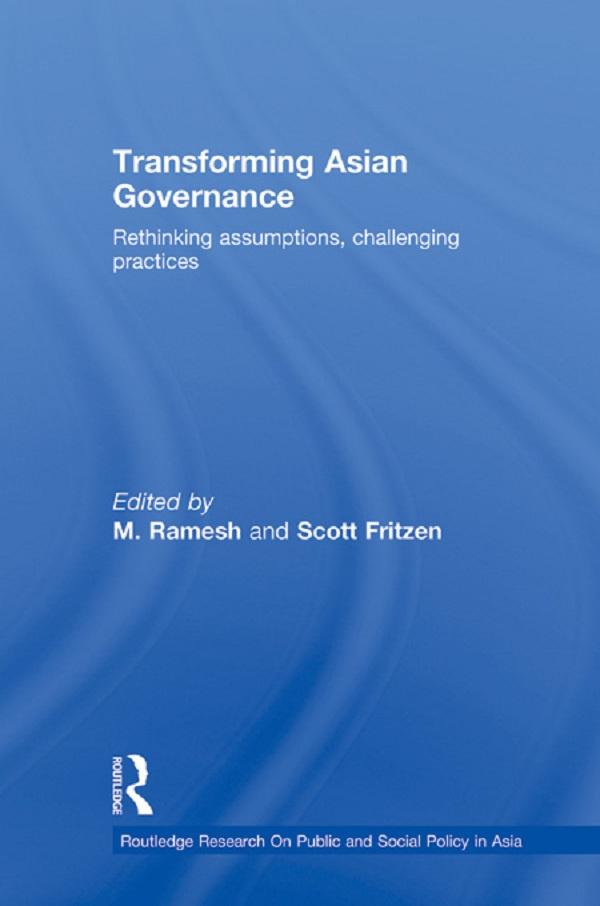
There are a multitude of hazards that confront attempts to change institutional or political orders in pursuit of good governance. Even seemingly technical prescriptions run up against local political and social realities which make their adoption difficult and, if adopted, require significant modification of the original prescriptions. Moreover, the technical, rationalist and/or normative language employed in the good governance discourse masks contests over power, rights, resources, and actors’ conflicting interests. There is a definite need to situate the good governance debate in the local context rather than reflexively adopting a universalistic positing of the fact or desirability of governance convergence across countries and sectors because the reality is that the world-wide deployment of good governance rhetoric is not accompanied by convergence in thinking or practices across nations. Transforming Asian Governance asks:
• How do good governance principles translate into local settings?
• How do local settings influence the conception of what is good governance and how the debate over good governance is deployed as a political or administrative strategy?
Using case studies in governance from Thailand, the Philippines, Pakistan, Malaysia, India, Indonesia, Korea and Japan, this book will be essential reading for anyone interested in the public and social policy of Asia, and international and comparative governance more generally.
Betaal eenvoudig met kaart, Klarna, Apple Pay of Google Pay. Niet tevreden? Je hebt altijd 14 dagen bedenktijd. Lees meer in onze voorwaarden. Heb je vragen, mail ons dan via hello@memmo.org.
Memmo maakt studeren makkelijker – waar je ook bent ter wereld. Wij brengen je cursusboeken en slimme studietools samen op één plek: samenvattingen, quizzen, podcasts en flashcards. En Ted, je studievriend die antwoord geeft op alles wat je je afvraagt. Meer dan 50.000 studenten studeren hier al – gebouwd om je sneller te laten leren en minder stress te geven.