
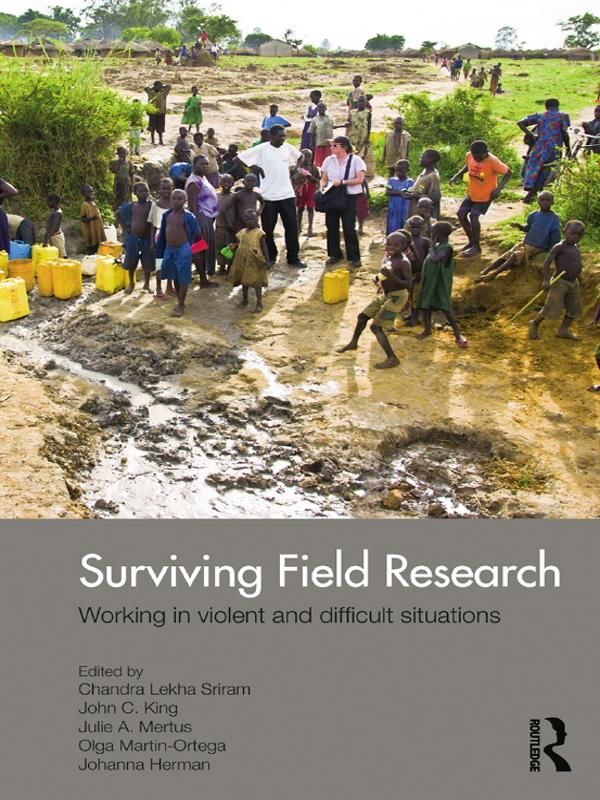
In recent decades there has been increasing attention to mass atrocities such as genocide, war crimes, crimes against humanity, and other gross human rights violations. At the same time, there has been a vast increase in the number of academics and researchers seeking to analyze the causes of, and offer practical responses to, these atrocities. Yet there remains insufficient discussion of the practical and ethical challenges surrounding research into serious abuses and dealing with vulnerable populations.
The aim of this edited volume is to guide researchers in identifying and addressing challenges in conducting qualitative research in difficult circumstances, such as conducting research in autocratic or uncooperative regimes, with governmental or non-governmental officials, and perhaps most importantly, with reluctant respondents such as victims of genocide or (on the other side of the coin) war criminals. The volume proceeds in five substantive sections, each addressing a different challenge of conducting field research in conflict-affected or repressive situations:
- Ethics
- Access
- Veracity
- Security
- Identity, objectivity, behaviour.
This important text will be vital reading for students, scholars and researchers in the areas of research methods, international relations, anthropology and human rights. It will also be of keen interest to policy practioners and NGOs, and especially relevant for those working in the regions of Africa, Latin America, and Asia.
Betaal eenvoudig met kaart, Klarna, Apple Pay of Google Pay. Niet tevreden? Je hebt altijd 14 dagen bedenktijd. Lees meer in onze voorwaarden. Heb je vragen, mail ons dan via hello@memmo.org.
Memmo maakt studeren makkelijker – waar je ook bent ter wereld. Wij brengen je cursusboeken en slimme studietools samen op één plek: samenvattingen, quizzen, podcasts en flashcards. En Ted, je studievriend die antwoord geeft op alles wat je je afvraagt. Meer dan 50.000 studenten studeren hier al – gebouwd om je sneller te laten leren en minder stress te geven.