
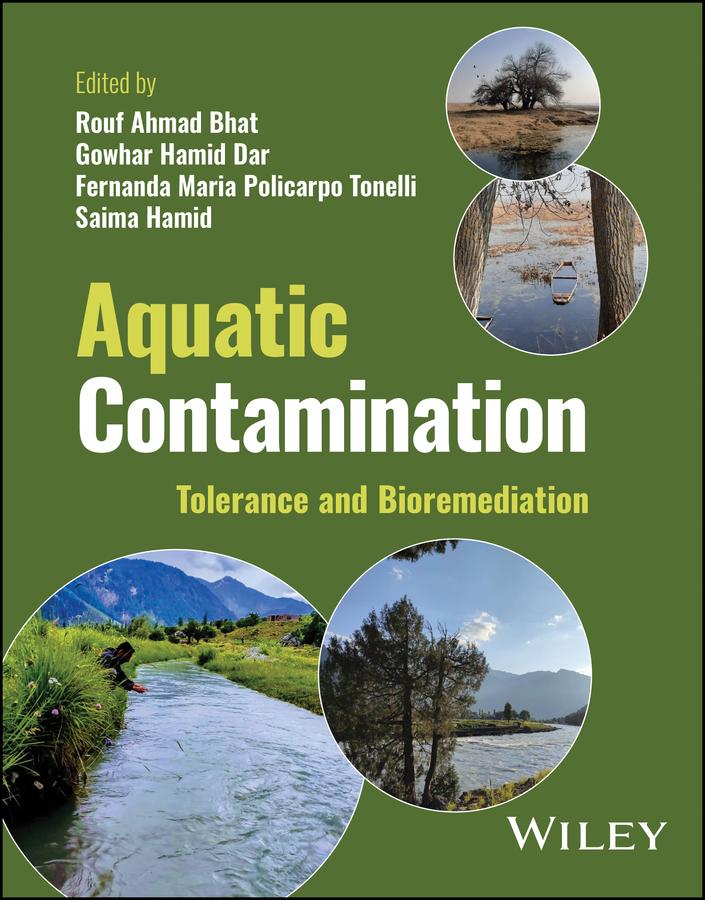
Authoritative resource presenting techniques and technologies to sustainably neutralize environmental contamination in aquatic plants, microorganisms, and more
Two thirds of the Earth is covered with aquatic habitats that play a key role in stabilizing the global environment and providing a wide variety of services to increasing human needs. Nevertheless, anthropogenic activities are rapidly destroying the quality of both fresh and marine waters globally, due to excessive use of chemicals, fertilizers and pollution from suburban and industrial areas eventually making their way into the aquatic world.
Aquatic Contamination: Tolerance and Bioremediation presents the broader spectrum of biological applicability of microbes with better understanding of cellular mechanisms for remediation of aquatic contaminants. The book also focuses on practices involved in molecular and genetic approaches, necessary to achieve targets of bioremediation and phytoremediation to solve global water contamination problems. Such approaches pave the way for the utilization of biological assets to design new, efficient, and environmentally sound remediation strategies by inculcating genomic techniques at cellular and molecular levels with model assessment.
Aquatic Contamination provides a comprehensive background for readers interested in all perspectives of the contamination of aquatic environs. It covers various research aspects which are being carried out globally to understand simulation models in the assessment of xenobiotics, role of genomics, transgenic plants, and microbial enzymes for degradation and removal of toxic substances in aquatic environs.
Key features include:
- Extensive coverage of interactions between plants, metals and microbes including the influence of biotic and abiotic factors
- Comprehensive discussion of the details of molecular mechanisms from assimilation to detoxification levels
- Exploration of the enzymatic approaches of potential plants acting as hyper-accumulators for contaminants in aquatic environs
- Details of sustainable tools such as transgenic plants for the manipulation of important functional microbial genes to achieve higher certainty of bioremediation
- Details of advances in tools and models like micro-arrays and simulation models for the complete assessment of xenobiotic compounds from cellular to degradation hierarchies
Aquatic Contamination: Tolerance and Bioremediation will be substantially helpful to environmentalists, microbiologists, biotechnologists and scientists, providing essential information on various modern technologies for the remediation of contaminants in aquatic ecosystems.
Betaal eenvoudig met kaart, Klarna, Apple Pay of Google Pay. Niet tevreden? Je hebt altijd 14 dagen bedenktijd. Lees meer in onze voorwaarden. Heb je vragen, mail ons dan via hello@memmo.org.
Memmo maakt studeren makkelijker – waar je ook bent ter wereld. Wij brengen je cursusboeken en slimme studietools samen op één plek: samenvattingen, quizzen, podcasts en flashcards. En Ted, je studievriend die antwoord geeft op alles wat je je afvraagt. Meer dan 50.000 studenten studeren hier al – gebouwd om je sneller te laten leren en minder stress te geven.