
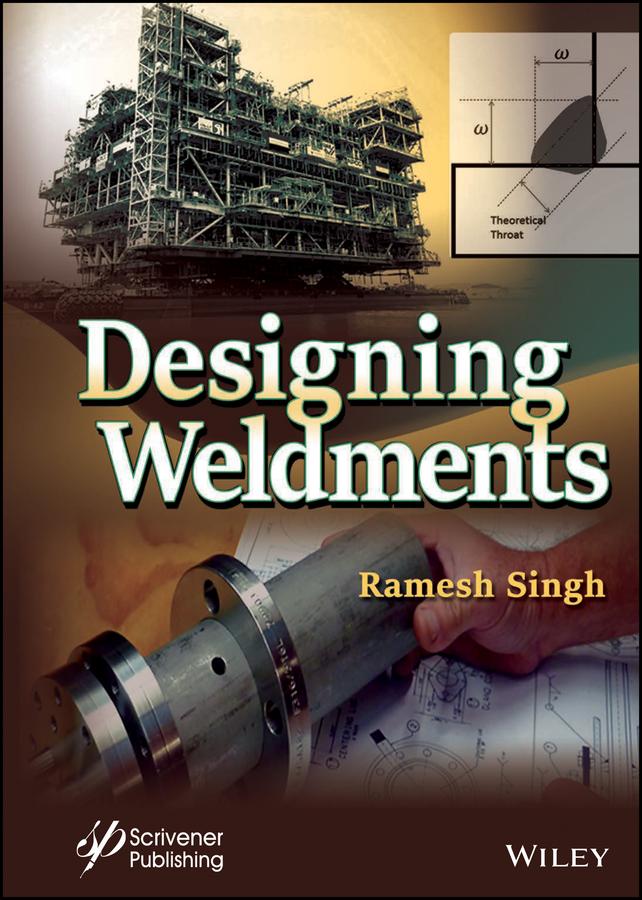
An important tool for professionals wishing to enhance their understanding or those who are new to the subject, Designing Weldments bridges that gap between structural engineers and a deeper understanding of the welding engineering within the structures.
In modern-day construction, welding is the primary method to join various members of any structure. Welds are required to meet various types of load in tension, compression, torsion, and perform in static or cyclic loading conditions. The weld has to be at least as strong as the parent metal to meet the demands of various stress working on the structure. It should meet the structural requirement, add value to the integrity of the structure, and prevent failures.
However, many design engineers lack even a fundamental insight or a basic understanding of essential welding processes and design requirements. Simply copying a few joint configurations in a drawing will not suffice. All-embracing and readable, Designing Weldments delivers a deeper understanding of many design factors that play a critical role in the design. The book clarifies welding design principles and applications. With this reference in hand, designers will have expert knowledge to consider very early on in the project, the implications of the choice of what type of weld to use for joining structural members, and how the component is made. The author explains the many welding techniques developed over the years, as well as some of which are still evolving.
The reader will also find in this book:
- Rules of thumb for saving time and money in the design phase of a project.
- An insider’s view for choosing the proper welding approach to ensure the overall strength of a structure.
- Offers structural engineers a deeper understanding of the weld within their structures.
- Clarifies welding design principles and applications, limiting the necessity to redesign the structure.
Audience
The intended market for this book is professionals working on the infrastructural projects in shipbuilding, construction of buildings, bridges, offshore platforms, wind towers for renewable energy, and other structures that join plates, pipes, and pipelines in power plants, manufacturing, and repair.
Betaal eenvoudig met kaart, Klarna, Apple Pay of Google Pay. Niet tevreden? Je hebt altijd 14 dagen bedenktijd. Lees meer in onze voorwaarden. Heb je vragen, mail ons dan via hello@memmo.org.
Memmo maakt studeren makkelijker – waar je ook bent ter wereld. Wij brengen je cursusboeken en slimme studietools samen op één plek: samenvattingen, quizzen, podcasts en flashcards. En Ted, je studievriend die antwoord geeft op alles wat je je afvraagt. Meer dan 50.000 studenten studeren hier al – gebouwd om je sneller te laten leren en minder stress te geven.