
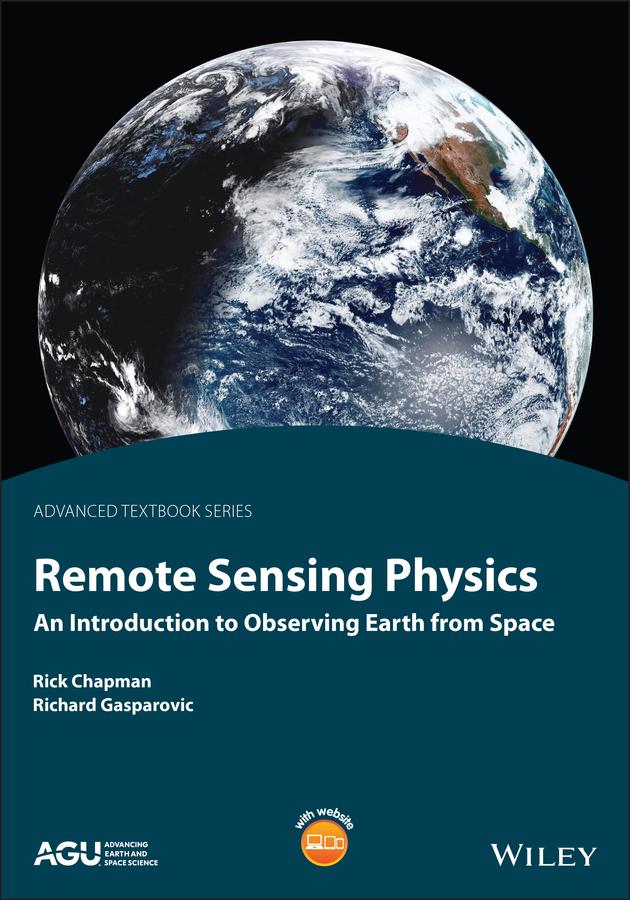
The development of spaceborne remote sensing technology has led to a new understanding of the complexity of our planet by allowing us to observe Earth and its environments on spatial and temporal scales that are unavailable to terrestrial sensors.
Remote Sensing Physics: An Introduction to Observing Earth from Space is a graduate-level text that examines the underlying physical principles and techniques used to make remote measurements, along with the algorithms used to extract geophysical information from those measurements.
Volume highlights include:
- Basis for Earth remote sensing including ocean, land, and atmosphere
- Description of satellite orbits relevant for Earth observations
- Physics of passive sensing, including infrared, optical and microwave imagers
- Physics of active sensing, including radars and lidars
- Overview of current and future Earth observation missions
- Compendium of resources including an extensive bibliography
- Sample problem sets and answers available to instructors
The American Geophysical Union promotes discovery in Earth and space science for the benefit of humanity. Its publications disseminate scientific knowledge and provide resources for researchers, students, and professionals.
Betaal eenvoudig met kaart, Klarna, Apple Pay of Google Pay. Niet tevreden? Je hebt altijd 14 dagen bedenktijd. Lees meer in onze voorwaarden. Heb je vragen, mail ons dan via hello@memmo.org.
Memmo maakt studeren makkelijker – waar je ook bent ter wereld. Wij brengen je cursusboeken en slimme studietools samen op één plek: samenvattingen, quizzen, podcasts en flashcards. En Ted, je studievriend die antwoord geeft op alles wat je je afvraagt. Meer dan 50.000 studenten studeren hier al – gebouwd om je sneller te laten leren en minder stress te geven.