
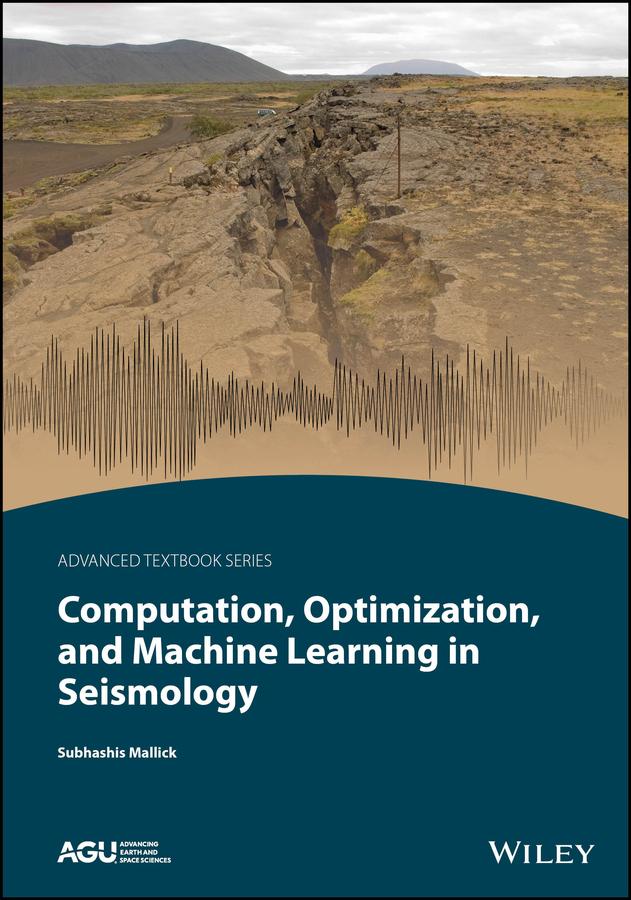
A textbook applying fundamental seismology theories to the latest computational tools
The goal of computational seismology is to digitally simulate seismic waves, create subsurface models, and match these models with observations to identify subsurface rock properties. With recent advances in computing technology, including machine learning, it is now possible to automate matching procedures and use waveform inversion or optimization to create large-scale models.
Computation, Optimization, and Machine Learning in Seismology provides students with a detailed understanding of seismic wave theory, optimization theory, and how to use machine learning to interpret seismic data.
Volume highlights include:
- Mathematical foundations and key equations for computational seismology
- Essential theories, including wave propagation and elastic wave theory
- Processing, mapping, and interpretation of prestack data
- Model-based optimization and artificial intelligence methods
- Applications for earthquakes, exploration seismology, depth imaging, and multi-objective geophysics problems
- Exercises applying the main concepts of each chapter
Betaal eenvoudig met kaart, Klarna, Apple Pay of Google Pay. Niet tevreden? Je hebt altijd 14 dagen bedenktijd. Lees meer in onze voorwaarden. Heb je vragen, mail ons dan via hello@memmo.org.
Memmo maakt studeren makkelijker – waar je ook bent ter wereld. Wij brengen je cursusboeken en slimme studietools samen op één plek: samenvattingen, quizzen, podcasts en flashcards. En Ted, je studievriend die antwoord geeft op alles wat je je afvraagt. Meer dan 50.000 studenten studeren hier al – gebouwd om je sneller te laten leren en minder stress te geven.