
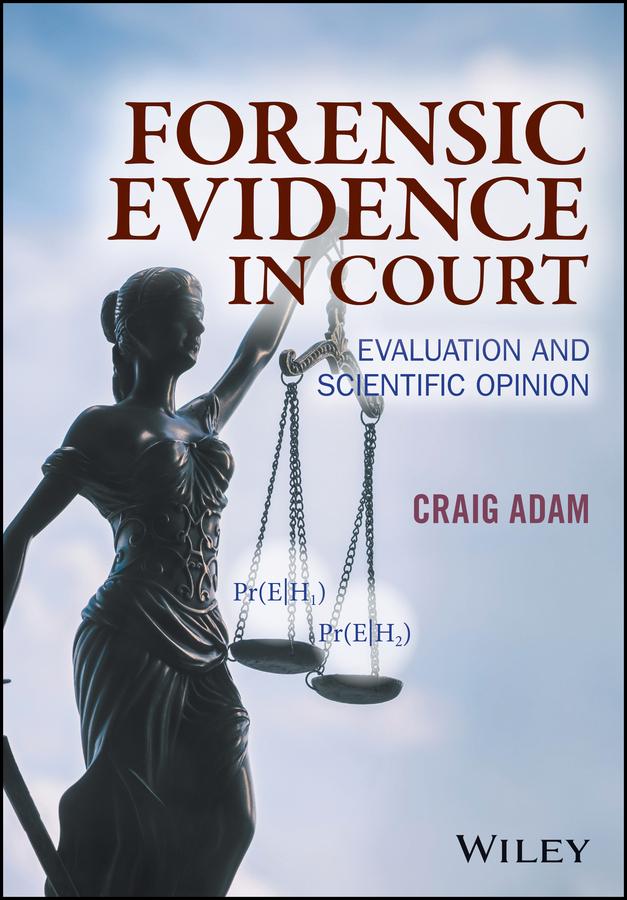
The interpretation and evaluation of scientific evidence and its presentation in a court of law is central both to the role of the forensic scientist as an expert witness and to the interests of justice. This book aims to provide a thorough and detailed discussion of the principles and practice of evidence interpretation and evaluation by using real cases by way of illustration. The presentation is appropriate for students of forensic science or related disciplines at advanced undergraduate and master's level or for practitioners engaged in continuing professional development activity.
The book is structured in three sections. The first sets the scene by describing and debating the issues around the admissibility and reliability of scientific evidence presented to the court. In the second section, the principles underpinning interpretation and evaluation are explained, including discussion of those formal statistical methods founded on Bayesian inference. The following chapters present perspectives on the evaluation and presentation of evidence in the context of a single type or class of scientific evidence, from DNA to the analysis of documents. For each, the science underpinning the analysis and interpretation of the forensic materials is explained, followed by the presentation of cases which illustrate the variety of approaches that have been taken in providing expert scientific opinion.
Betaal eenvoudig met kaart, Klarna, Apple Pay of Google Pay. Niet tevreden? Je hebt altijd 14 dagen bedenktijd. Lees meer in onze voorwaarden. Heb je vragen, mail ons dan via hello@memmo.org.
Memmo maakt studeren makkelijker – waar je ook bent ter wereld. Wij brengen je cursusboeken en slimme studietools samen op één plek: samenvattingen, quizzen, podcasts en flashcards. En Ted, je studievriend die antwoord geeft op alles wat je je afvraagt. Meer dan 50.000 studenten studeren hier al – gebouwd om je sneller te laten leren en minder stress te geven.