
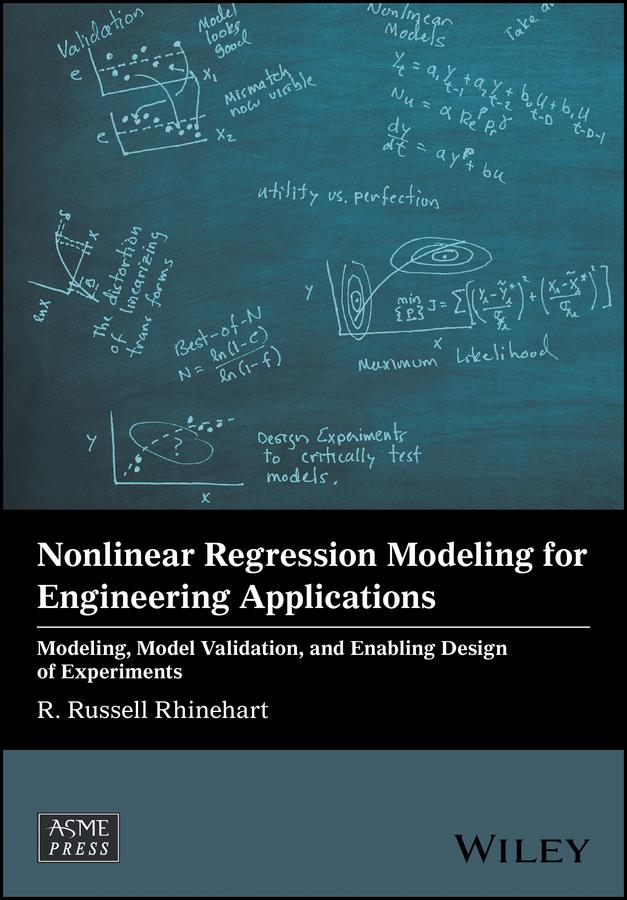
Since mathematical models express our understanding of how nature behaves, we use them to validate our understanding of the fundamentals about systems (which could be processes, equipment, procedures, devices, or products). Also, when validated, the model is useful for engineering applications related to diagnosis, design, and optimization.
First, we postulate a mechanism, then derive a model grounded in that mechanistic understanding. If the model does not fit the data, our understanding of the mechanism was wrong or incomplete. Patterns in the residuals can guide model improvement. Alternately, when the model fits the data, our understanding is sufficient and confidently functional for engineering applications.
This book details methods of nonlinear regression, computational algorithms,model validation, interpretation of residuals, and useful experimental design. The focus is on practical applications, with relevant methods supported by fundamental analysis.
This book will assist either the academic or industrial practitioner to properly classify the system, choose between the various available modeling options and regression objectives, design experiments to obtain data capturing critical system behaviors, fit the model parameters based on that data, and statistically characterize the resulting model. The author has used the material in the undergraduate unit operations lab course and in advanced control applications.
Betaal eenvoudig met kaart, Klarna, Apple Pay of Google Pay. Niet tevreden? Je hebt altijd 14 dagen bedenktijd. Lees meer in onze voorwaarden. Heb je vragen, mail ons dan via hello@memmo.org.
Memmo maakt studeren makkelijker – waar je ook bent ter wereld. Wij brengen je cursusboeken en slimme studietools samen op één plek: samenvattingen, quizzen, podcasts en flashcards. En Ted, je studievriend die antwoord geeft op alles wat je je afvraagt. Meer dan 50.000 studenten studeren hier al – gebouwd om je sneller te laten leren en minder stress te geven.