
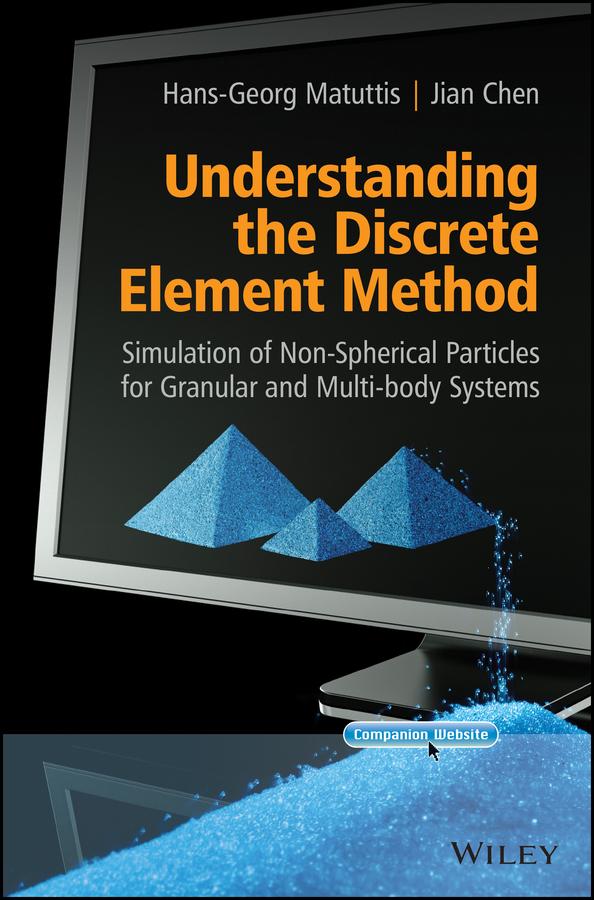
Gives readers a more thorough understanding of DEM and equips researchers for independent work and an ability to judge methods related to simulation of polygonal particles
- Introduces DEM from the fundamental concepts (theoretical mechanics and solidstate physics), with 2D and 3D simulation methods for polygonal particles
- Provides the fundamentals of coding discrete element method (DEM) requiring little advance knowledge of granular matter or numerical simulation
- Highlights the numerical tricks and pitfalls that are usually only realized after years of experience, with relevant simple experiments as applications
- Presents a logical approach starting withthe mechanical and physical bases,followed by a description of the techniques and finally their applications
- Written by a key author presenting ideas on how to model the dynamics of angular particles using polygons and polyhedral
- Accompanying website includes MATLAB-Programs providing the simulation code for two-dimensional polygons
Recommended for researchers and graduate students who deal with particle models in areas such as fluid dynamics, multi-body engineering, finite-element methods, the geosciences, and multi-scale physics.
Betaal eenvoudig met kaart, Klarna, Apple Pay of Google Pay. Niet tevreden? Je hebt altijd 14 dagen bedenktijd. Lees meer in onze voorwaarden. Heb je vragen, mail ons dan via hello@memmo.org.
Memmo maakt studeren makkelijker – waar je ook bent ter wereld. Wij brengen je cursusboeken en slimme studietools samen op één plek: samenvattingen, quizzen, podcasts en flashcards. En Ted, je studievriend die antwoord geeft op alles wat je je afvraagt. Meer dan 50.000 studenten studeren hier al – gebouwd om je sneller te laten leren en minder stress te geven.