
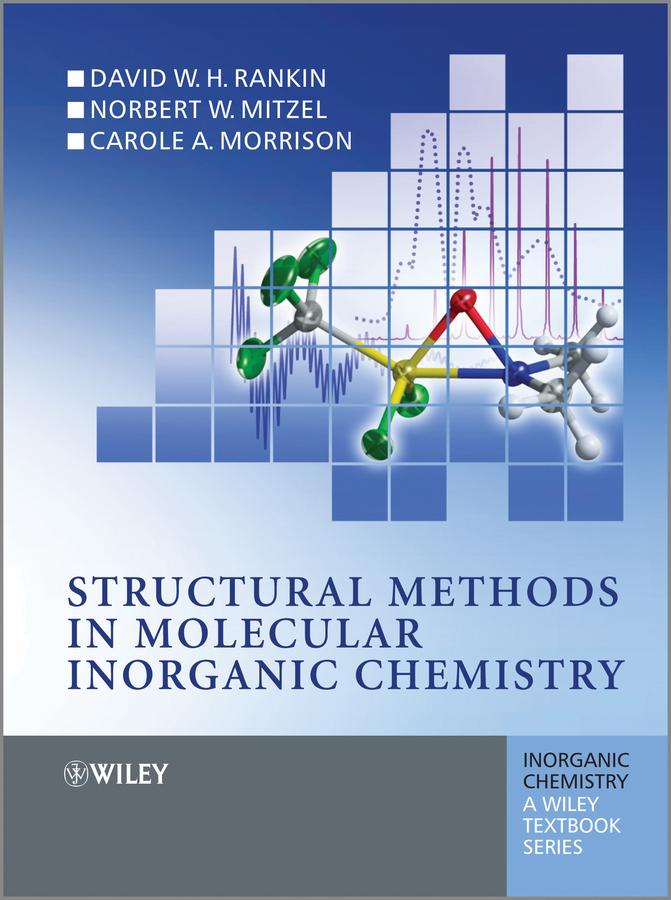
Determining the structure of molecules is a fundamental skill that all chemists must learn. Structural Methods in Molecular Inorganic Chemistry is designed to help readers interpret experimental data, understand the material published in modern journals of inorganic chemistry, and make decisions about what techniques will be the most useful in solving particular structural problems.
Following a general introduction to the tools and concepts in structural chemistry, the following topics are covered in detail:
• computational chemistry
• nuclear magnetic resonance spectroscopy
• electron paramagnetic resonance spectroscopy
• Mössbauer spectroscopy
• rotational spectra and rotational structure
• vibrational spectroscopy
• electronic characterization techniques
• diffraction methods
• mass spectrometry
The final chapter presents a series of case histories, illustrating how chemists have applied a broad range of structural techniques to interpret and understand chemical systems.
Throughout the textbook a strong connection is made between theoretical topics and the real world of practicing chemists. Each chapter concludes with problems and discussion questions, and a supporting website contains additional advanced material.
Structural Methods in Molecular Inorganic Chemistry is an extensive update and sequel to the successful textbook Structural Methods in Inorganic Chemistry by Ebsworth, Rankin and Cradock. It is essential reading for all advanced students of chemistry, and a handy reference source for the professional chemist.
Betaal eenvoudig met kaart, Klarna, Apple Pay of Google Pay. Niet tevreden? Je hebt altijd 14 dagen bedenktijd. Lees meer in onze voorwaarden. Heb je vragen, mail ons dan via hello@memmo.org.
Memmo maakt studeren makkelijker – waar je ook bent ter wereld. Wij brengen je cursusboeken en slimme studietools samen op één plek: samenvattingen, quizzen, podcasts en flashcards. En Ted, je studievriend die antwoord geeft op alles wat je je afvraagt. Meer dan 50.000 studenten studeren hier al – gebouwd om je sneller te laten leren en minder stress te geven.