
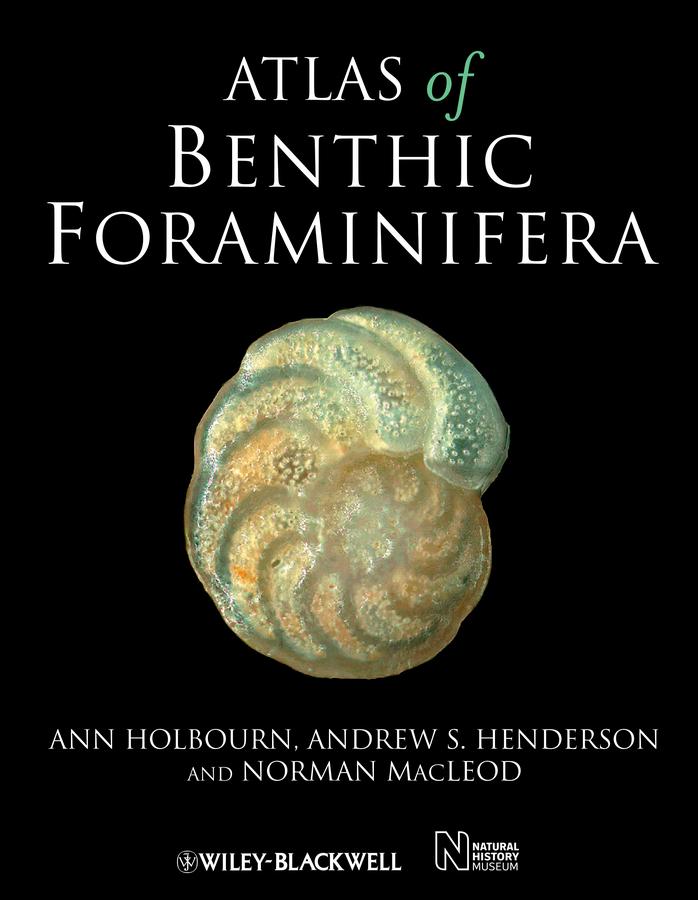
An up-to-date atlas of an important fossil and living group, with the Natural History Museum.
Deep-sea benthic foraminifera have played a central role in biostratigraphic, paleoecological, and paleoceanographical research for over a century. These single–celled marine protists are important because of their geographic ubiquity, distinction morphologies and rapid evolutionary rates, their abundance and diversity deep–sea sediments, and because of their utility as indicators of environmental conditions both at and below the sediment–water interface. In addition, stable isotopic data obtained from deep–sea benthic foraminiferal tests provide paleoceanographers with environmental information that is proving to be of major significance in studies of global climatic change.
This work collects together, for the first time, new morphological descriptions, taxonomic placements, stratigraphic occurrence data, geographical distribution summaries, and palaeoecological information, along with state-of-the-art colour photomicrographs (most taken in reflected light, just as you would see them using light microscopy), of 300 common deep-sea benthic foraminifera species spanning the interval from Jurassic - Recent. This volume is intended as a reference and research resource for post-graduate students in micropalaeontology, geological professionals (stratigraphers, paleontologists, paleoecologists, palaeoceanographers), taxonomists, and evolutionary (paleo)biologists.
Betaal eenvoudig met kaart, Klarna, Apple Pay of Google Pay. Niet tevreden? Je hebt altijd 14 dagen bedenktijd. Lees meer in onze voorwaarden. Heb je vragen, mail ons dan via hello@memmo.org.
Memmo maakt studeren makkelijker – waar je ook bent ter wereld. Wij brengen je cursusboeken en slimme studietools samen op één plek: samenvattingen, quizzen, podcasts en flashcards. En Ted, je studievriend die antwoord geeft op alles wat je je afvraagt. Meer dan 50.000 studenten studeren hier al – gebouwd om je sneller te laten leren en minder stress te geven.