
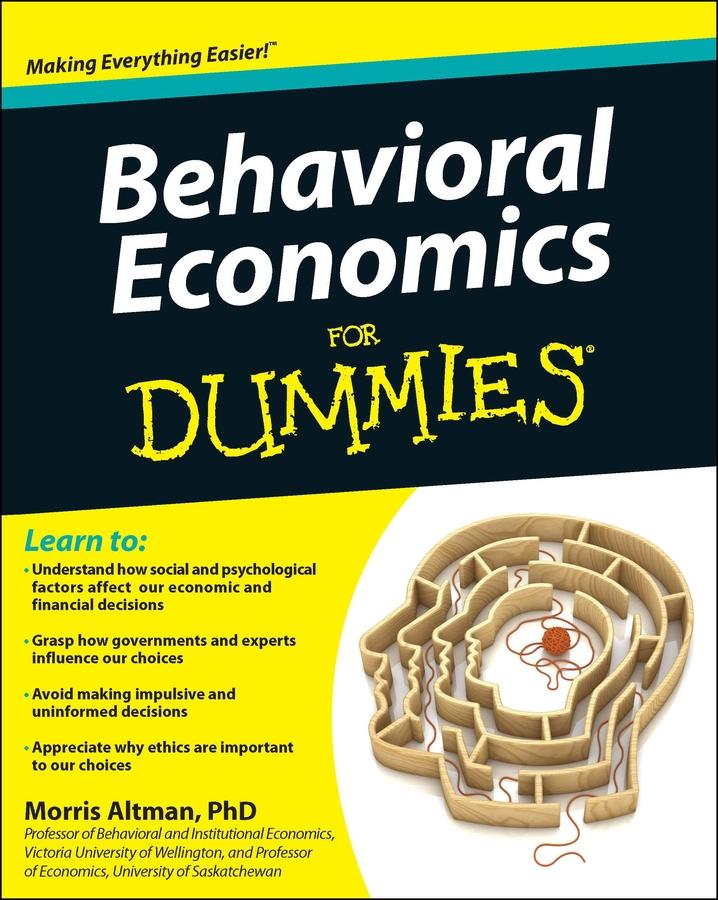
While classical economics is based on the notion that people act with rational self-interest, many key money decisions—like splurging on an expensive watch—can seem far from rational. The field of behavioral economics sheds light on the many subtle and not-so-subtle factors that contribute to our financial and purchasing choices. And in Behavioral Economics For Dummies, readers will learn how social and psychological factors, such as instinctual behavior patterns, social pressure, and mental framing, can dramatically affect our day-to-day decision-making and financial choices.
Based on psychology and rooted in real-world examples, Behavioral Economics For Dummies offers the sort of insights designed to help investors avoid impulsive mistakes, companies understand the mechanisms behind individual choices, and governments and nonprofits make public decisions.
- A friendly introduction to the study of how and why people really make financial decisions
- The author is a professor of behavioral and institutional economics at Victoria University
An essential component to improving your financial decision-making (and even to understanding current events), Behavioral Economics For Dummies is important for just about anyone who has a bank account and is interested in why—and when—they spend money.
Betaal eenvoudig met kaart, Klarna, Apple Pay of Google Pay. Niet tevreden? Je hebt altijd 14 dagen bedenktijd. Lees meer in onze voorwaarden. Heb je vragen, mail ons dan via hello@memmo.org.
Memmo maakt studeren makkelijker – waar je ook bent ter wereld. Wij brengen je cursusboeken en slimme studietools samen op één plek: samenvattingen, quizzen, podcasts en flashcards. En Ted, je studievriend die antwoord geeft op alles wat je je afvraagt. Meer dan 50.000 studenten studeren hier al – gebouwd om je sneller te laten leren en minder stress te geven.