
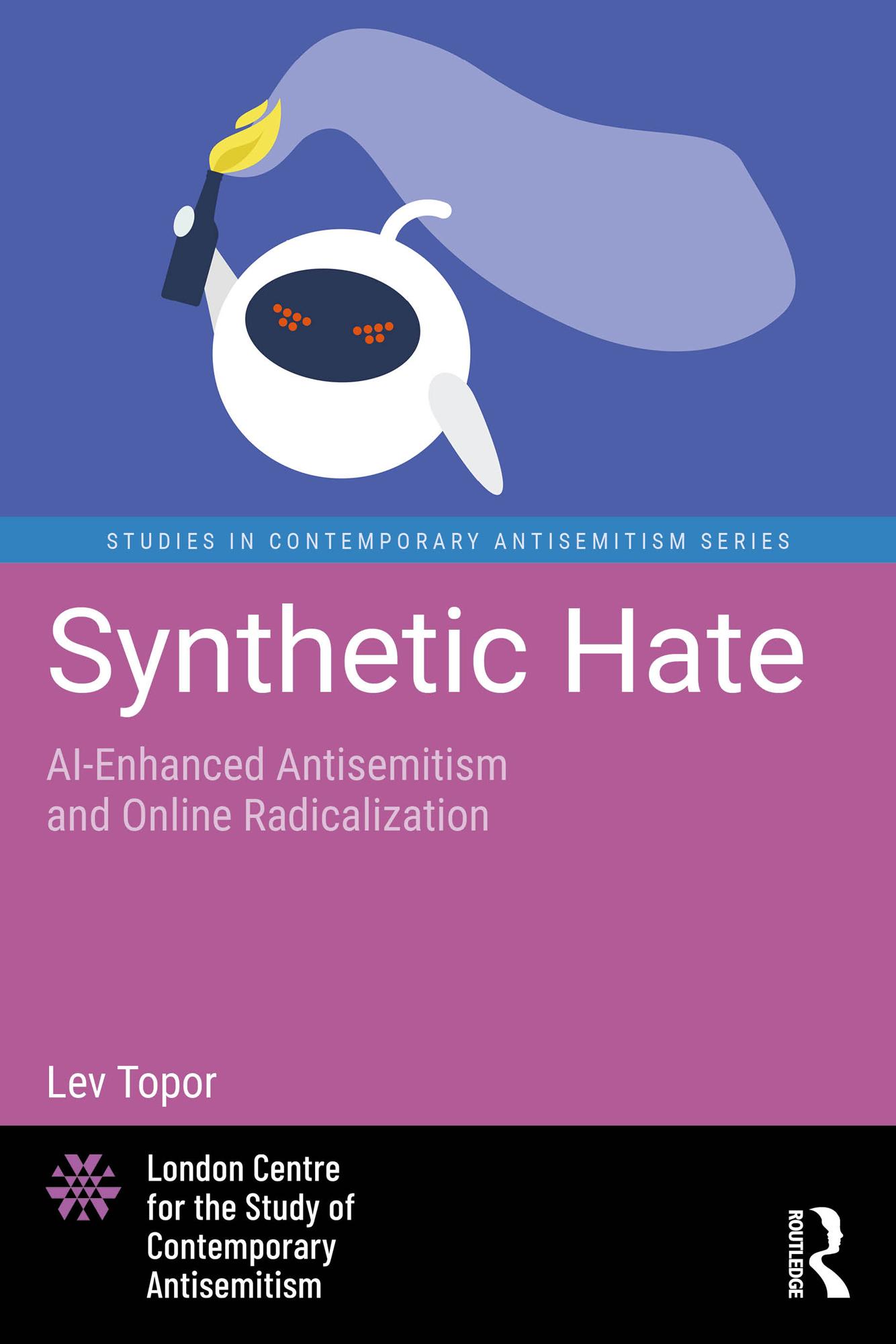
Synthetic Hate investigates how extremists exploit artificial intelligence (AI) to modernize the world’s oldest hatred. Antisemitism – rooted in religious discrimination, medieval blood libels, Nazi propaganda, and contemporary Islamist and far-right conspiracies – has found new life through generative tools that can produce persuasive text, images, audio, and video at scale.
Drawing on documented cases and controlled demonstrations, the book shows how large language models (LLMs), deepfakes, bots, and recommendation systems enable cheap, rapid, and adaptive propaganda – memes that evade moderation, fabricated “evidence,” synthetic voices, and narrative laundering that spreads across platforms and into mainstream feeds. The result is not “new” hate, but hate that is faster, more convincing, and harder to police.
Crucially, Synthetic Hate goes beyond diagnosis, and it lays out a practical counterstrategy of technical safeguards, platform accountability and regulation, and education and resilience, so policymakers, researchers, and practitioners can blunt AI-amplified antisemitism and hate without sacrificing democratic values.
Betaal eenvoudig met kaart, Klarna, Apple Pay of Google Pay. Niet tevreden? Je hebt altijd 14 dagen bedenktijd. Lees meer in onze voorwaarden. Heb je vragen, mail ons dan via hello@memmo.org.
Memmo maakt studeren makkelijker – waar je ook bent ter wereld. Wij brengen je cursusboeken en slimme studietools samen op één plek: samenvattingen, quizzen, podcasts en flashcards. En Ted, je studievriend die antwoord geeft op alles wat je je afvraagt. Meer dan 50.000 studenten studeren hier al – gebouwd om je sneller te laten leren en minder stress te geven.