
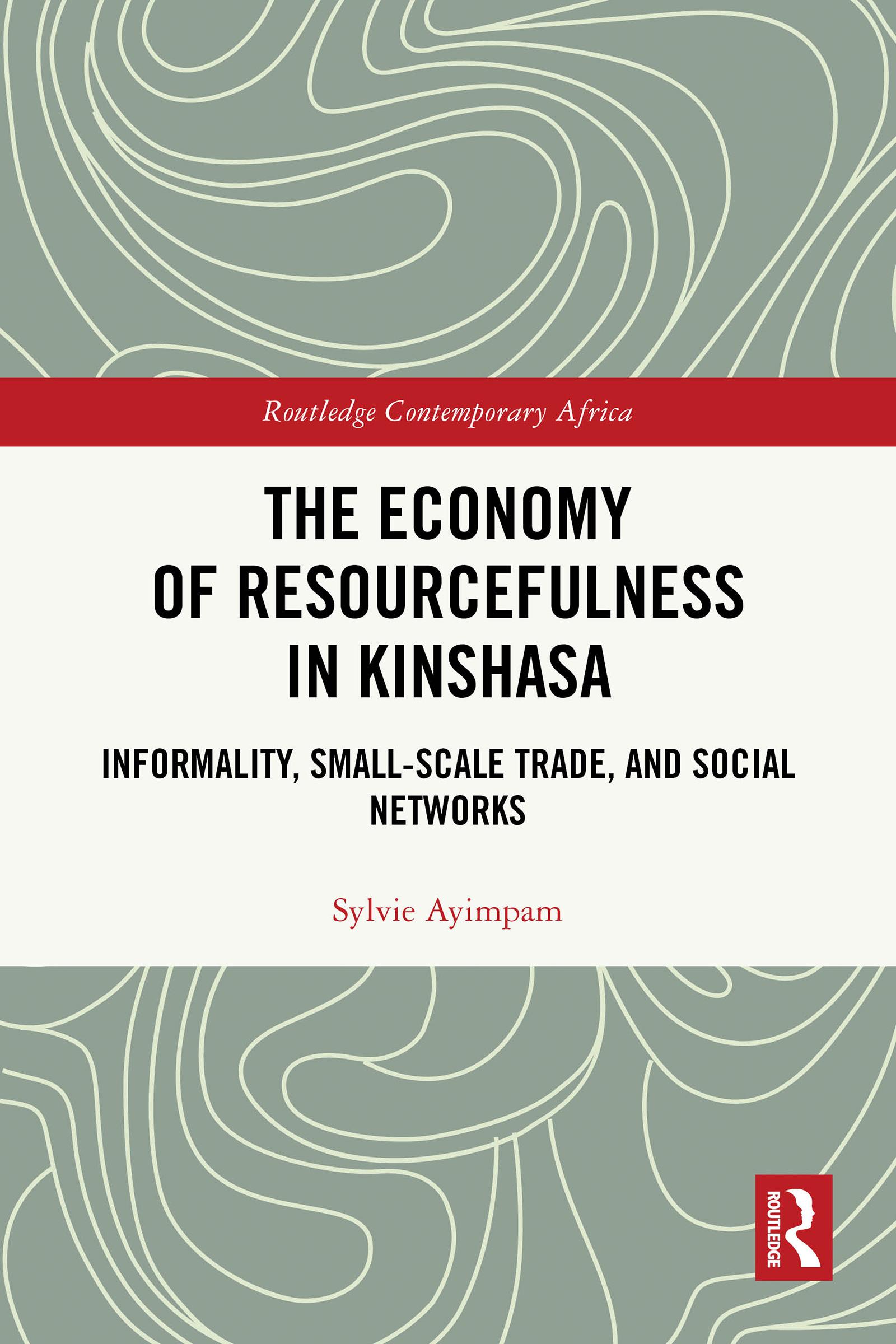
How, in a context of prolonged economic and political crisis, do city dwellers reinvent the means of their survival in Kinshasa? This book answers that question. Through fine-grained ethnography, it shows how micro-social arrangements enable small-scale traders to provision the city and ordinary citizens to keep living, immersing the reader in the many forms of “resourcefulness” that organize small-scale trade across Kinshasa’s markets.
The book moves beyond the formal/informal binary to theorize an “economy of resourcefulness,” where economic, social, political, and cultural dimensions are tightly entangled. It traces how cooperation and cunning, solidarity and extortion, coexist in everyday pursuits of income under precarious conditions. Following retail circuits while attending to shifting state presences, digital payments, congestion, and risk, it reconstructs the practical norms and negotiated rules through which actors coordinate, conflict, and protect themselves—offering a bottom-up view of governance in practice and of ongoing social change.
This volume will interest scholars and students of African studies, anthropology, sociology, political science, geography, urban studies, and development studies, as well as practitioners concerned with popular economies, urban governance, and everyday livelihoods in the Global South.
Betaal eenvoudig met kaart, Klarna, Apple Pay of Google Pay. Niet tevreden? Je hebt altijd 14 dagen bedenktijd. Lees meer in onze voorwaarden. Heb je vragen, mail ons dan via hello@memmo.org.
Memmo maakt studeren makkelijker – waar je ook bent ter wereld. Wij brengen je cursusboeken en slimme studietools samen op één plek: samenvattingen, quizzen, podcasts en flashcards. En Ted, je studievriend die antwoord geeft op alles wat je je afvraagt. Meer dan 50.000 studenten studeren hier al – gebouwd om je sneller te laten leren en minder stress te geven.