
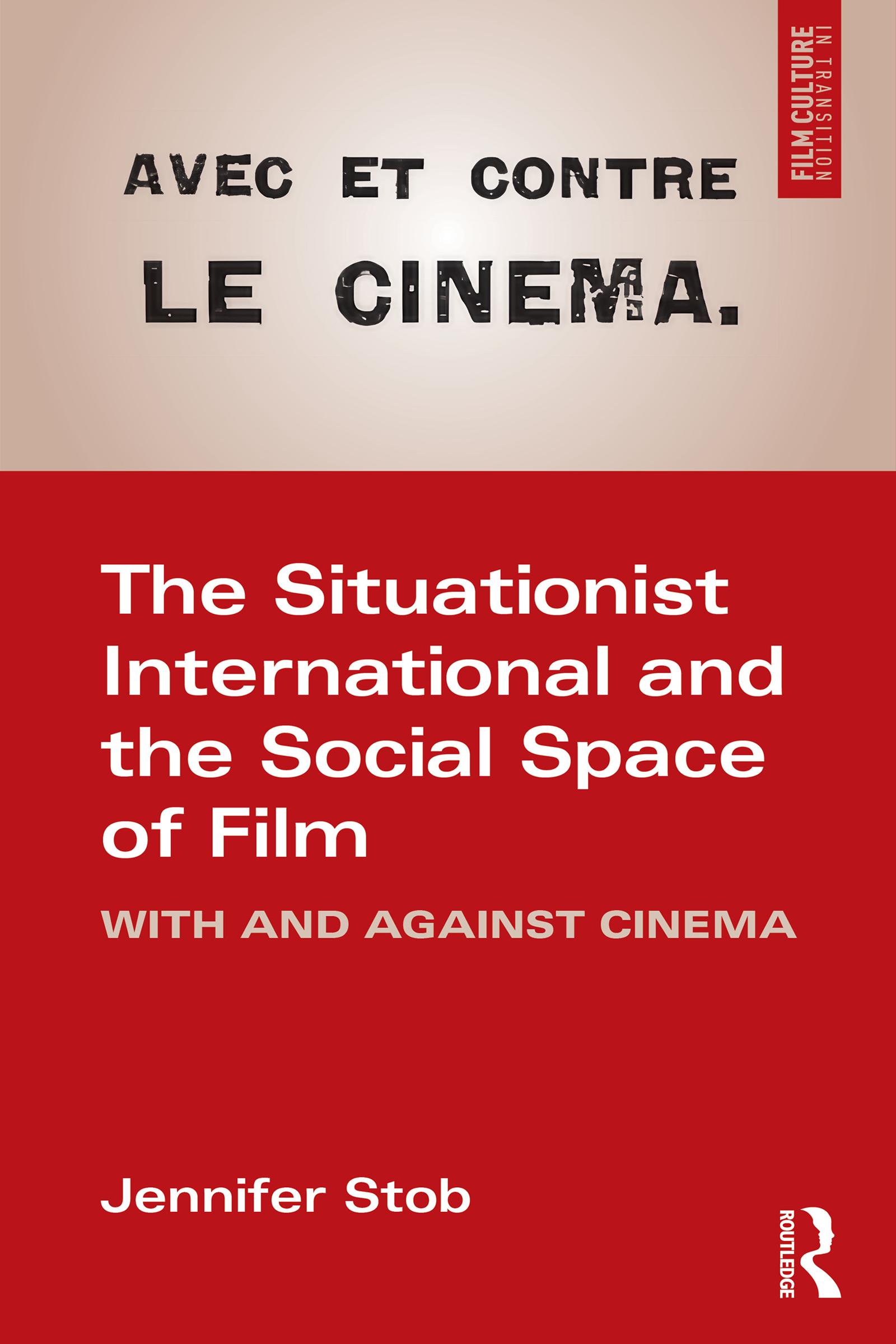
This book explores the Situationist International’s paradoxical relationship with cinema from 1957 to 1972. The SI was a postwar avant-garde that condemned representation’s erosion of social life. Yet its membership cared deeply for cinema, the epitome of capitalist representation for that era. How did the Situationists reconcile their interest in filmic social space with their hopes to revolutionize social space in city streets?
The Situationist International and the Social Space of Film: With and Against Cinema traces the SI’s attempts throughout the 1960s to work with cinema’s associative power and against its passivity. It follows this project from early encounters with Lettrist cinema to 1968 and beyond, all the while contextualizing Situationist theory with the work of friends and foes like Henri Lefebvre, Marcel Mariën, Alain Resnais, Jean-Luc Godard and Agnès Varda.
Meticulously researched and thoughtfully argued, Stob’s book offers timely lessons for today’s media artists, scholars and activists. Cinema is revealed to be a vital Situationist paradigm for social togetherness as well as for social separation.
Betaal eenvoudig met kaart, Klarna, Apple Pay of Google Pay. Niet tevreden? Je hebt altijd 14 dagen bedenktijd. Lees meer in onze voorwaarden. Heb je vragen, mail ons dan via hello@memmo.org.
Memmo maakt studeren makkelijker – waar je ook bent ter wereld. Wij brengen je cursusboeken en slimme studietools samen op één plek: samenvattingen, quizzen, podcasts en flashcards. En Ted, je studievriend die antwoord geeft op alles wat je je afvraagt. Meer dan 50.000 studenten studeren hier al – gebouwd om je sneller te laten leren en minder stress te geven.