
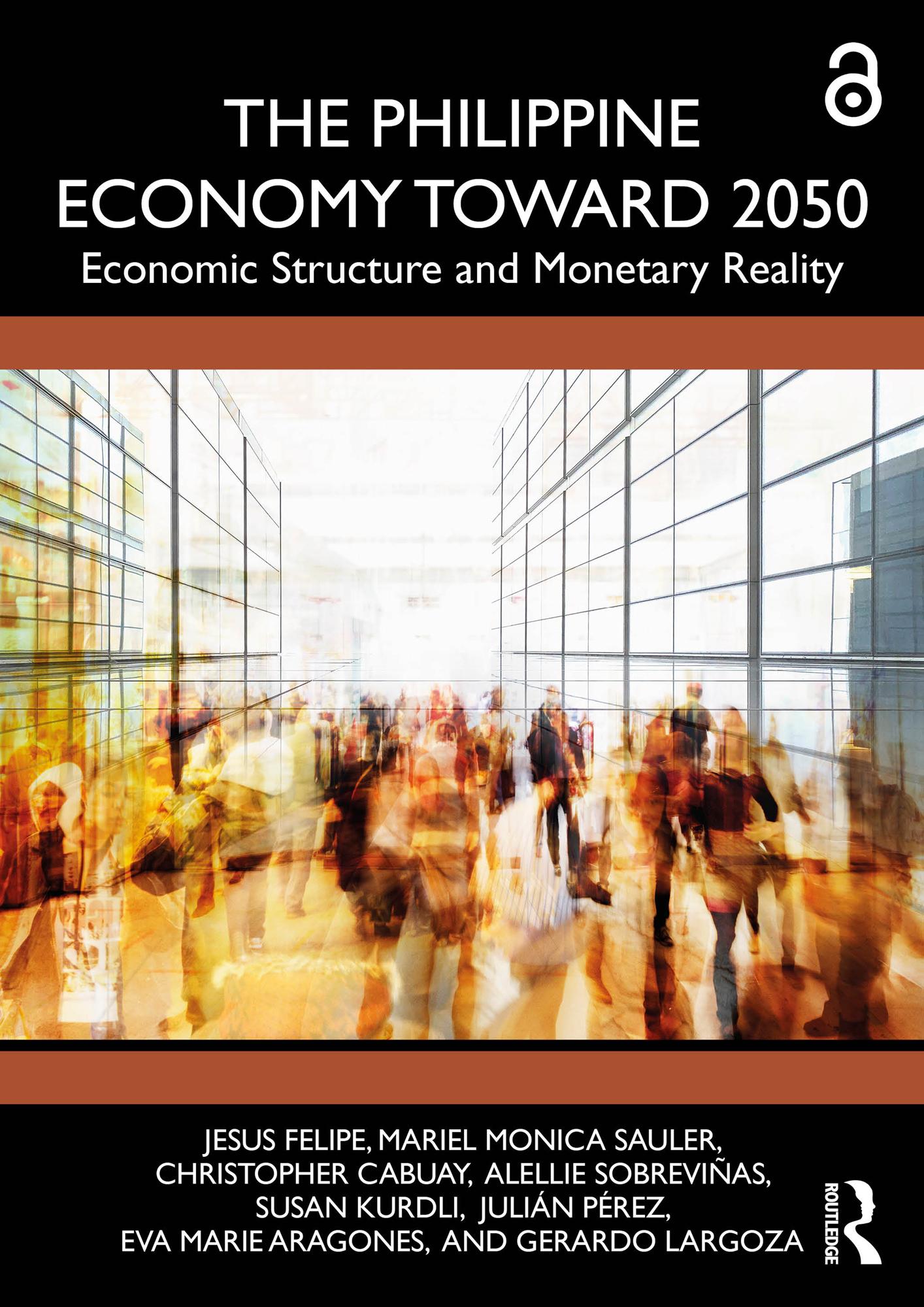
This book provides a rigorous analysis of the factors underlying the Philippines’ relative economic stagnation compared with its Southeast Asian neighbors despite sustained optimistic government rhetoric.
Three critical factors are identified: failure to industrialize and undergo a complete economic transformation, resulting in an underdeveloped agricultural sector and an economy dependent on low-productivity services; ineffective reforms that differ markedly from successful regional models; and self-defeating fiscal conservatism that has prevented adequate investment in essential public goods and industrial policy. Using two innovative economic models—a macro-econometric model and an employment-education forecasting model—the book offers forecasts of the Philippines' income per capita, poverty, or economic structure, through 2050. The researchers warn that unless the country’s economic policy focuses on the transformation of the economy (with emphasis on the modernization of agriculture and the development of the manufacturing sector) and the government adopts a more active role, the Philippines will experience more of the same (MOTS) during the next decades.
An accessible resource for scholars, students, journalists, officials, and business professionals as an introduction to Philippine history, politics, and economy, the book will also be useful for development practitioners with its insights on structural transformation and on fiscal and monetary policy.
Betaal eenvoudig met kaart, Klarna, Apple Pay of Google Pay. Niet tevreden? Je hebt altijd 14 dagen bedenktijd. Lees meer in onze voorwaarden. Heb je vragen, mail ons dan via hello@memmo.org.
Memmo maakt studeren makkelijker – waar je ook bent ter wereld. Wij brengen je cursusboeken en slimme studietools samen op één plek: samenvattingen, quizzen, podcasts en flashcards. En Ted, je studievriend die antwoord geeft op alles wat je je afvraagt. Meer dan 50.000 studenten studeren hier al – gebouwd om je sneller te laten leren en minder stress te geven.