
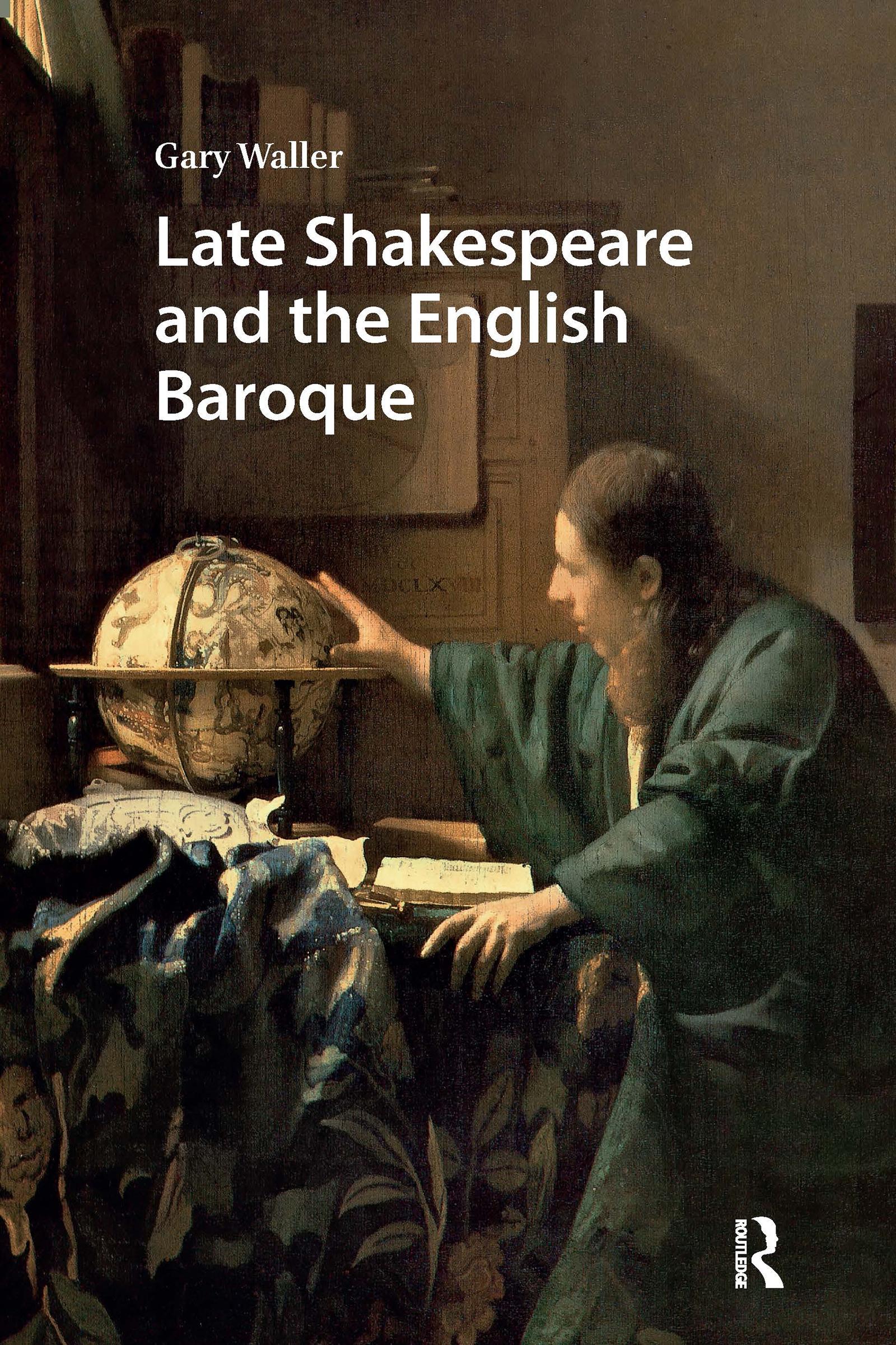
Late Shakespeare and the English Baroque focuses mainly on Shakespeare’s late (or later) works, those written from around 1607. It sets both poetry and plays within the emerging culture of the baroque, the term defined not merely by stylistic features but by the underlying ideological ‘structure of feeling’ of baroque culture in early modern England. The book extends the mode of analysis of The Female Baroque (Amsterdam University Press, 2020) and draws on theoretical work by José Antonio Maravall, Raymond Williams, and Julia Kristeva. It analyzes recurring Baroque characteristics – hyperbole and melancholy, theatricality, gender, and ‘plateauing’. Attention is given to the sonnets and other poems, as well as the tragedies from Hamlet on, and argues that increasingly, tragi-comedy emerges as a distinctively baroque Shakespearean characteristic. In the final chapter, primarily on The Tempest, the late Shakespeare is shown to have philosophical insights parallel to Montaigne or Bruno, and to provide anticipatory connections with later baroque artists like Vermeer.
Betaal eenvoudig met kaart, Klarna, Apple Pay of Google Pay. Niet tevreden? Je hebt altijd 14 dagen bedenktijd. Lees meer in onze voorwaarden. Heb je vragen, mail ons dan via hello@memmo.org.
Memmo maakt studeren makkelijker – waar je ook bent ter wereld. Wij brengen je cursusboeken en slimme studietools samen op één plek: samenvattingen, quizzen, podcasts en flashcards. En Ted, je studievriend die antwoord geeft op alles wat je je afvraagt. Meer dan 50.000 studenten studeren hier al – gebouwd om je sneller te laten leren en minder stress te geven.