
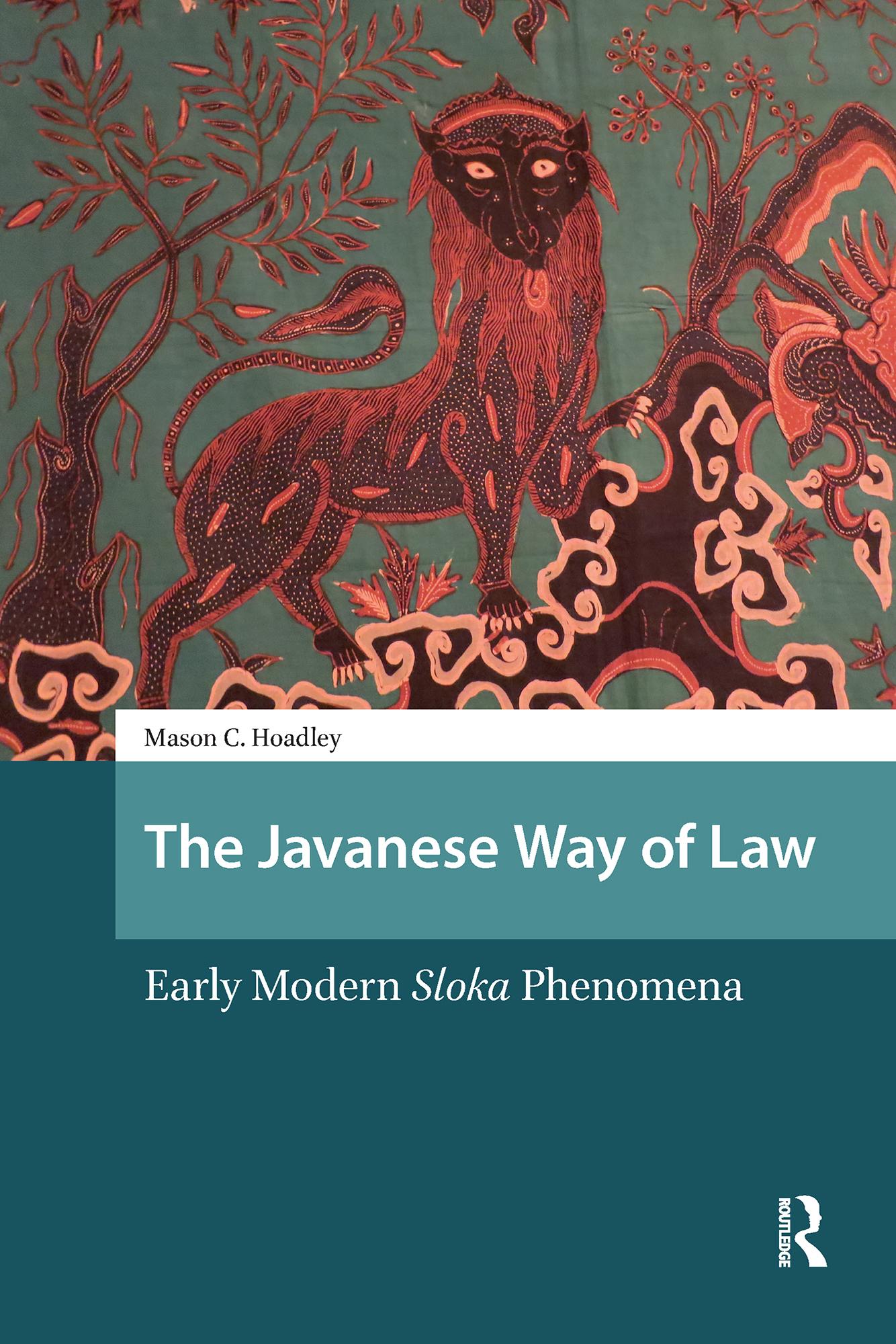
The author's investigation of early-modern Javanese law reveals that judicial authority does not come from the contents of legal titles or juridical texts, but from legal maxims and variations thereof. A century and a half ago Simon Keyzer, a recognized scholar of Javanese law, noted that understanding of that law is dependent upon a grasp of such pithy expressions, which provide the key to the whole body of suits. (Preface, C.F. Winter, Javaansche Zamenspraken, 1858, which examines hundreds of sloka, the majority of which are directed to prevailing legal practice). Drawing upon the contents of 18th century Javanese legal texts, the present work builds upon Keyzer's and Winter's references to 'sloka-phenomena', namely sloka proper (maxims) and its derivatives sinalokan (that made of sloka), aksara here meaning legal principles, and prakara (matter, case). These are usually conveyed in vignettes illustrating their function and as a group, constitute the essence of traditional Javanese written law.
Betaal eenvoudig met kaart, Klarna, Apple Pay of Google Pay. Niet tevreden? Je hebt altijd 14 dagen bedenktijd. Lees meer in onze voorwaarden. Heb je vragen, mail ons dan via hello@memmo.org.
Memmo maakt studeren makkelijker – waar je ook bent ter wereld. Wij brengen je cursusboeken en slimme studietools samen op één plek: samenvattingen, quizzen, podcasts en flashcards. En Ted, je studievriend die antwoord geeft op alles wat je je afvraagt. Meer dan 50.000 studenten studeren hier al – gebouwd om je sneller te laten leren en minder stress te geven.