
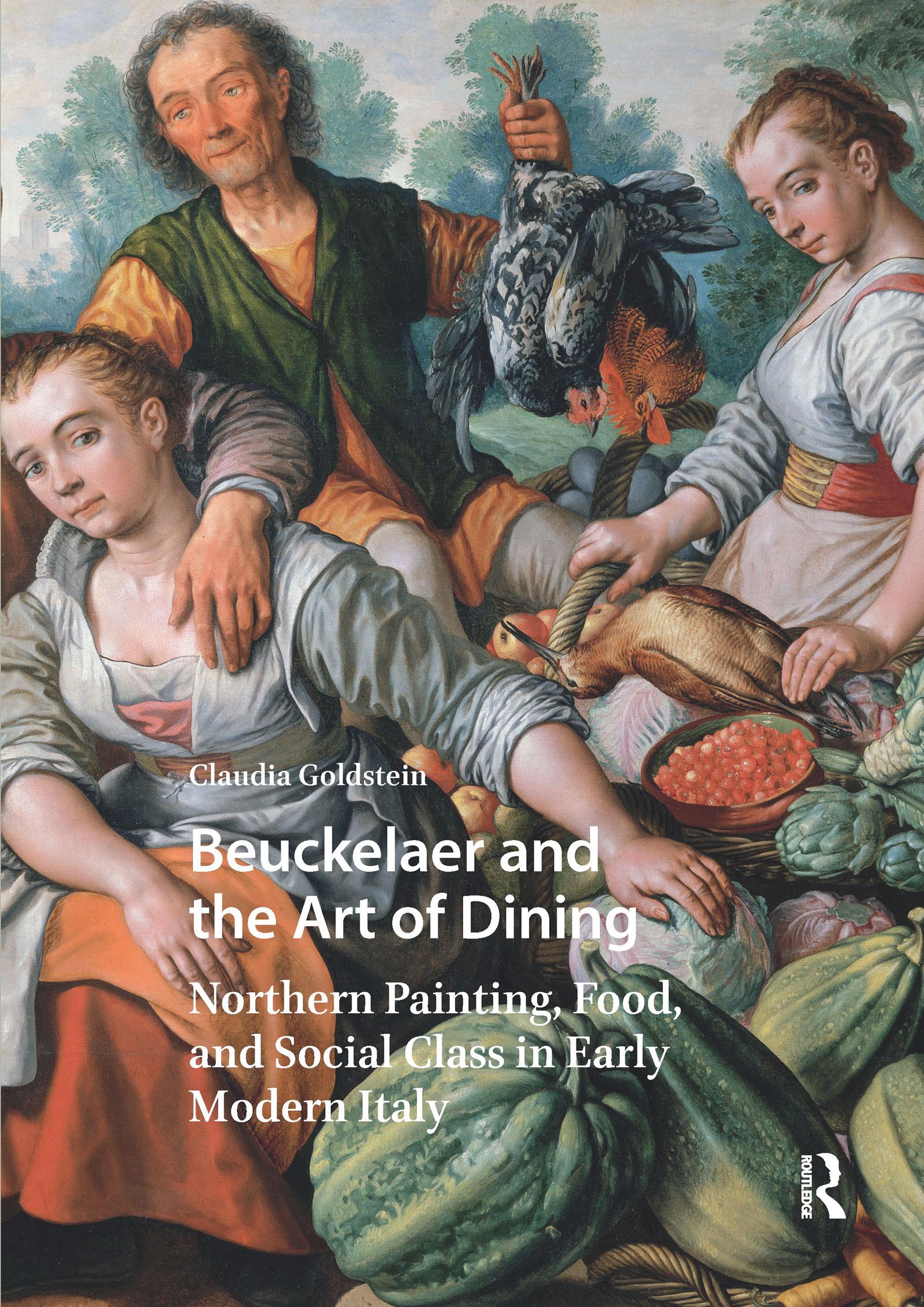
Sixteenth-century Flemish painter Joachim Beuckelaer produced dozens of large-scale paintings of contemporary working women and men selling, presenting, and preparing a visually stunning array of foodstuffs for the viewer. These were new subjects in Antwerp and even newer in Italy, where elite merchants and nobles like Margaret of Parma displayed them as they were meant to be displayed: in dining rooms and spaces used for entertaining. This study explores the cross-cultural meanings of Beuckelaer's distinctly Northern European kitchen and market scenes in the context of North Italian dining and food culture. Examining the functions of Beuckelaer's strange and new subject matter, Goldstein situates his paintings and those of his closest Italian follower, Vincenzo Campi, in the physical space of the dining room, addressing dining practice and the class and gender tensions inherent in a setting that placed both elite and non-elite viewers before life-sized renderings of their employees, and themselves.
Betaal eenvoudig met kaart, Klarna, Apple Pay of Google Pay. Niet tevreden? Je hebt altijd 14 dagen bedenktijd. Lees meer in onze voorwaarden. Heb je vragen, mail ons dan via hello@memmo.org.
Memmo maakt studeren makkelijker – waar je ook bent ter wereld. Wij brengen je cursusboeken en slimme studietools samen op één plek: samenvattingen, quizzen, podcasts en flashcards. En Ted, je studievriend die antwoord geeft op alles wat je je afvraagt. Meer dan 50.000 studenten studeren hier al – gebouwd om je sneller te laten leren en minder stress te geven.
Misschien vind je dit ook leuk
Koop het boek0