
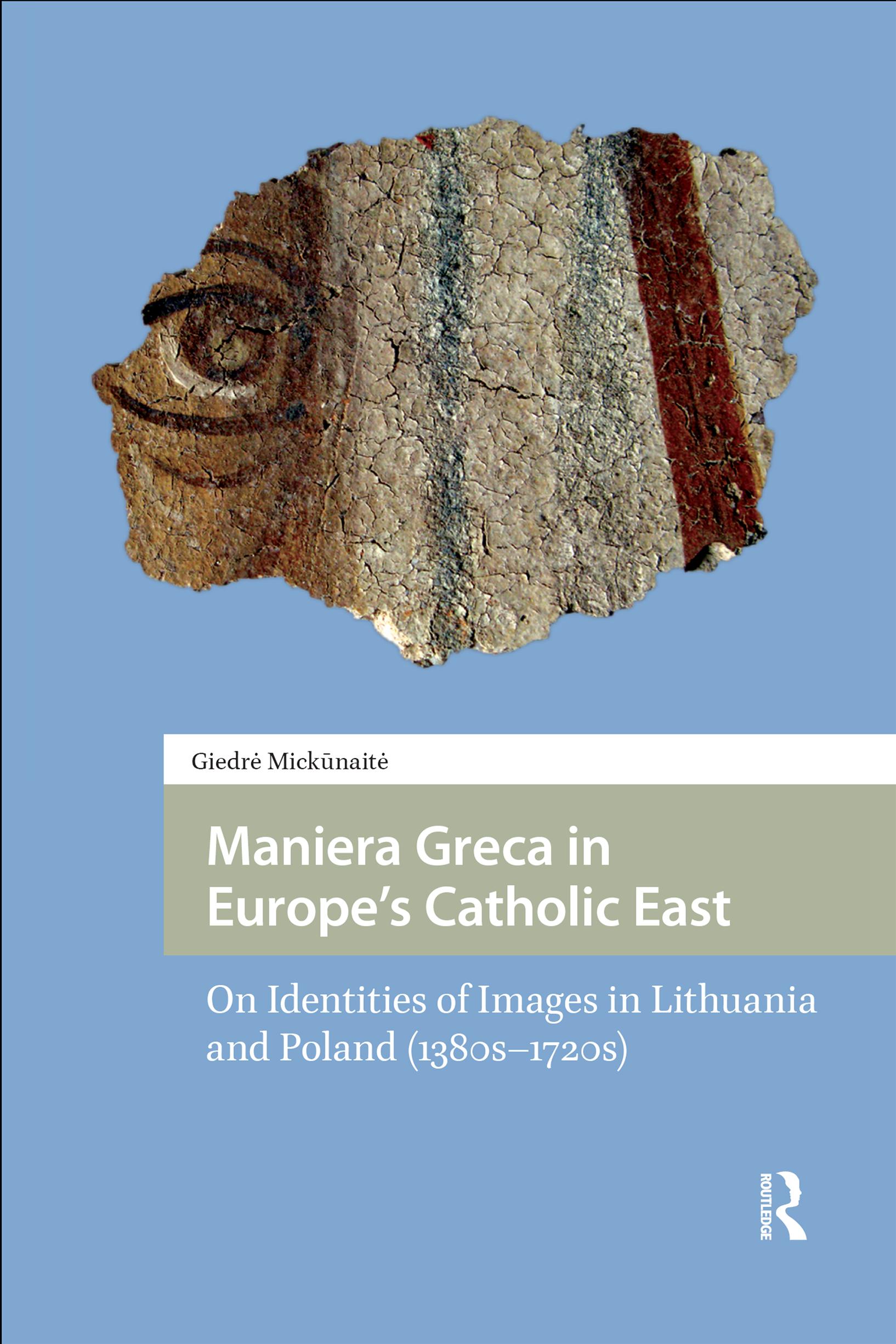
How and why does vernacular art become foreign? What does ‘Greek manner’ mean in regions far beyond the Mediterranean? What stories do images need? How do narratives shape pictures? The study addresses these questions in Byzantine paintings from the former Grand Duchy of Lithuania, contextualized with evidence from Poland, Serbia, Russia, and Italy. The research follows developments in artistic practices and the reception of these images, as well as distinguishing between the Greek manner – based on visual qualities – and the style favoured by the devout, sustained by cults and altered through stories. Following the reception of Byzantine and pseudo-Byzantine art in Lithuania and Poland from the late fourteenth through the early eighteenth centuries, Maniera Greca in Europe’s Catholic Easit argues that tradition is repetitive order achieved through reduction and oblivion, and concludes that the sole persistent understanding of the Greek image has been stereotyped as the icon of the Mother of God.
Betaal eenvoudig met kaart, Klarna, Apple Pay of Google Pay. Niet tevreden? Je hebt altijd 14 dagen bedenktijd. Lees meer in onze voorwaarden. Heb je vragen, mail ons dan via hello@memmo.org.
Memmo maakt studeren makkelijker – waar je ook bent ter wereld. Wij brengen je cursusboeken en slimme studietools samen op één plek: samenvattingen, quizzen, podcasts en flashcards. En Ted, je studievriend die antwoord geeft op alles wat je je afvraagt. Meer dan 50.000 studenten studeren hier al – gebouwd om je sneller te laten leren en minder stress te geven.