
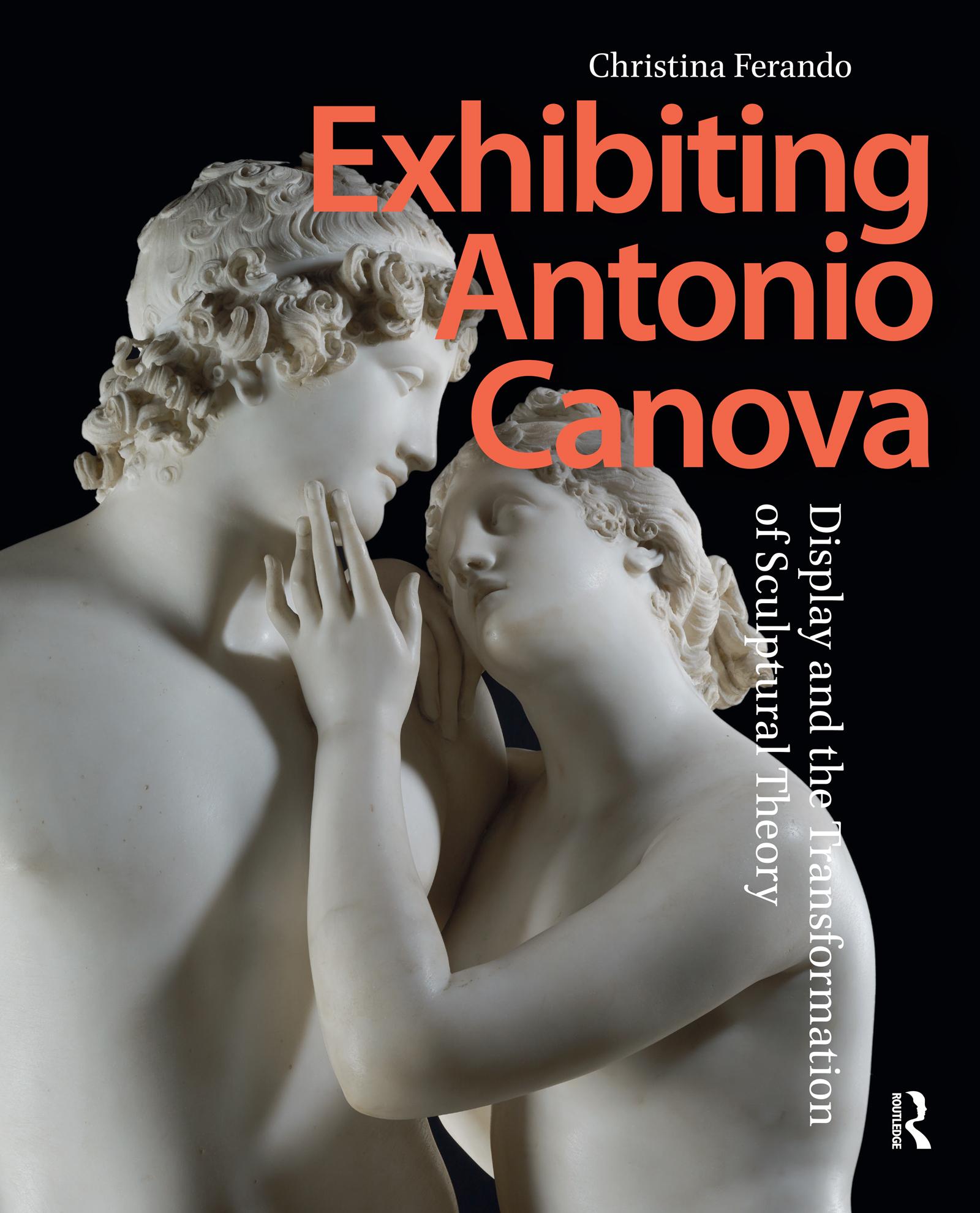
Exhibiting Antonio Canova: Display and the Transformation of Sculptural Theory argues that the display of Canova’s sculptures in the late eighteenth and early nineteenth centuries acted as a catalyst for discourse across a broad range of subjects. By enshrining his marble figures alongside plaster casts of ancient works, bathing them in candlelight, staining and waxing their surfaces, and even setting them in motion on rotating bases, Canova engaged viewers intellectually, physically, and emotionally. These displays inspired discussions on topics as diverse as originality and artistic production, the association between the sculptural surface, flesh, and anatomy, the relationship between painting and sculpture, and the role of public museums. Beholders’ discussions also shaped the legacy of important sculptural theories. They helped usher in their modern definitions and created the lenses through which we experience and interpret works of art, establishing modern attitudes not just towards sculpture, but towards cultural patrimony in general.
Betaal eenvoudig met kaart, Klarna, Apple Pay of Google Pay. Niet tevreden? Je hebt altijd 14 dagen bedenktijd. Lees meer in onze voorwaarden. Heb je vragen, mail ons dan via hello@memmo.org.
Memmo maakt studeren makkelijker – waar je ook bent ter wereld. Wij brengen je cursusboeken en slimme studietools samen op één plek: samenvattingen, quizzen, podcasts en flashcards. En Ted, je studievriend die antwoord geeft op alles wat je je afvraagt. Meer dan 50.000 studenten studeren hier al – gebouwd om je sneller te laten leren en minder stress te geven.