
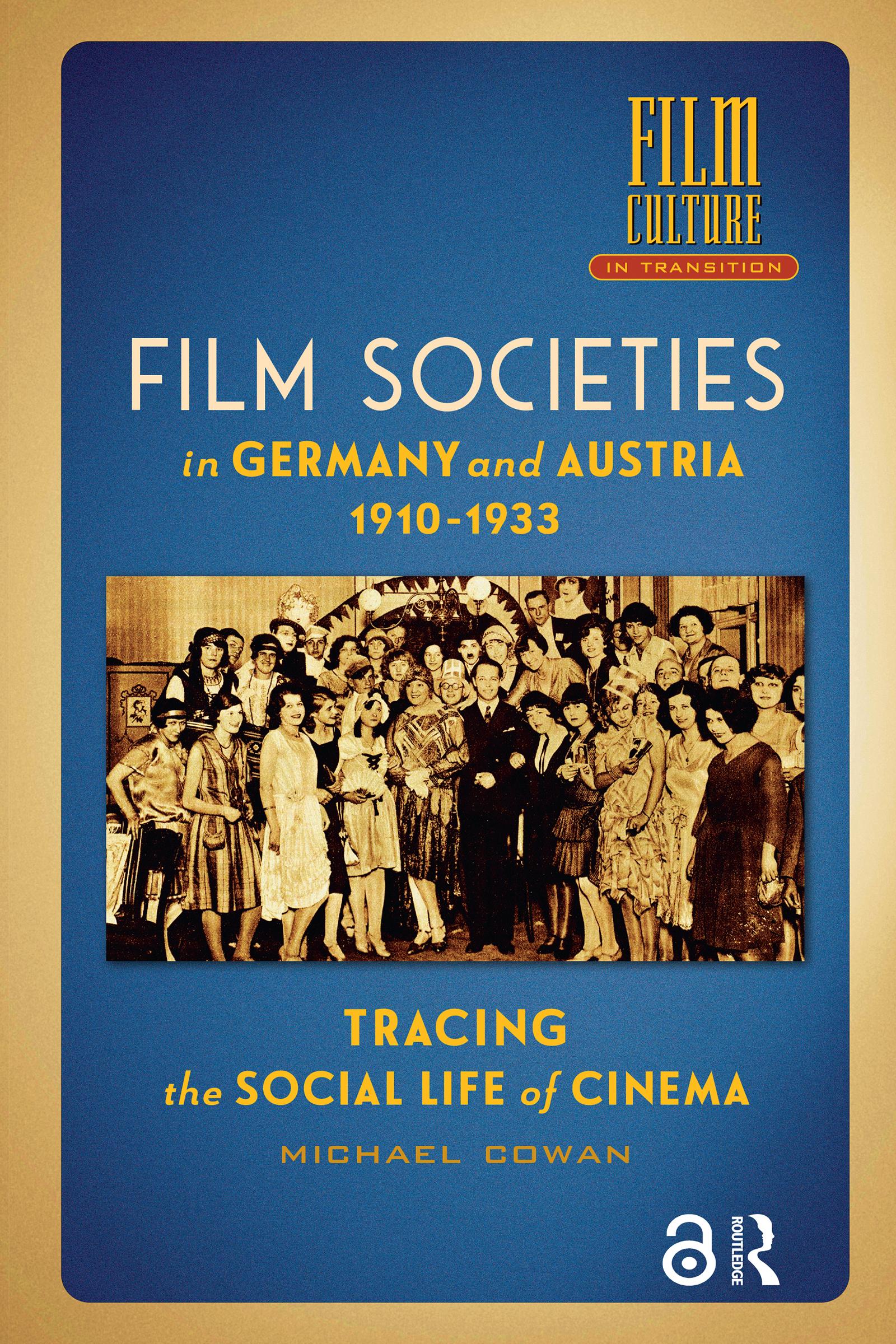
This study traces the evolution of early film societies in Germany and Austria, from the emergence of mass movie theaters in the 1910s to the turbulent years of the late Weimar Republic. Examining a diverse array of groups, it approaches film societies as formations designed to assimilate and influence a new medium: a project emerging from the world of amateur science before taking new directions into industry, art and politics. Through an interdisciplinary approach—in dialogue with social history, print history and media archaeology—it also transforms our theoretical understanding of what a film society was and how it operated. Far from representing a mere collection of pre-formed cinephiles, film societies were, according to the book’s central argument, productive social formations, which taught people how to nurture their passion for the movies, how to engage with cinema, and how to interact with each other. Ultimately, the study argues that examining film societies can help to reveal the diffuse agency by which generative ideas of cinema take shape.
Betaal eenvoudig met kaart, Klarna, Apple Pay of Google Pay. Niet tevreden? Je hebt altijd 14 dagen bedenktijd. Lees meer in onze voorwaarden. Heb je vragen, mail ons dan via hello@memmo.org.
Memmo maakt studeren makkelijker – waar je ook bent ter wereld. Wij brengen je cursusboeken en slimme studietools samen op één plek: samenvattingen, quizzen, podcasts en flashcards. En Ted, je studievriend die antwoord geeft op alles wat je je afvraagt. Meer dan 50.000 studenten studeren hier al – gebouwd om je sneller te laten leren en minder stress te geven.