
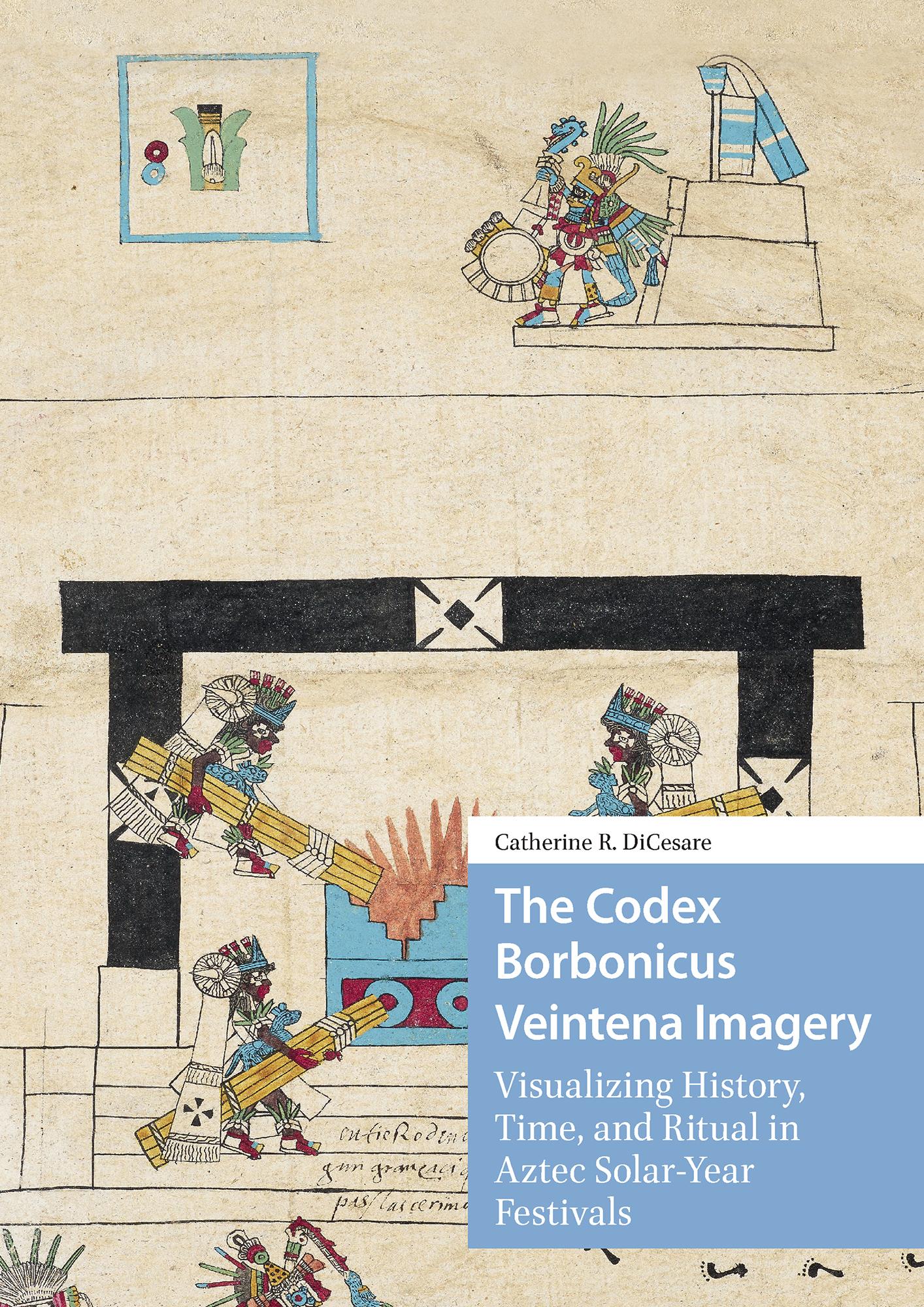
The sixteenth-century pictorial manuscript known as the Codex Borbonicus contains a remarkable record of the eighteen Mexica (or “Aztec”) festival periods of twenty days, known as veintenas, celebrated during the 365-day solar year. Because its indigenous artists framed the Borbonicus veintenas with historical year dates, this volume situates the annually recurring rituals within the march of linear, reckoned time, in the singular year “2 Reed” (1507), during the reign of Moteuczoma II. DiCesare attends to the historical dimensions of several unusual scenes, proposing that the veintenas probably varied significantly from year to year in response to historical concerns. She considers particularly whether the Borbonicus veintenas document the confluence of solar year ceremonies with a second set of ritual feast days, governed by the 260-day cycle known as the tonalpohualli, or “count of days.” In this way, DiCesare analyzes how linear and cyclical conceptions of time intersected in Mexica ritual performance.
Betaal eenvoudig met kaart, Klarna, Apple Pay of Google Pay. Niet tevreden? Je hebt altijd 14 dagen bedenktijd. Lees meer in onze voorwaarden. Heb je vragen, mail ons dan via hello@memmo.org.
Memmo maakt studeren makkelijker – waar je ook bent ter wereld. Wij brengen je cursusboeken en slimme studietools samen op één plek: samenvattingen, quizzen, podcasts en flashcards. En Ted, je studievriend die antwoord geeft op alles wat je je afvraagt. Meer dan 50.000 studenten studeren hier al – gebouwd om je sneller te laten leren en minder stress te geven.
Misschien vind je dit ook leuk
Koop het boek0