
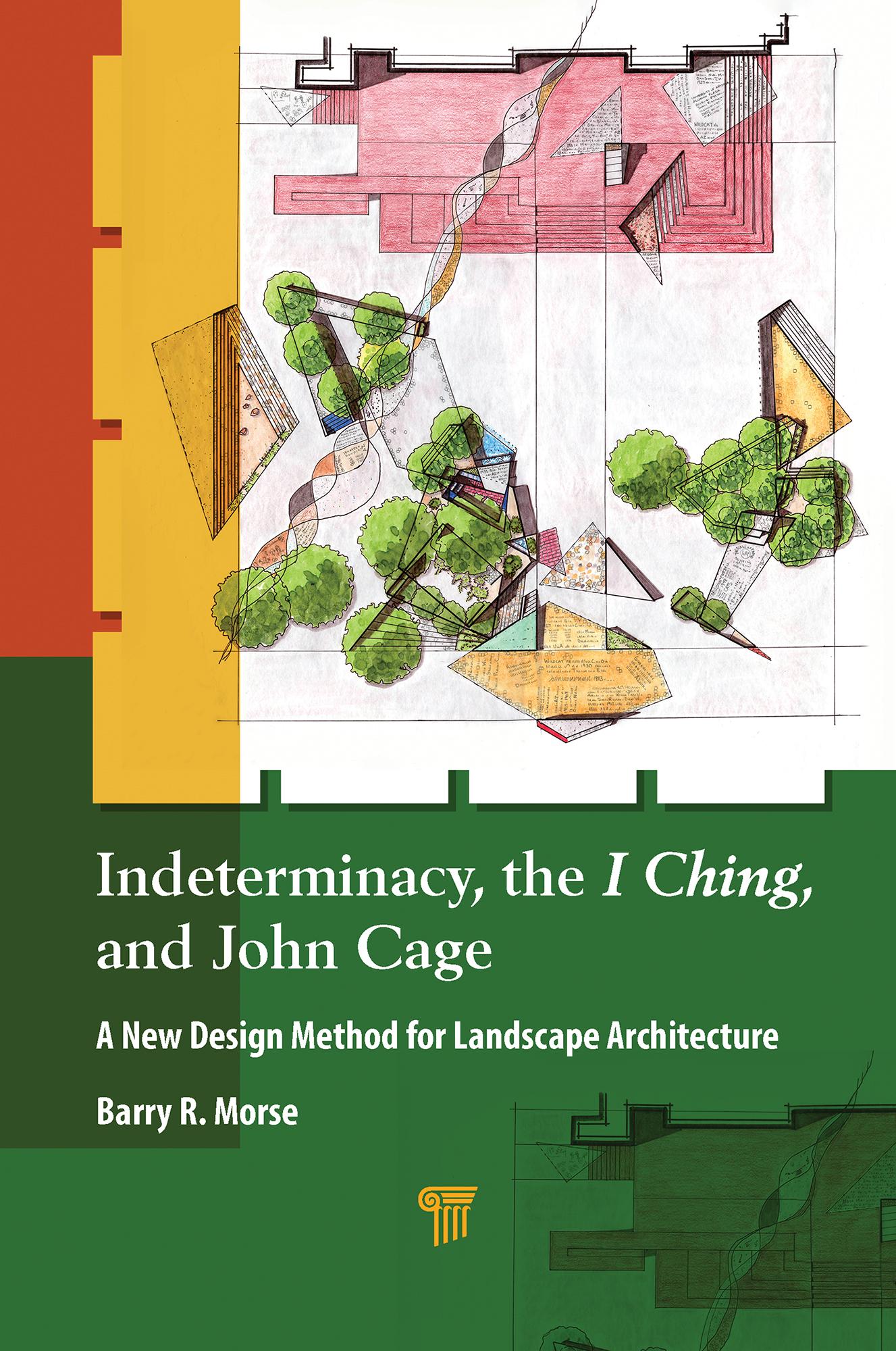
The creative use of indeterminacy, that is, “chance,” is an often-overlooked design opportunity despite the universality of chance in art, nature, science, and life. How can “chance,” a seemingly capricious phenomenon, be made to work for someone? One controlled use of chance is through the Chinese I Ching “chance operations” method of composer and artist John Cage (1912–1992). This book addresses the questions of how one might approach using this method in landscape architectural design, what the outcome of such an indeterminate design would be, and whether or not it could lead to a viable constructed landscape.
In addition, this book answers the question: What is the relationship between the I Ching, John Cage, and the constructed landscape anyway? The final product of the exploration of this method is a new hypothetical redesign of an existing plaza using Cage’s techniques and a comparative evaluation of the new indeterminate concept and the two pre-existing designs, using the original program objectives as a guide against which the three designs can be judged for effectiveness.
Betaal eenvoudig met kaart, Klarna, Apple Pay of Google Pay. Niet tevreden? Je hebt altijd 14 dagen bedenktijd. Lees meer in onze voorwaarden. Heb je vragen, mail ons dan via hello@memmo.org.
Memmo maakt studeren makkelijker – waar je ook bent ter wereld. Wij brengen je cursusboeken en slimme studietools samen op één plek: samenvattingen, quizzen, podcasts en flashcards. En Ted, je studievriend die antwoord geeft op alles wat je je afvraagt. Meer dan 50.000 studenten studeren hier al – gebouwd om je sneller te laten leren en minder stress te geven.