
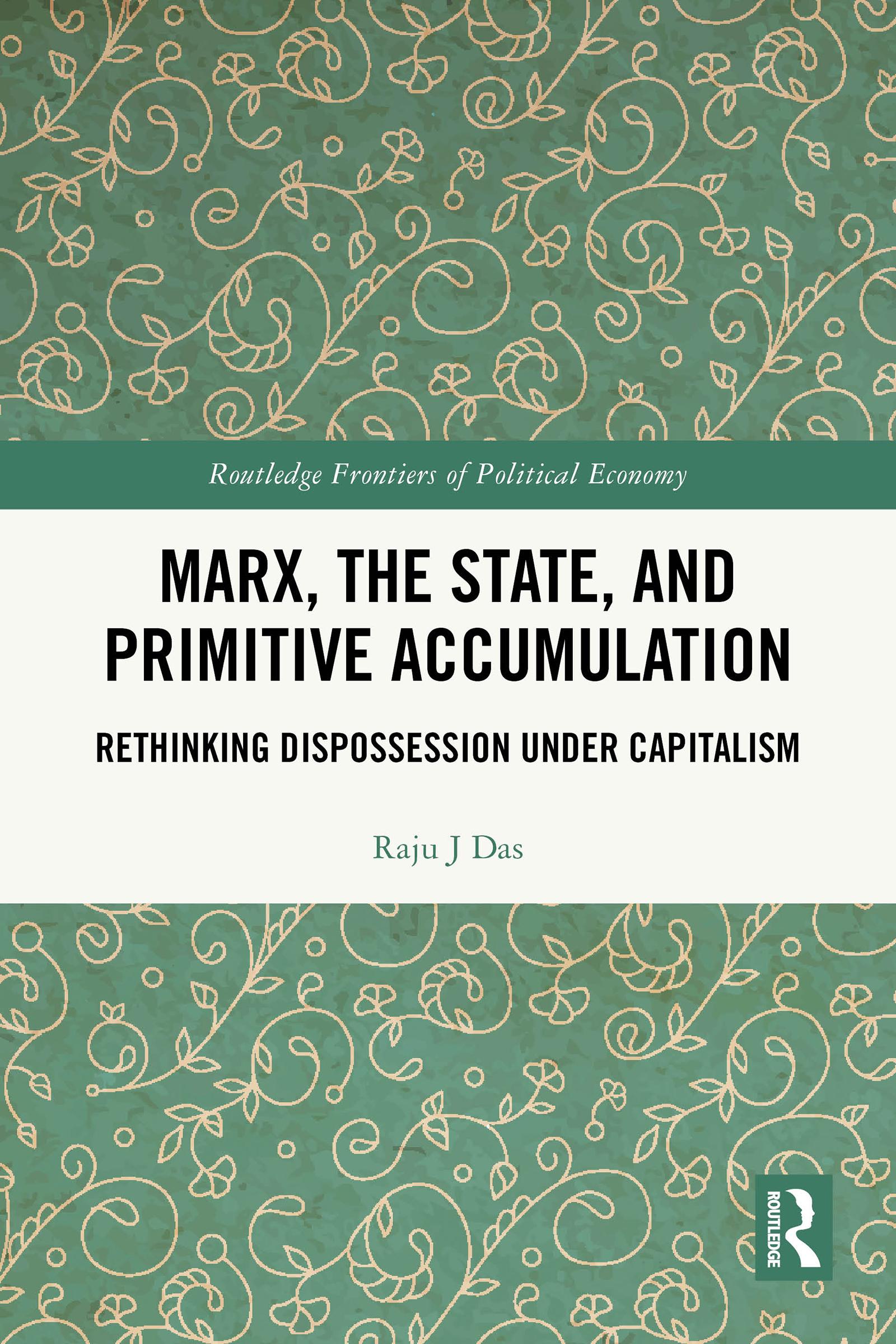
Critically engaging with contributions from both the Global North and the Global South, this book offers a systematic rethinking of Marx’s concept of primitive accumulation and its relevance to contemporary capitalism. The book argues that recent attempts to reinterpret dispossession often suffer from conceptual overstretch and a neglect of production and class relations.
The book’s focus is the concept of expanded primitive accumulation: an ongoing, state-mediated process of extra-economic coercion under capitalism that separates producers from privately owned, communal, and state-owned means of production and subsistence. This concept is situated within a broader framework that distinguishes and relates primitive accumulation, labor exploitation, normal capitalist exchange relations, and class differentiation within the totality of capitalist social relations. The analysis foregrounds the capitalist state as both enforcer and manager of dispossession and shows that such processes are shaped by class struggle and require ideological legitimation.
Combining theoretical reconstruction with empirical analysis, including a case study from Odisha, India, the book develops the political implications of dispossession, emphasizing the need for working-class leadership in struggles against capitalism. It will be of interest to scholars and students across the social sciences, as well as to readers concerned with Marxist political and economic thought, capitalism, dispossession, and the state.
Betaal eenvoudig met kaart, Klarna, Apple Pay of Google Pay. Niet tevreden? Je hebt altijd 14 dagen bedenktijd. Lees meer in onze voorwaarden. Heb je vragen, mail ons dan via hello@memmo.org.
Memmo maakt studeren makkelijker – waar je ook bent ter wereld. Wij brengen je cursusboeken en slimme studietools samen op één plek: samenvattingen, quizzen, podcasts en flashcards. En Ted, je studievriend die antwoord geeft op alles wat je je afvraagt. Meer dan 50.000 studenten studeren hier al – gebouwd om je sneller te laten leren en minder stress te geven.