
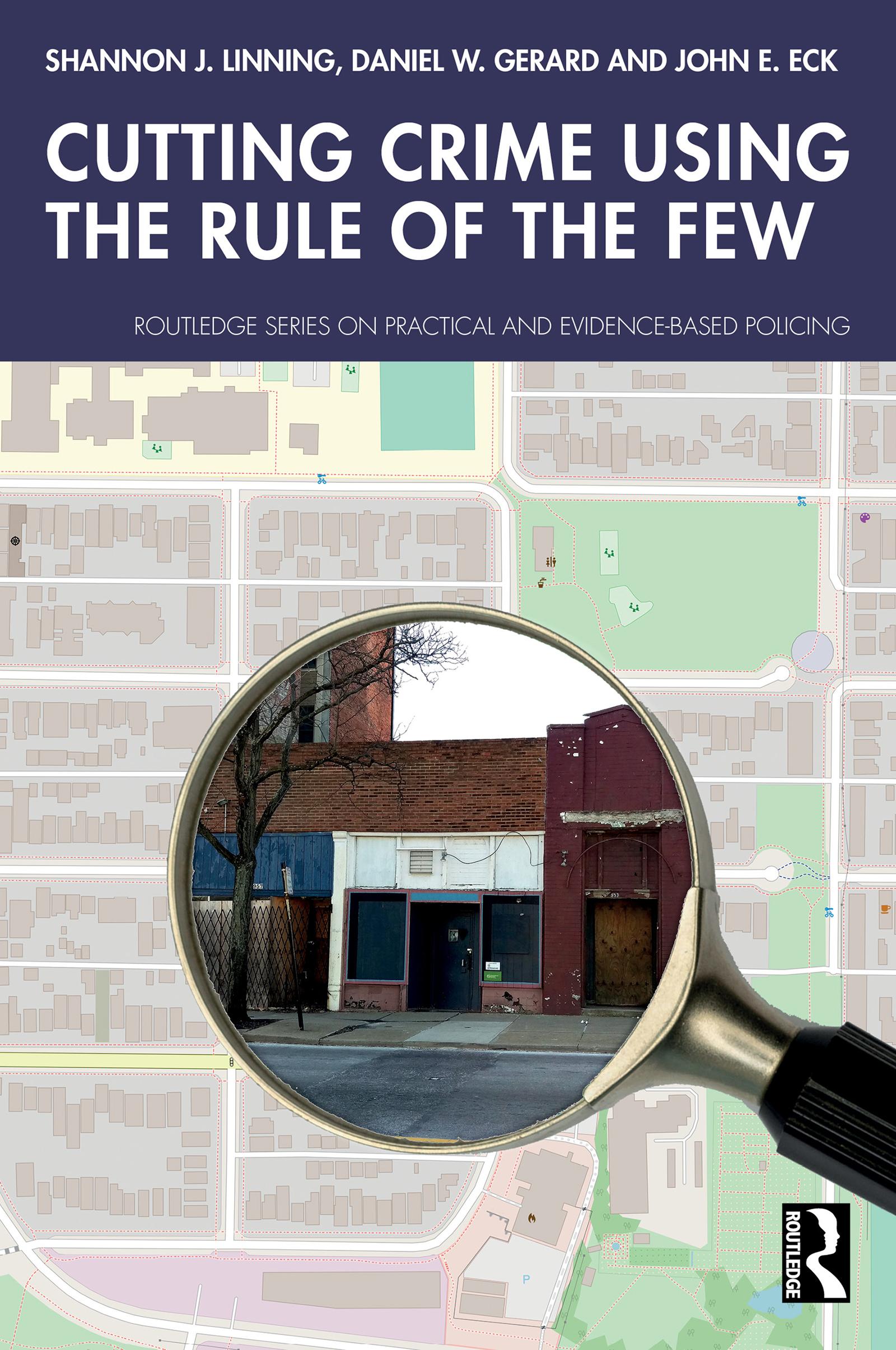
Based on decades of research, this book reveals how the rule of the few can redirect your focus to create effective crime control policies. Many crime reduction strategies fail because they apply common crime fallacies. They assume that: solutions to crime need to be complicated, crime is widespread, residents matter the most, more arrests reduce crime, and police can solve all crime problems. At the heart of each fallacy is a failure to consider an old idea: the rule of the few. The rule of the few means a tiny fraction of inputs cause most of the outcomes. Research shows that solving problems at smaller scales can cut crime substantially, crime is highly concentrated at a few places in any city, only a few residents can usually effect change, only a few people commit most of the crime, and a few everyday people can dismantle crime opportunities.
Cutting Crime Using the Rule of the Few shows that crime is not merely a police problem. It explains how those who own or manage property and design the products we use have far more power to suppress crime opportunities than they realize. Cutting Crime reveals how to use the rule of the few to identify and solve crime problems. It provides a set of tools and spells out specific strategies that the police, property owners, business owners, and government agencies can use to reduce crime. Just as it only takes a few to create a lot of crime, it only takes a few to prevent those crimes.
Betaal eenvoudig met kaart, Klarna, Apple Pay of Google Pay. Niet tevreden? Je hebt altijd 14 dagen bedenktijd. Lees meer in onze voorwaarden. Heb je vragen, mail ons dan via hello@memmo.org.
Memmo maakt studeren makkelijker – waar je ook bent ter wereld. Wij brengen je cursusboeken en slimme studietools samen op één plek: samenvattingen, quizzen, podcasts en flashcards. En Ted, je studievriend die antwoord geeft op alles wat je je afvraagt. Meer dan 50.000 studenten studeren hier al – gebouwd om je sneller te laten leren en minder stress te geven.