
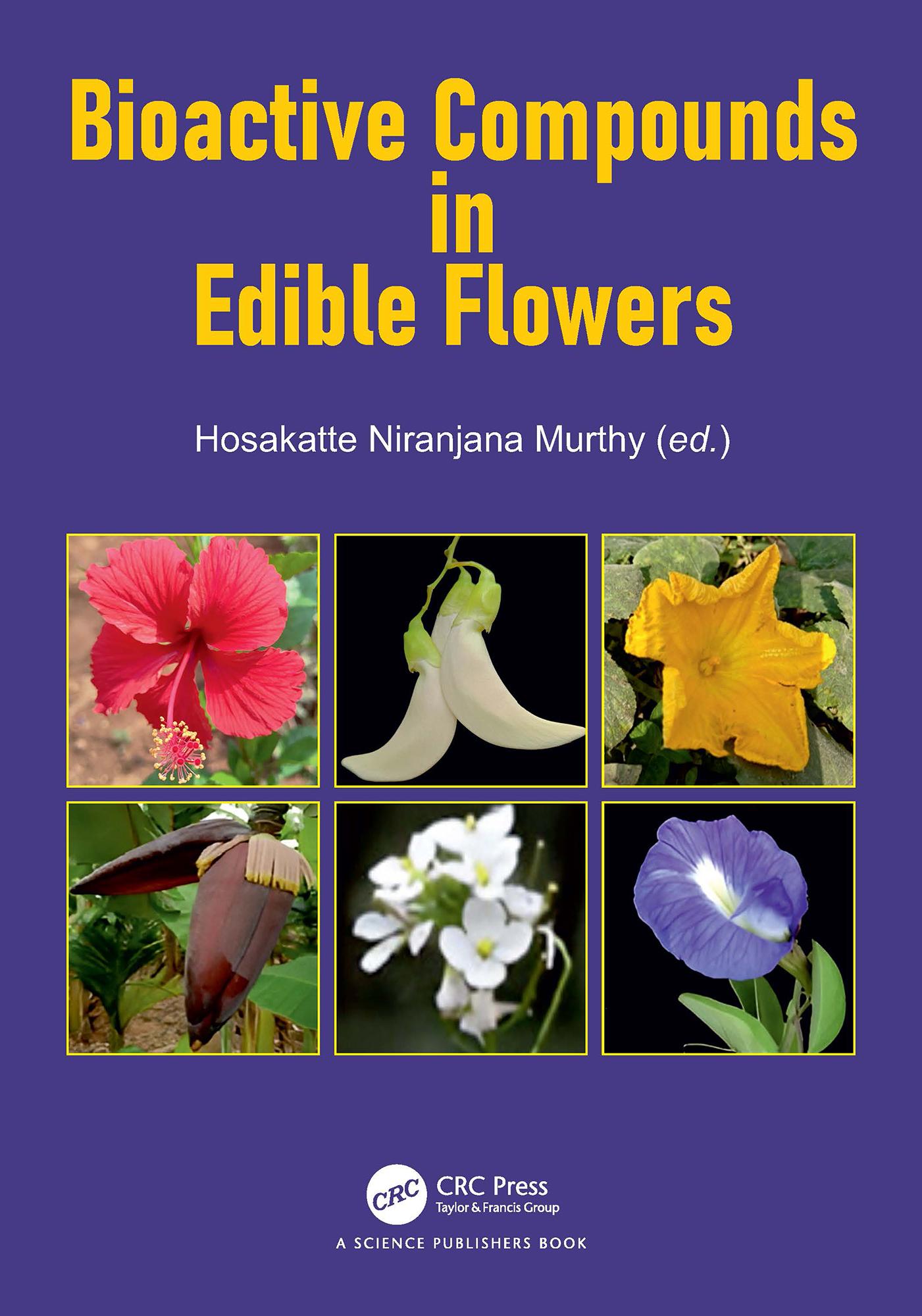
Many societies have found various utilities of edible flowers. They give a more ornamental look, enhances the taste, and also enhances its nutritional value. Numerous studies conducted recently have shown that edible flowers are also rich in nutrients such as carbohydrates, proteins, fats, fibre, vitamins, minerals. These flowers also contain a variety of phytochemicals, including phenolics, flavonoids, carotenoids, terpenoids, alkaloids, and other compounds that have been shown to increase biological activities, such as antioxidant, antimicrobial and antidiabetic, anticancer, cardioprotective, hepatoprotective, and neuroprotective qualities. Edible flowers have now found their way into a number of industries, including as cosmeceuticals, functional foods, and nutraceuticals.
The book provides information on the nutritional value, phytochemical makeup, and bioactivity of both wild and cultivated flowers. It also describes edible flowers in depth to make them better-known to consumers and the food business. Each chapter discusses the possible toxicological effects of floral components.
Betaal eenvoudig met kaart, Klarna, Apple Pay of Google Pay. Niet tevreden? Je hebt altijd 14 dagen bedenktijd. Lees meer in onze voorwaarden. Heb je vragen, mail ons dan via hello@memmo.org.
Memmo maakt studeren makkelijker – waar je ook bent ter wereld. Wij brengen je cursusboeken en slimme studietools samen op één plek: samenvattingen, quizzen, podcasts en flashcards. En Ted, je studievriend die antwoord geeft op alles wat je je afvraagt. Meer dan 50.000 studenten studeren hier al – gebouwd om je sneller te laten leren en minder stress te geven.