
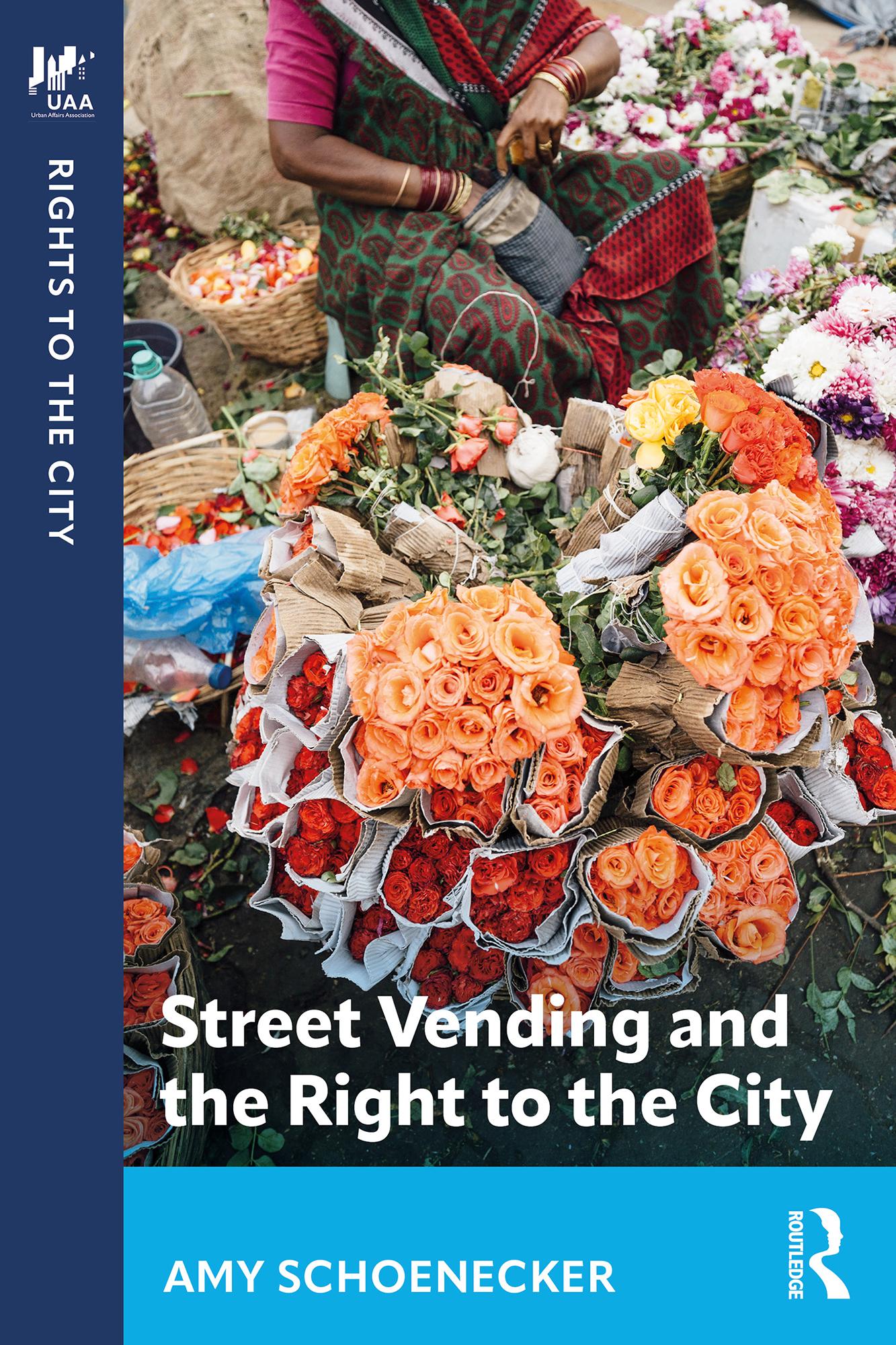
Street vendors often face disproportionate state violence not simply for their use of public space, but because of who they are as users of public space. Through a multicity comparison, Street Vending and the Right to the City demonstrates how vendors blur the lines of in/formality through their resistance tactics, and fight for their rights to the city not only as economic agents, but as residents seeking urban belonging. Given the state violence that people living and working informally face, claiming the right to exist in urban space is indeed a radical act. Cities and states, from New York City to Uruguay, have begun to formalize street vending, with many advocates arguing for this approach, but this book highlights why formalization is not a cure. With international examples and an in-depth case study featuring a comparison of Chicago and Mumbai, the chapters explore how urban informalities are produced and offer perspectives on roadblocks and pathways to gaining legitimacy. This book is essential for academics and students in urban planning, urban studies, anthropology, sociology, urban design, geography, and political science, as well as practitioners and policymakers.
Betaal eenvoudig met kaart, Klarna, Apple Pay of Google Pay. Niet tevreden? Je hebt altijd 14 dagen bedenktijd. Lees meer in onze voorwaarden. Heb je vragen, mail ons dan via hello@memmo.org.
Memmo maakt studeren makkelijker – waar je ook bent ter wereld. Wij brengen je cursusboeken en slimme studietools samen op één plek: samenvattingen, quizzen, podcasts en flashcards. En Ted, je studievriend die antwoord geeft op alles wat je je afvraagt. Meer dan 50.000 studenten studeren hier al – gebouwd om je sneller te laten leren en minder stress te geven.