
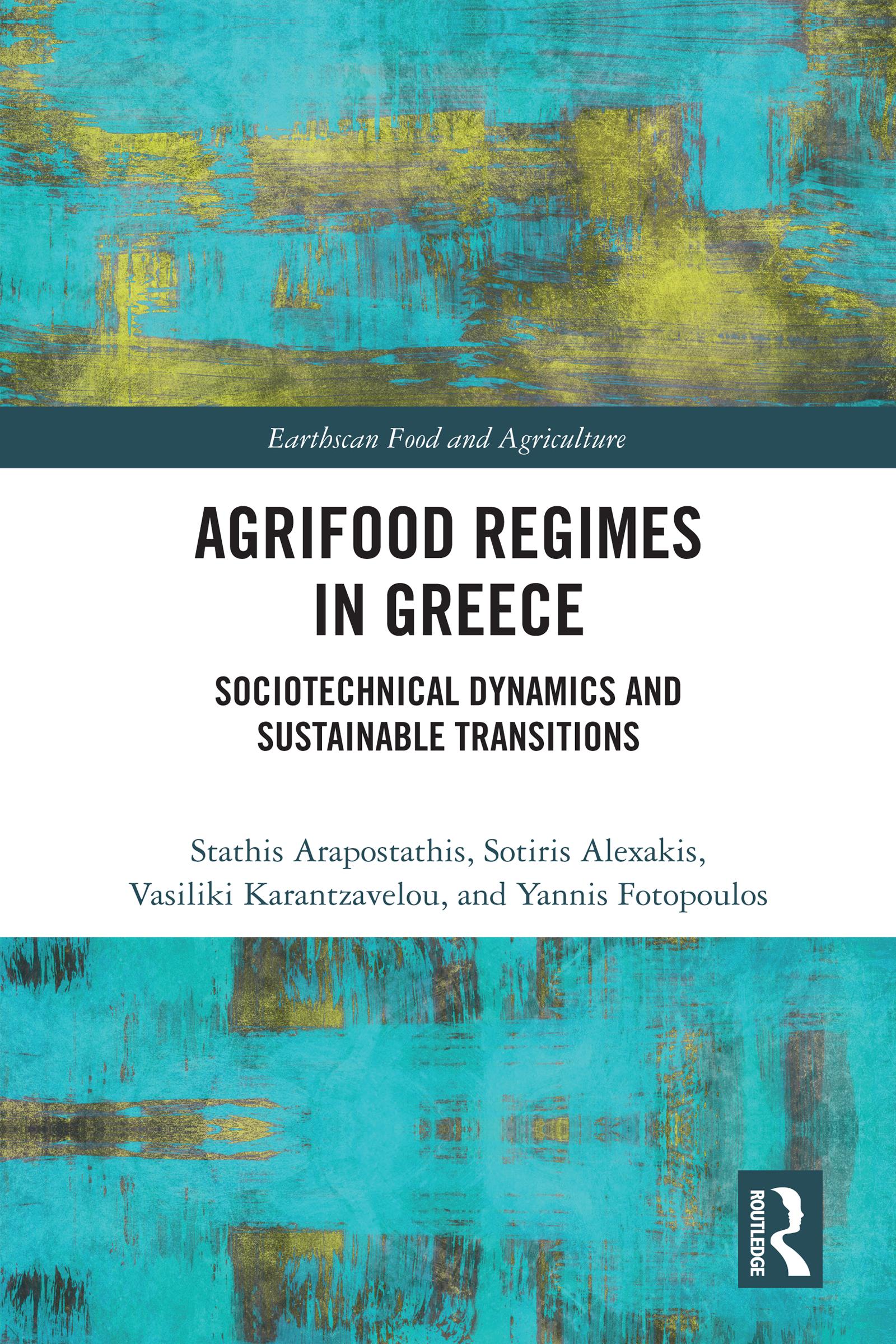
This book examines the history and sociotechnical transformations of agrifood regimes in contemporary Greece.
It presents a historical sociology of the Greek agrifood sector to decipher dependencies, sociotechnical dynamics, and paths that illuminate current challenges. It argues that no national sustainability policy can meet EU and UN targets without examining the historical construction of the agrifood system and its lock-ins. By analyzing key products—wheat, tomato, olive oil, pork, chicken, and fish—it captures production regime specificities while explaining the sector’s transition toward sustainability. The book describes structural transformations and the adaptation of European policies in Greece, emphasizing hurdles and resistance to alignment with EU objectives. Its longitudinal approach provides a deep understanding of sociomaterial and sociotechnical systems. At the same time it contributes a new innovative understanding of the sociotechnical imaginary of productivism in the agrifood sector. Situating Greek cases within broader European transitions, it highlights the contingencies and dynamics shaping the country’s path toward sustainable agrifood governance.
This book will be of great interest to students and scholars of food and agriculture, sustainability, science and technology studies, and European politics and policy.
Betaal eenvoudig met kaart, Klarna, Apple Pay of Google Pay. Niet tevreden? Je hebt altijd 14 dagen bedenktijd. Lees meer in onze voorwaarden. Heb je vragen, mail ons dan via hello@memmo.org.
Memmo maakt studeren makkelijker – waar je ook bent ter wereld. Wij brengen je cursusboeken en slimme studietools samen op één plek: samenvattingen, quizzen, podcasts en flashcards. En Ted, je studievriend die antwoord geeft op alles wat je je afvraagt. Meer dan 50.000 studenten studeren hier al – gebouwd om je sneller te laten leren en minder stress te geven.