
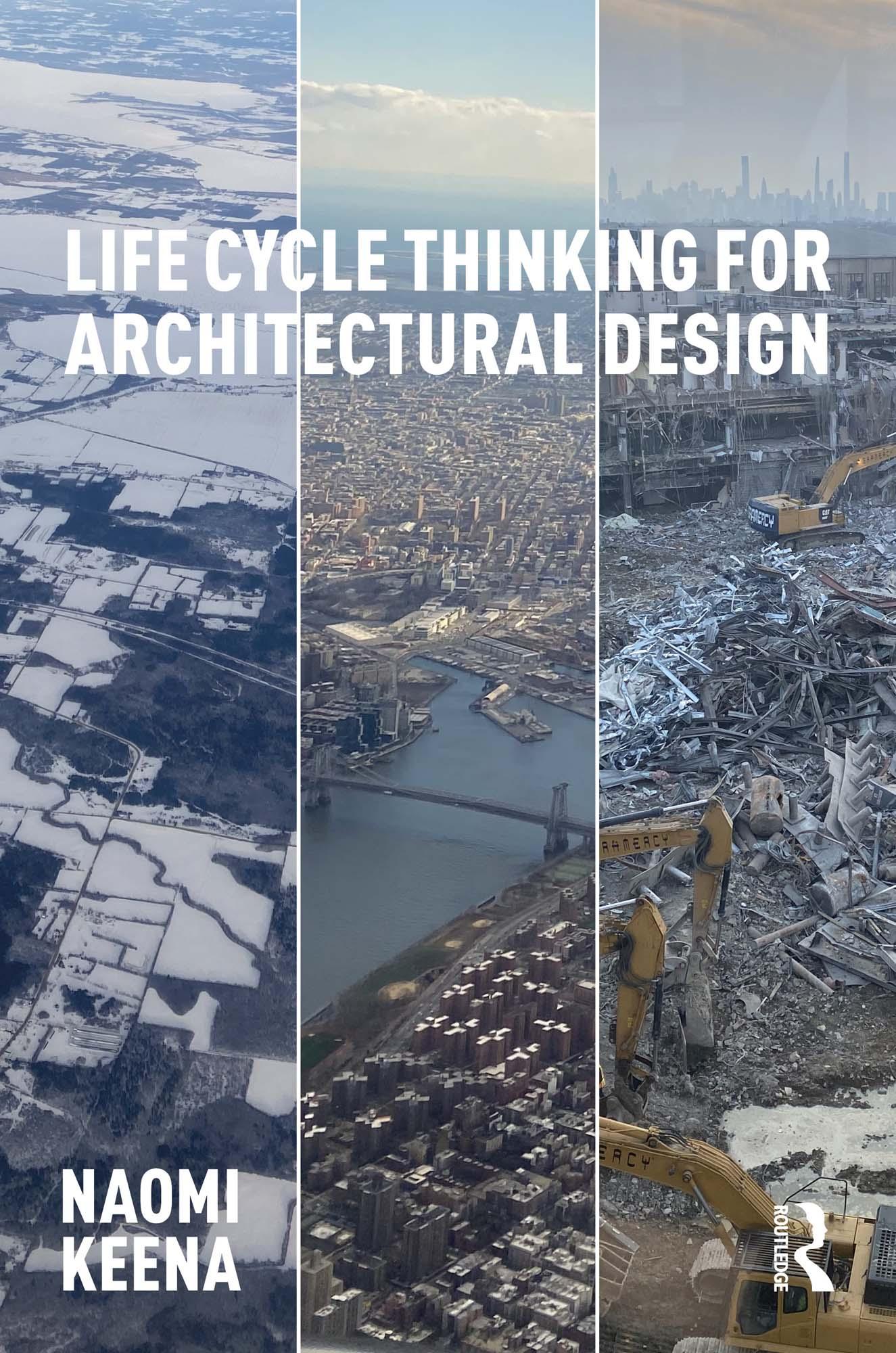
This book provides an accessible and holistic understanding of life cycle assessment, allowing readers to build life cycle thinking into their design process.
Life cycle analysis is becoming more commonplace in architectural discourse to understand embodied carbon in buildings. However, life cycle cost analysis and social life cycle analysis are often not considered. By combining these methods of analyses, a clear understanding of the environmental, economic, and social aspects of the entire life cycle of a building and its design emerges. Drawing from seminal texts as well as contemporary thinking on systems theory, urban systems, and ecological analyses, this book frames architectural design processes within the socio-ecological context of 21st-century challenges. It also highlights the role data visualization and data storytelling play in capturing the memory or embodied aspects of a building's life cycle. This is critical for evidence-based decision-making during the design process as well as documenting the temporal scale of a building to allow for future use architecture. Finally, a case study comparing the life cycle of Grand Central Terminal and Pennsylvania Station in New York highlights the environmental, economic, and social costs borne by the demolition and rebuild of Penn Station, and provides a demonstration of how the theory works in practice.
This will be an essential resource for all architects and designers at the beginning of their careers.
Betaal eenvoudig met kaart, Klarna, Apple Pay of Google Pay. Niet tevreden? Je hebt altijd 14 dagen bedenktijd. Lees meer in onze voorwaarden. Heb je vragen, mail ons dan via hello@memmo.org.
Memmo maakt studeren makkelijker – waar je ook bent ter wereld. Wij brengen je cursusboeken en slimme studietools samen op één plek: samenvattingen, quizzen, podcasts en flashcards. En Ted, je studievriend die antwoord geeft op alles wat je je afvraagt. Meer dan 50.000 studenten studeren hier al – gebouwd om je sneller te laten leren en minder stress te geven.