
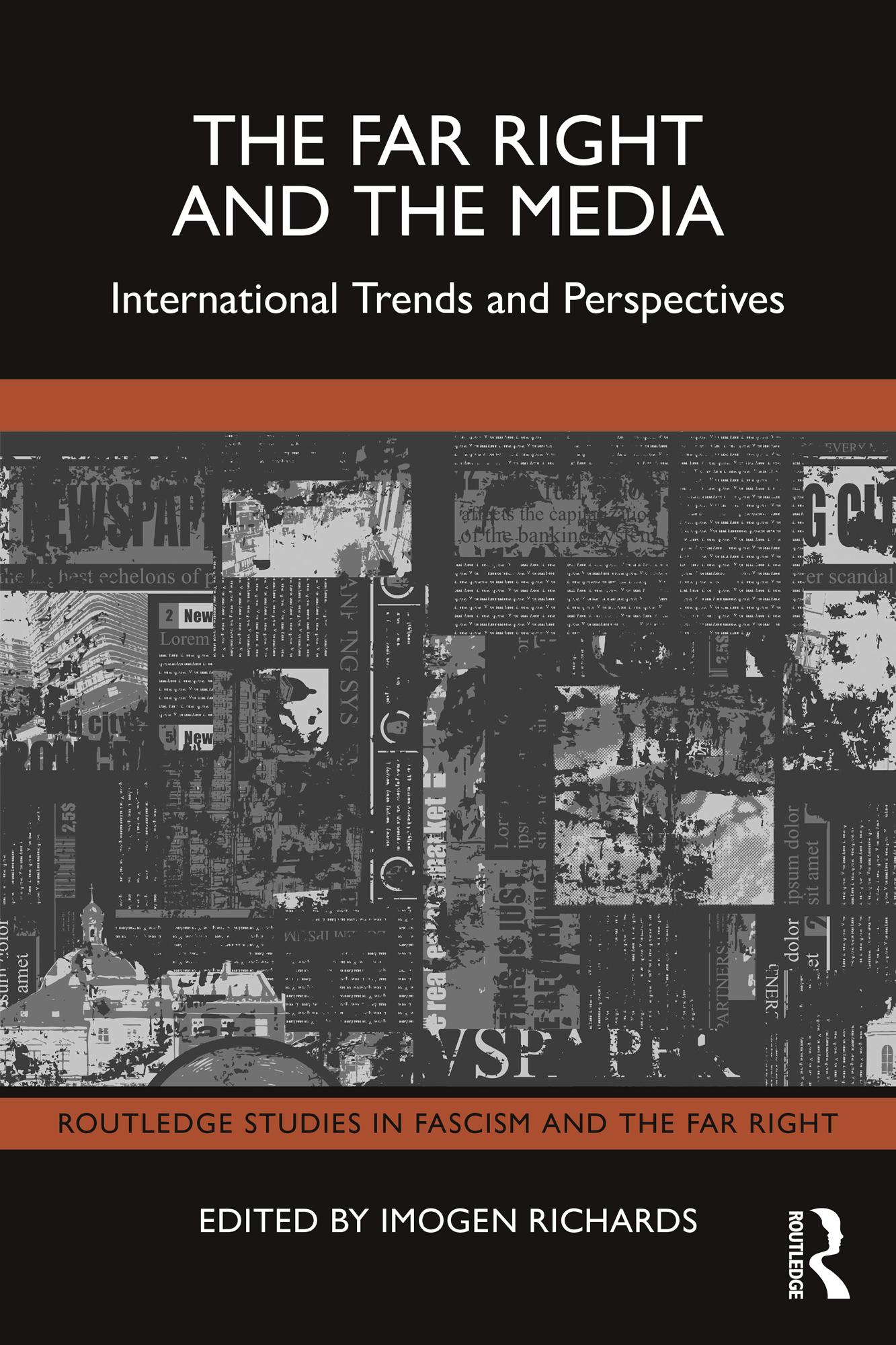
This book examines how far-right politics and news media shape one another, exposing, contesting, and at times inadvertently legitimising white supremacist, violent misogynist, and other far-right ideas. It situates these dynamics within the economic and structural transformations associated with the neoliberal restructuring of media industries, demonstrating how commercial imperatives, audience capture, and shifts in journalistic practice intersect with deeper histories of inequality, coloniality, and exclusion to structure contemporary news environments.
Drawing on research from Australia, the United States, Germany, Spain, and Portugal, the book analyses how newsroom routines and editorial practices interact with far-right strategies to influence coverage and, over time, recalibrate the parameters of public political debate. Case studies of the January 6 Capitol insurrection, the Christchurch terrorist attack, electoral breakthroughs in Iberia, and German reporting on "incel" online spaces show how the pursuit of immediacy, spectacle, and a narrow performance of balance can, for susceptible audiences, render far-right narratives increasingly visible and, in some contexts, implicitly legitimate. While the chapters do not offer sustained exemplars of alternative practice, they signpost the potential for a historically informed and critically engaged journalism to disrupt these dynamics and to produce more accurate, accountable, and contextually rigorous reporting on the far right.
Integrating insights from media studies, political communication, and cultural sociology, this volume provides a theoretically grounded and empirically rich resource for scholars, journalists, activists, and policymakers. It offers conceptual and analytical tools for examining how far-right ideas gain traction in contemporary political discourse and how media practices might more effectively respond to and resist the political and social challenges presented by far-right mainstreaming.
Betaal eenvoudig met kaart, Klarna, Apple Pay of Google Pay. Niet tevreden? Je hebt altijd 14 dagen bedenktijd. Lees meer in onze voorwaarden. Heb je vragen, mail ons dan via hello@memmo.org.
Memmo maakt studeren makkelijker – waar je ook bent ter wereld. Wij brengen je cursusboeken en slimme studietools samen op één plek: samenvattingen, quizzen, podcasts en flashcards. En Ted, je studievriend die antwoord geeft op alles wat je je afvraagt. Meer dan 50.000 studenten studeren hier al – gebouwd om je sneller te laten leren en minder stress te geven.