
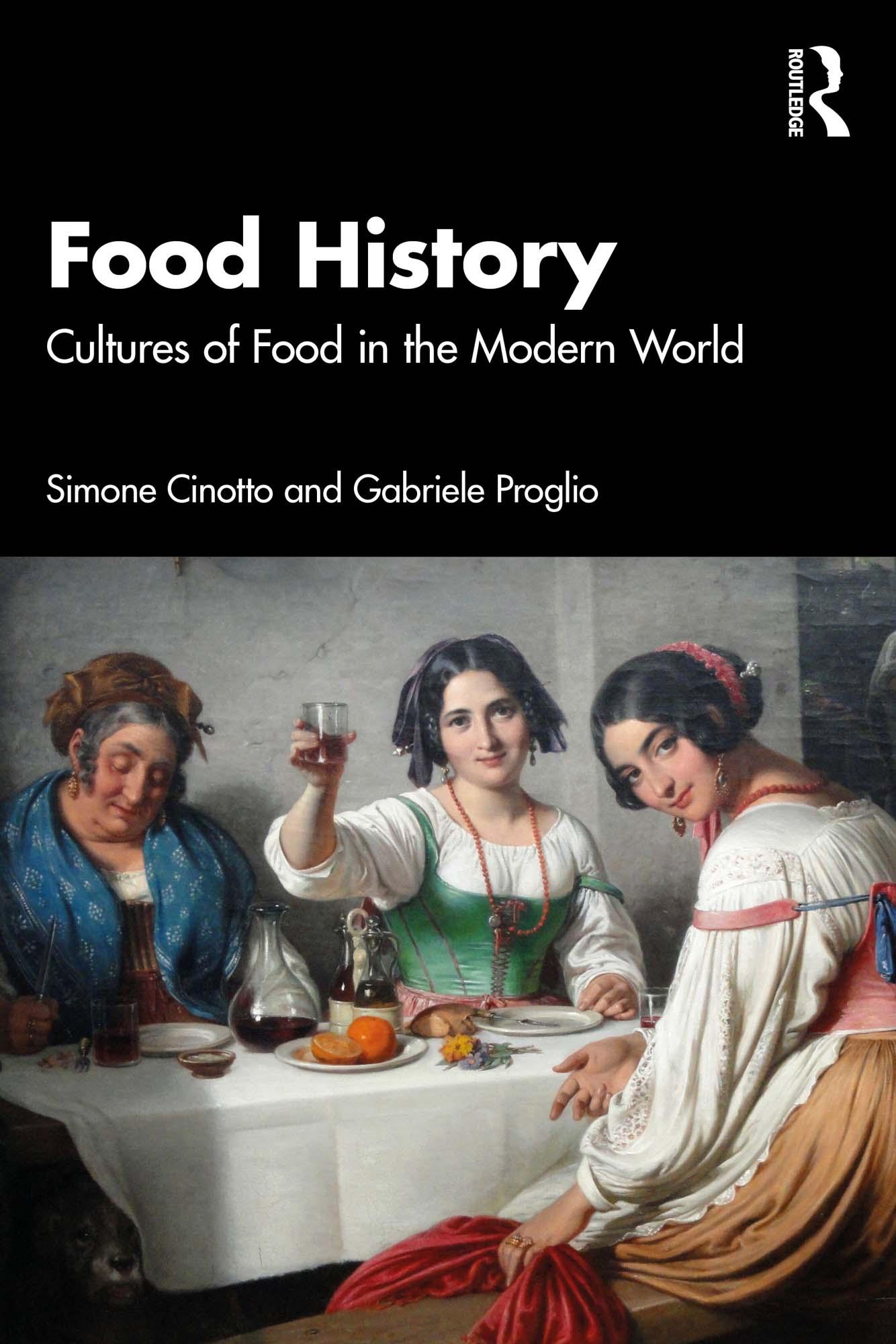
Food History: Cultures of Food in the Modern World analyzes the history of food as a dynamic, contextual process unfolding over time and space, diversified across the many food cultures and food systems of the world.
The book examines cuisines and tastes as historical formations, products of exchange and trade, shaped by the mobility of people, plants, and animals, as well as by the agricultural and culinary agency of farmers and cooks—most of them women—whose memory has often been lost in the margins of history. With its focus on the modern age, Food History describes the major transformations in the production, processing, distribution, and consumption of food that have shaped contemporary food systems and cultures. It traces the progressive globalization of food and the making of cuisines: from the birth of subsistence farming in the Fertile Crescent and the great agricultural civilizations of the ancient world, to the industrialization of food and the emergence of the nation-state and science as forces shaping the diets of large populations; from the “fast food” cuisine of global food multinationals to the “slow food” gastronomy that responded to such standardization, as well as the rise of food activism.
With its rich array of illustrations, maps, and case study boxes, Food History helps students and general readers understand food as a source of nourishment, health, pleasure, identity, and politics, as well as the impact that its production, distribution, and consumption have had on society and the environment.
Betaal eenvoudig met kaart, Klarna, Apple Pay of Google Pay. Niet tevreden? Je hebt altijd 14 dagen bedenktijd. Lees meer in onze voorwaarden. Heb je vragen, mail ons dan via hello@memmo.org.
Memmo maakt studeren makkelijker – waar je ook bent ter wereld. Wij brengen je cursusboeken en slimme studietools samen op één plek: samenvattingen, quizzen, podcasts en flashcards. En Ted, je studievriend die antwoord geeft op alles wat je je afvraagt. Meer dan 50.000 studenten studeren hier al – gebouwd om je sneller te laten leren en minder stress te geven.