
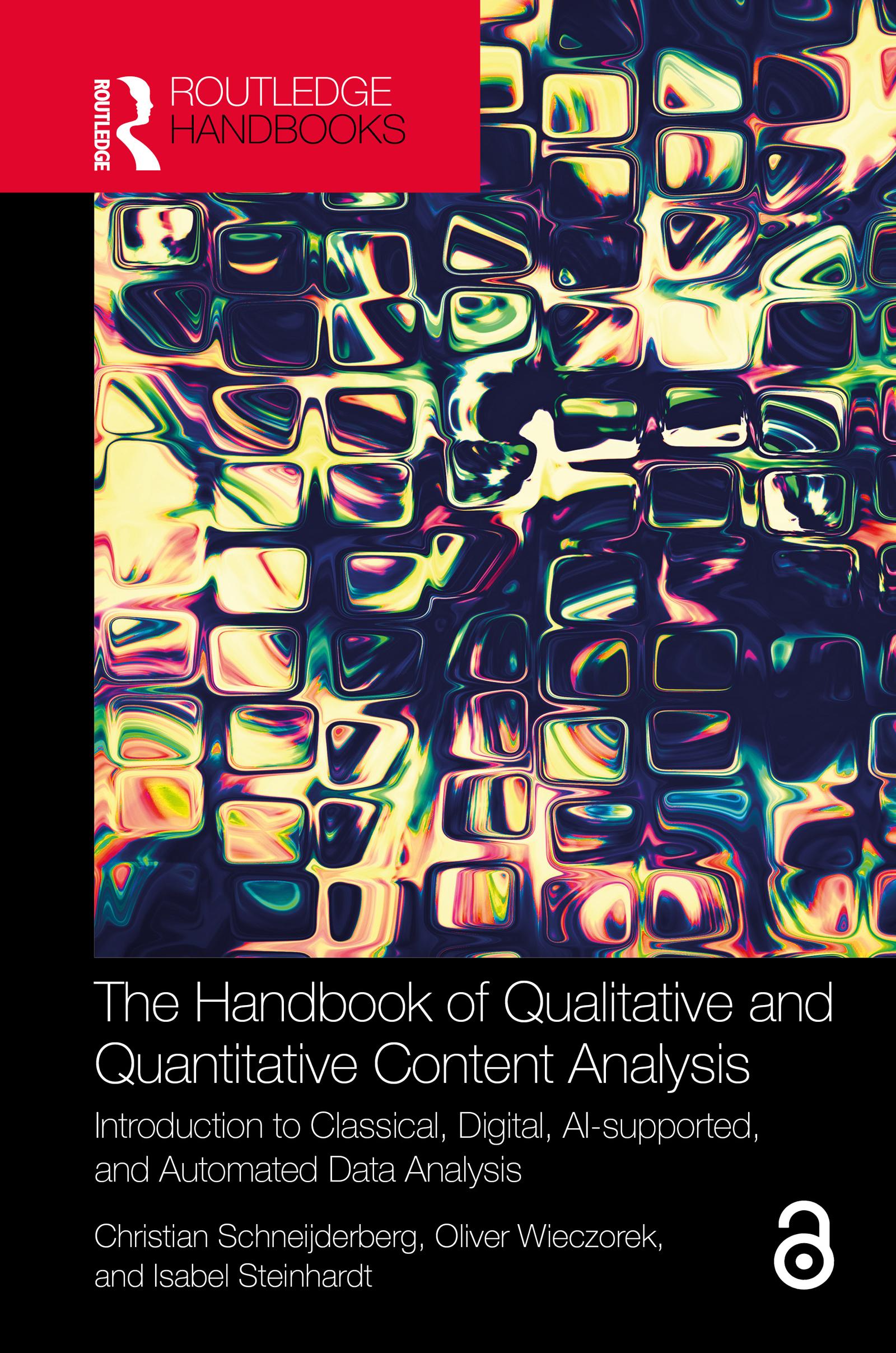
Translated from German, The Handbook of Qualitative and Quantitative Content Analysis is a comprehensive handbook which offers an application-orientated introduction to qualitative and quantitative content analysis methods.
The book provides explanations for beginners from bachelor level onwards on how to select an appropriate qualitative or quantitative content analysis method and how to use the chosen method(s) depending on research interest and amount of data. Part 1 defines the basics of qualitative and quantitative content analysis and empirical research, including research quality conventions and how to do interpretation; Part 2 is a practical guide to classical qualitative content analysis and semi-automated quantitative content analysis; and Part 3 introduces Python alongside automated techniques such as correspondence analysis, semantic network analysis, sentiment analysis, and topic modelling using generative and deep learning algorithms. Each of these sections are enriched with extensive examples and cover a range of software applications, including AntConc, MAXQDA, Python, and VosViewer.
This is the ideal resource for anyone interested in content analysis research methods across the social sciences, humanities, and data sciences.
The Open Access version of this book, available at http://www.taylorfrancis.com, has been made available under a Creative Commons [Attribution-Non Commercial-No Derivatives (CC BY-NC-ND)] 4.0 license.
Betaal eenvoudig met kaart, Klarna, Apple Pay of Google Pay. Niet tevreden? Je hebt altijd 14 dagen bedenktijd. Lees meer in onze voorwaarden. Heb je vragen, mail ons dan via hello@memmo.org.
Memmo maakt studeren makkelijker – waar je ook bent ter wereld. Wij brengen je cursusboeken en slimme studietools samen op één plek: samenvattingen, quizzen, podcasts en flashcards. En Ted, je studievriend die antwoord geeft op alles wat je je afvraagt. Meer dan 50.000 studenten studeren hier al – gebouwd om je sneller te laten leren en minder stress te geven.