
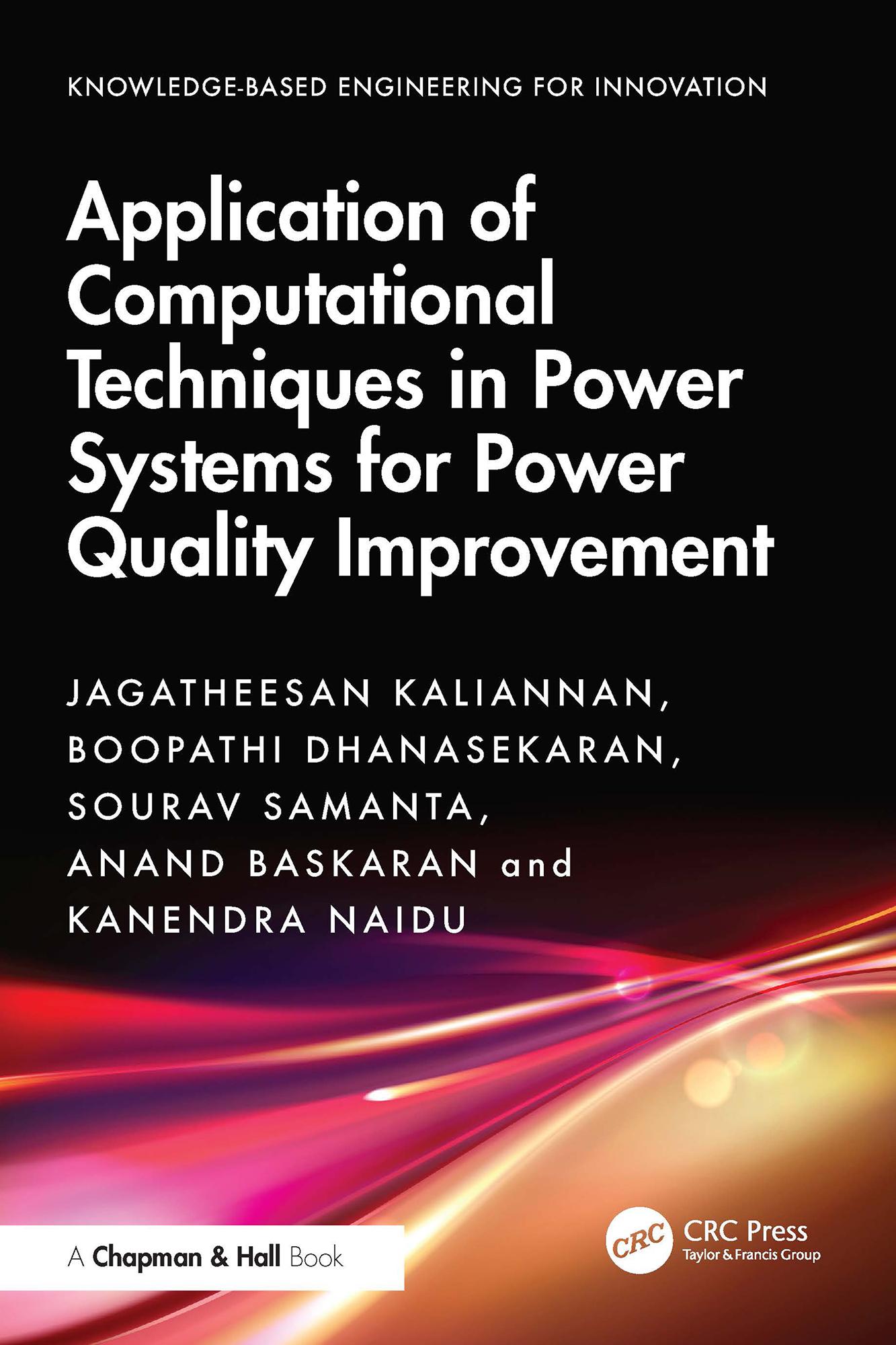
This book explores the role of computational intelligence techniques in addressing power quality challenges in modern power systems. It examines the integration of multiple energy sources, renewable energy systems, and energy storage units while analyzing nonlinearities in power plants. The book introduces optimization methods, including machine learning, genetic algorithms, and neural networks, to enhance power system stability, reliability, and efficiency. It bridges theoretical insights with real-world applications in modern power networks.
• Explores the use of AI techniques, including genetic algorithms and fuzzy logic, for power system analysis and optimization.
• Examines power quality issues such as frequency deviations, tie-line power flow variations, and area control errors
• Discusses the tuning of secondary controllers, including PID controllers, using advanced optimization algorithms
• Addresses PQ challenges posed by renewable energy integration and energy storage units
• Covers real-time system monitoring and control for maintaining power quality under nonlinear operating conditions
• Provides a structured approach to analysing system behaviour using mathematical modeling and time-domain simulations
This book serves as a valuable resource for researchers, professionals, and students in power system engineering, computational intelligence, and smart grid technologies.
Betaal eenvoudig met kaart, Klarna, Apple Pay of Google Pay. Niet tevreden? Je hebt altijd 14 dagen bedenktijd. Lees meer in onze voorwaarden. Heb je vragen, mail ons dan via hello@memmo.org.
Memmo maakt studeren makkelijker – waar je ook bent ter wereld. Wij brengen je cursusboeken en slimme studietools samen op één plek: samenvattingen, quizzen, podcasts en flashcards. En Ted, je studievriend die antwoord geeft op alles wat je je afvraagt. Meer dan 50.000 studenten studeren hier al – gebouwd om je sneller te laten leren en minder stress te geven.