
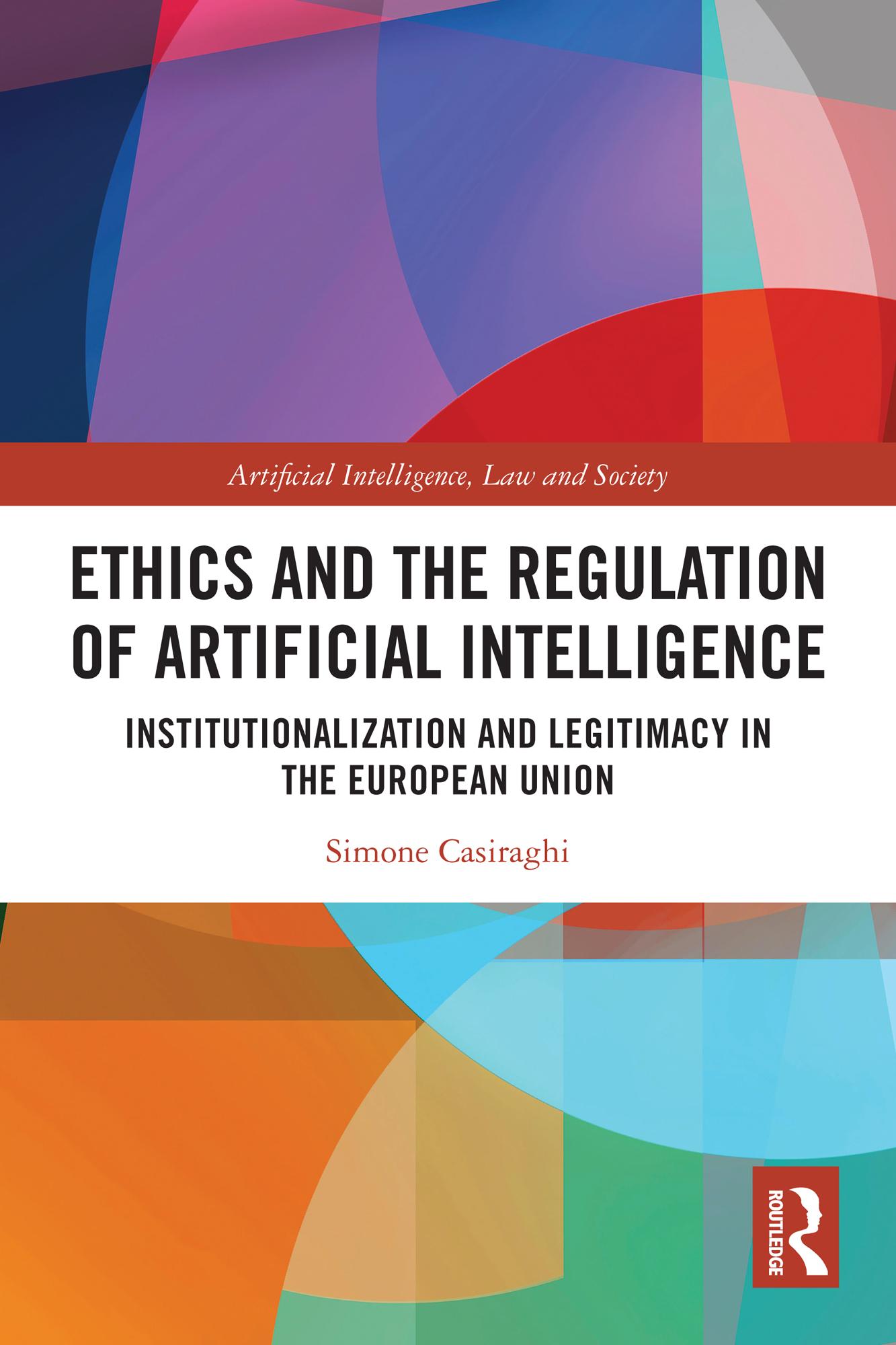
Through the theoretical lens of law and science and technology studies (STS), this book investigates the "ethification" of the EU regulatory framework on AI.
Discourses on ethics have been proliferating in recent policy, legislative and industry-led AI regulatory initiatives in the European Union (EU). In parallel, Artificial Intelligence (AI) ethics has become institutionalized at different levels. Focusing on three EU-based case studies – research ethics committees, advisory expert groups and standardization bodies – this book critically evaluates the legitimacy of AI ethics through the "good governance" principles of accountability, transparency and participation. Despite the EU’s aspiration to promote a distinctive ethical approach centered on trustworthiness and human-centric AI, the book shows how ethical considerations often assume a technocratic form, lacking the robust checks and balances and democratic credentials typical of traditional forms of technology regulation. In response, the book argues for a recalibration — a deflation or re-politicization — of the role of ethics in the governance of AI.
This book will appeal to scholars, EU officials, civil society actors and private-sector practitioners, working at the interface of law, ethics and technology, especially those with interests in the regulation of AI.
Betaal eenvoudig met kaart, Klarna, Apple Pay of Google Pay. Niet tevreden? Je hebt altijd 14 dagen bedenktijd. Lees meer in onze voorwaarden. Heb je vragen, mail ons dan via hello@memmo.org.
Memmo maakt studeren makkelijker – waar je ook bent ter wereld. Wij brengen je cursusboeken en slimme studietools samen op één plek: samenvattingen, quizzen, podcasts en flashcards. En Ted, je studievriend die antwoord geeft op alles wat je je afvraagt. Meer dan 50.000 studenten studeren hier al – gebouwd om je sneller te laten leren en minder stress te geven.