
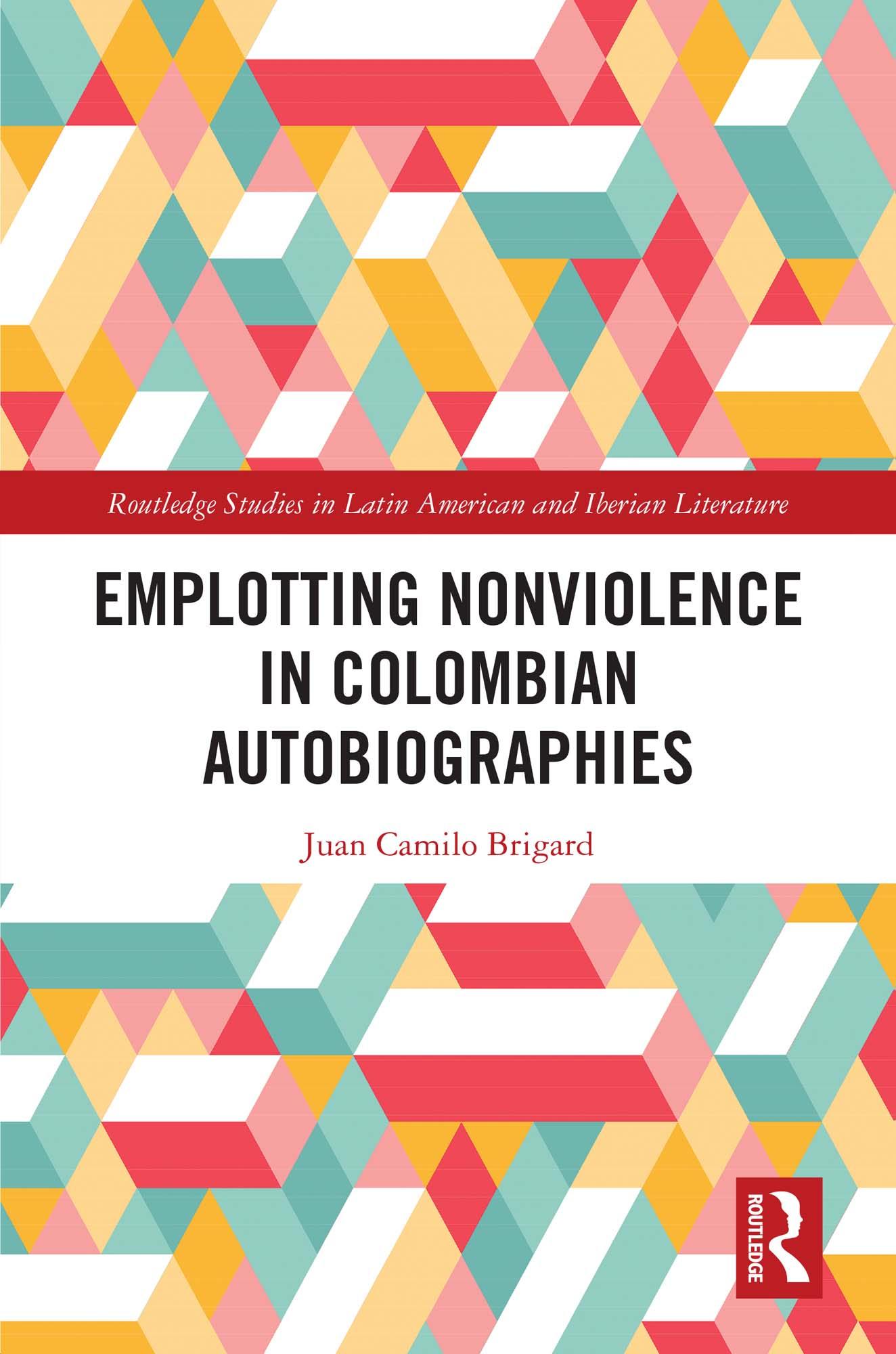
How do individuals upholding an ethos of nonviolence tell their life narratives in places ravaged by armed conflict? With an understanding of violence and nonviolence as socially contingent concepts, Emplotting Nonviolence in Colombian Autobiographies focuses on the life writings of three Colombian social movement leaders (the U’wa Esperanza-Aguablanca’s Tengo los pies en la cabeza, the Afrocolombian Rudecindo Castro’s Calle caliente, and the LGBTQ+ artivist Manuel Antonio Velandia’s De homosexual a marica sujeto de derechos) and contrasts them with the memoirs of a hegemonic ex-president (Álvaro Uribe’s No Lost Causes). These autobiographies are analyzed using a "contextual narratology of contingency". This is a narrative approach that examines "emplotment" —the structuring of storytelling sequences and its narrative devices— in the light of historical literary genres. Moreover, through a context-sensitive literary lens, this approach emphasizes each book’s rhetoric of group-oriented self-representation, or "collective narration" and the way literary genres inflect the representation of nonviolence.
Betaal eenvoudig met kaart, Klarna, Apple Pay of Google Pay. Niet tevreden? Je hebt altijd 14 dagen bedenktijd. Lees meer in onze voorwaarden. Heb je vragen, mail ons dan via hello@memmo.org.
Memmo maakt studeren makkelijker – waar je ook bent ter wereld. Wij brengen je cursusboeken en slimme studietools samen op één plek: samenvattingen, quizzen, podcasts en flashcards. En Ted, je studievriend die antwoord geeft op alles wat je je afvraagt. Meer dan 50.000 studenten studeren hier al – gebouwd om je sneller te laten leren en minder stress te geven.