
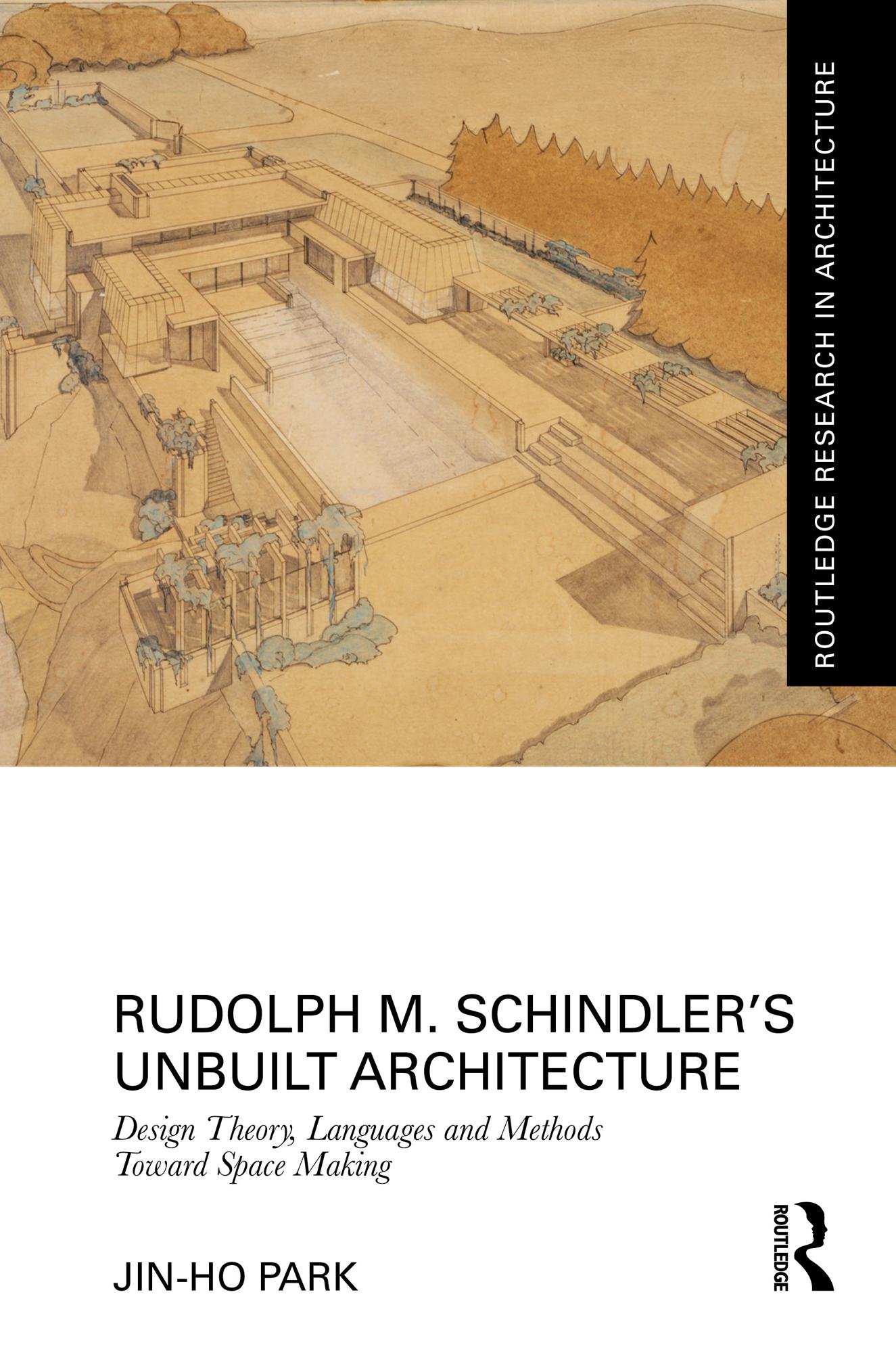
This book explores Rudolph M. Schindler’s design theory, architectural languages, and methods, with a focus on his unbuilt projects. Drawing from his lecture notes, manuscripts, and drawings, it offers fresh insights into Schindler’s legacy, emphasizing how his work diverged from mainstream modernism and deserves greater recognition in modern architectural history.
Part I investigates Schindler’s theoretical and methodical foundations, including his concept of “space architecture” and “Reference Frames in Space”—three-dimensional tools for shaping form and proportion. Using archival materials, it traces the development and evolution of his ideas within broader historical and theoretical contexts. Part II presents detailed analyses of over a dozen unbuilt projects, reconstructed through drawings and models. These case studies reveal Schindler’s design theory and methods in practice and provide a deeper understanding of his creative process and influence on modern architecture.
This book will appeal to architectural scholars, students, and practitioners interested in early modernism and Californian Modernism. It also speaks to institutions, libraries, and enthusiasts of Rudolph M. Schindler’s work. With global interest in Schindler’s legacy, the book offers valuable insights for both academic and general audiences passionate about his unique architectural vision.
Betaal eenvoudig met kaart, Klarna, Apple Pay of Google Pay. Niet tevreden? Je hebt altijd 14 dagen bedenktijd. Lees meer in onze voorwaarden. Heb je vragen, mail ons dan via hello@memmo.org.
Memmo maakt studeren makkelijker – waar je ook bent ter wereld. Wij brengen je cursusboeken en slimme studietools samen op één plek: samenvattingen, quizzen, podcasts en flashcards. En Ted, je studievriend die antwoord geeft op alles wat je je afvraagt. Meer dan 50.000 studenten studeren hier al – gebouwd om je sneller te laten leren en minder stress te geven.