
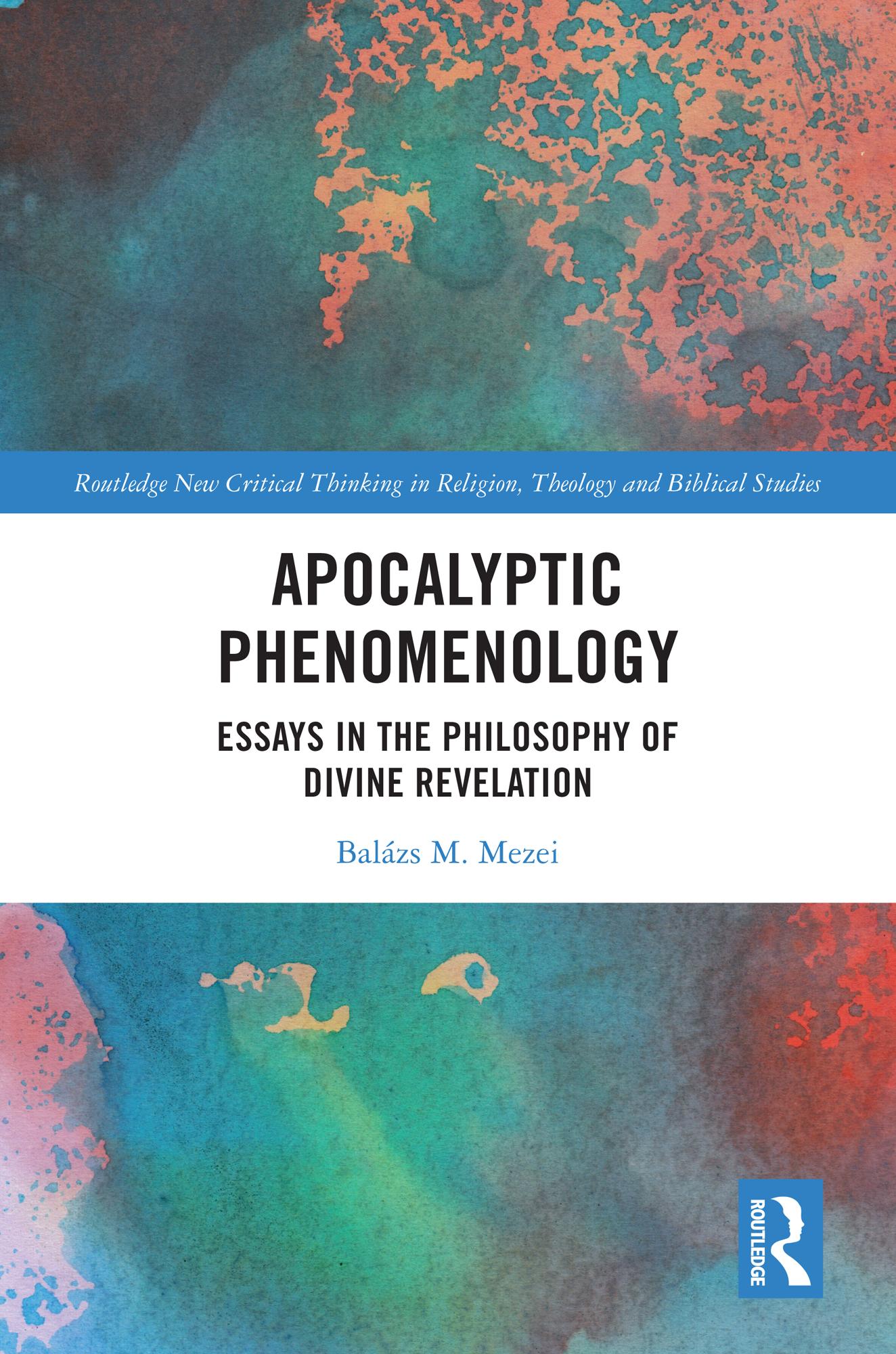
This book provides a detailed view of the author’s conception of ‘apocalyptic phenomenology’, referring to the revelatory and self-disclosing nature of phenomenological thinking, a thinking that is central to our philosophical traditions today.
The concept of ‘apocalyptic phenomenology’, i.e., a phenomenological theology that discloses the ultimate ground of being, God in the form of divine revelation, is original. At the same time, it is rooted in the phenomenological tradition of Offenbarung (revelation, revealing) as the basic feature of phenomena. In the author’s view, reality is self-disclosing, ‘apocalyptic’, and thus he explains the connections between the original, biblical notion of apocalupsis and the important developments of our philosophical traditions leading up to the ‘theological turn of phenomenology’. The chapters are framed around a focus on newness and engage with the work of key thinkers such as Edmund Husserl, Martin Heidegger, Paul Ricœur, Hans Urs von Balthasar, and Anton Günther.
Apocalyptic Phenomenology will be of interest to scholars of both theology and philosophy.
Betaal eenvoudig met kaart, Klarna, Apple Pay of Google Pay. Niet tevreden? Je hebt altijd 14 dagen bedenktijd. Lees meer in onze voorwaarden. Heb je vragen, mail ons dan via hello@memmo.org.
Memmo maakt studeren makkelijker – waar je ook bent ter wereld. Wij brengen je cursusboeken en slimme studietools samen op één plek: samenvattingen, quizzen, podcasts en flashcards. En Ted, je studievriend die antwoord geeft op alles wat je je afvraagt. Meer dan 50.000 studenten studeren hier al – gebouwd om je sneller te laten leren en minder stress te geven.