
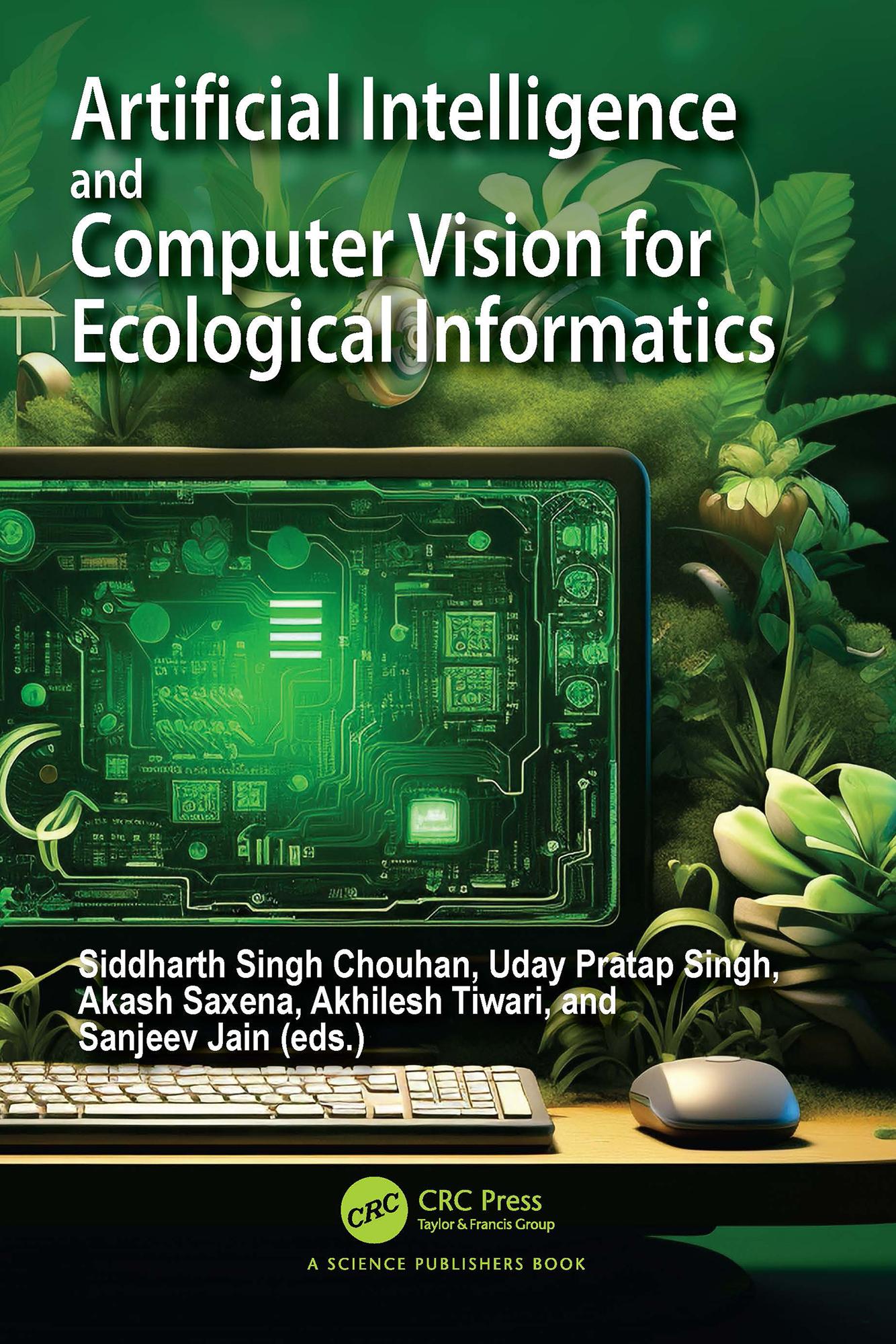
Ecological informatics, more commonly known as Ecoinformatics, is the study of environmental sciences and ecological information. It is an emerging interdisciplinary framework for the management, analysis, and synthesis of ecological data with the help of advanced computational intelligence algorithms. Management in this context is data acquisition, preprocessing, and sharing the data. Analysis and synthesis are the process of extracting useful information and forecasting with the help of intelligent algorithms.
The aim of this book is to encapsulate concepts and theories of artificial intelligence and computer vision algorithms used for the evaluation of various ecological informatics applications. It focuses on soft computing, machine learning, deep learning, artificial intelligence, bio-inspired algorithms, data analysis tools, data visualization tools, and computer vision algorithms used in ecological informatics. The book covers remote sensing applications, water bodies evaluation, agriculture mapping, aquatic mapping, forest management, and terrestrial ecosystems.
The book will be useful to students, researchers, scientists, and field experts in directing their work towards this domain, to deliver and design models and prototypes for the benefit of society and the environment.
Betaal eenvoudig met kaart, Klarna, Apple Pay of Google Pay. Niet tevreden? Je hebt altijd 14 dagen bedenktijd. Lees meer in onze voorwaarden. Heb je vragen, mail ons dan via hello@memmo.org.
Memmo maakt studeren makkelijker – waar je ook bent ter wereld. Wij brengen je cursusboeken en slimme studietools samen op één plek: samenvattingen, quizzen, podcasts en flashcards. En Ted, je studievriend die antwoord geeft op alles wat je je afvraagt. Meer dan 50.000 studenten studeren hier al – gebouwd om je sneller te laten leren en minder stress te geven.