
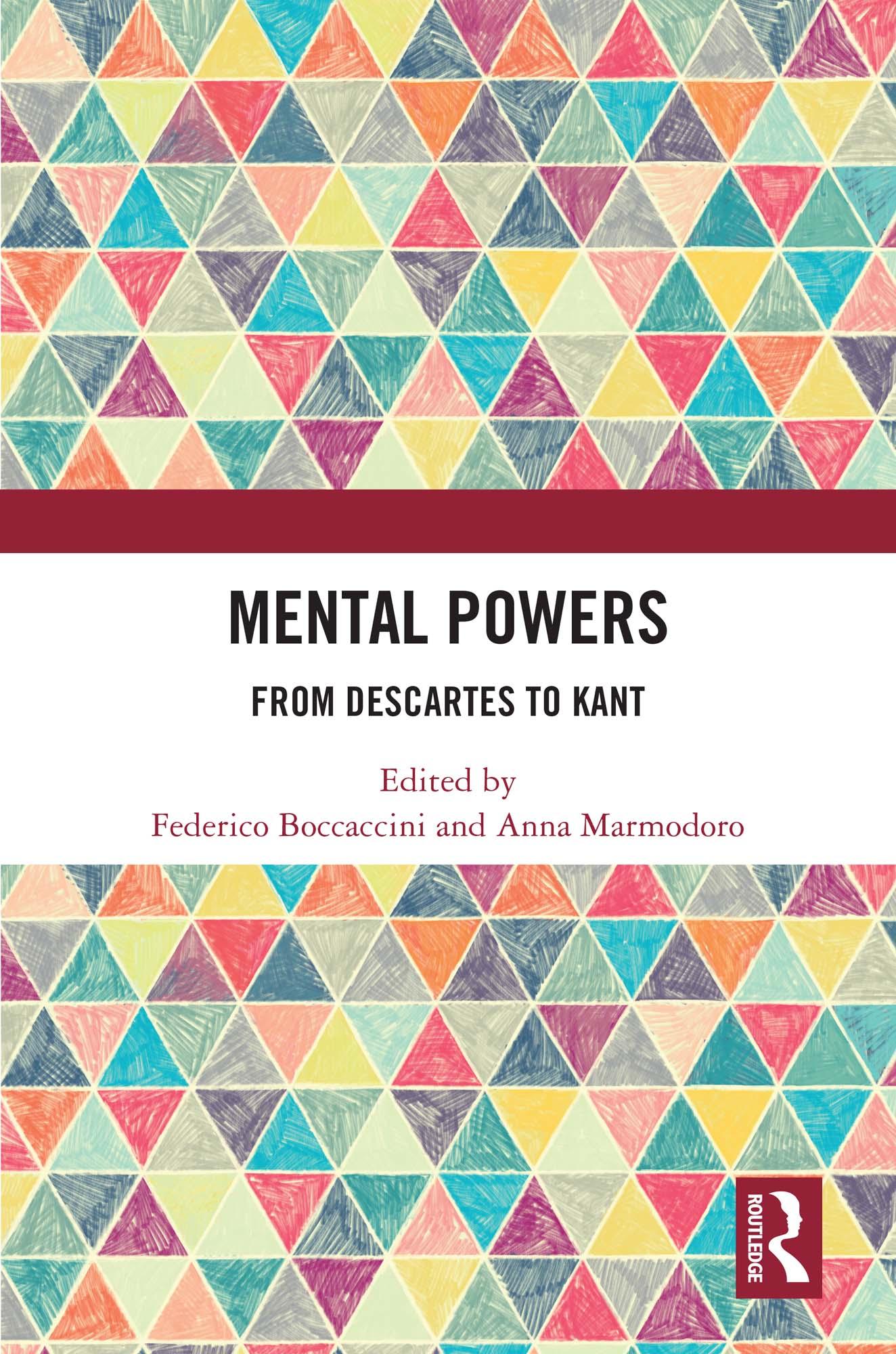
Scholars of the history of philosophy of mind have focused by and large on the early modern critique of the Aristotelian-scholastic theory of vegetative, sensory and intellectual faculties of the soul. While it is true that the early moderns attacked and abandoned the ‘old’ metaphysical conception of soul’s faculties, many thinkers of the period still continued to debate about, for or against, the limits and nature of the powers of thought – from Descartes to Kant. The notion of ‘mental power’ is central to these debates, and yet it has received little attention by specialists in modern philosophy. Taking into consideration some representative figures of modern thought like Descartes, Cudworth, Locke, Spinoza, Leibniz, Hume and Kant, this edited volume presents a general account of the concept of ‘mental power’ in the seventeenth and eighteenth centuries, focusing on the issue of how a sample of influential thinkers of that period analyzed, described and conceived the human agent’s mental abilities and skills as governing perception, action and moral behavior. This leads to innovative narrative which partially accounts for, in a broad sense, the rise of modern psychology and philosophy of mind. This book was originally published as a special issue of the British Journal for the History of Philosophy.
Betaal eenvoudig met kaart, Klarna, Apple Pay of Google Pay. Niet tevreden? Je hebt altijd 14 dagen bedenktijd. Lees meer in onze voorwaarden. Heb je vragen, mail ons dan via hello@memmo.org.
Memmo maakt studeren makkelijker – waar je ook bent ter wereld. Wij brengen je cursusboeken en slimme studietools samen op één plek: samenvattingen, quizzen, podcasts en flashcards. En Ted, je studievriend die antwoord geeft op alles wat je je afvraagt. Meer dan 50.000 studenten studeren hier al – gebouwd om je sneller te laten leren en minder stress te geven.