
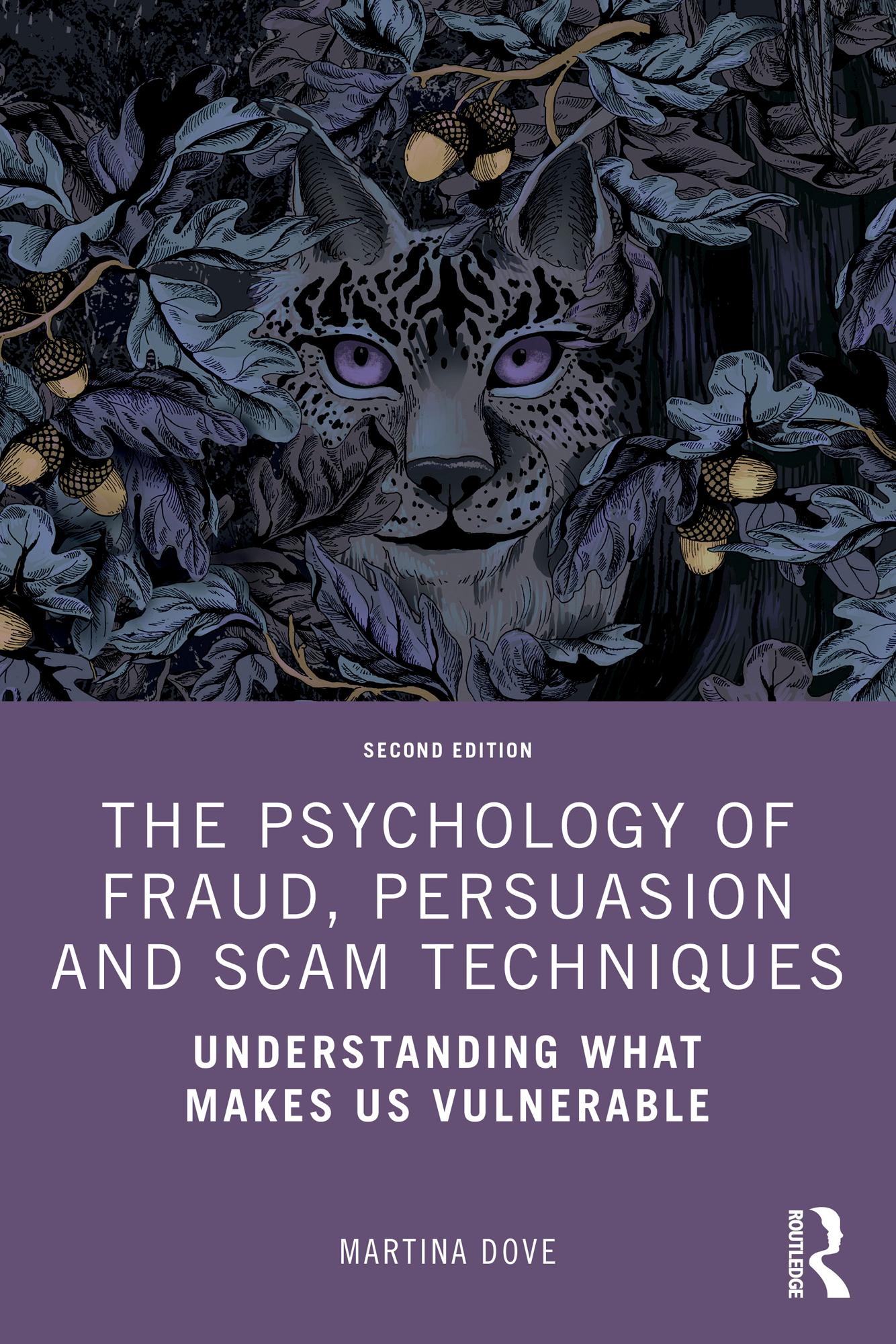
The second edition of this bestselling book provides an in-depth explanation of not only why we fall for scams and how fraudsters use technology and other techniques to manipulate others but also why fraud prevention advice is not always effective.
Starting with how fraud victimisation is perceived by society and why fraud is underreported, the book explores the different types of fraud and the human and demographic factors that make us vulnerable. It explains how fraud has become increasingly sophisticated and how fraudsters use communication, deception, and theories of rationality, cognition and judgmental heuristics, as well as specific persuasion and scam techniques, to encourage compliance. Covering frauds including romance scams and phishing attacks, the new edition includes a greater focus on pig butchering scams and sextortion scams, examples of AI-mediated fraud and extortion, and more on deep fake frauds and the effects on victims. It explores ways we can learn to spot scams and persuasive communication, with checklists and advice for reflection and protection.
Featuring illustrative case studies and examples throughout alongside a set of practical guidelines to reduce fraud vulnerability and advice on how to effectively report fraud, this easy-to-read book is essential reading for fraud prevention specialists, fraud victims and academics and students interested in the psychology of fraud.
Betaal eenvoudig met kaart, Klarna, Apple Pay of Google Pay. Niet tevreden? Je hebt altijd 14 dagen bedenktijd. Lees meer in onze voorwaarden. Heb je vragen, mail ons dan via hello@memmo.org.
Memmo maakt studeren makkelijker – waar je ook bent ter wereld. Wij brengen je cursusboeken en slimme studietools samen op één plek: samenvattingen, quizzen, podcasts en flashcards. En Ted, je studievriend die antwoord geeft op alles wat je je afvraagt. Meer dan 50.000 studenten studeren hier al – gebouwd om je sneller te laten leren en minder stress te geven.