
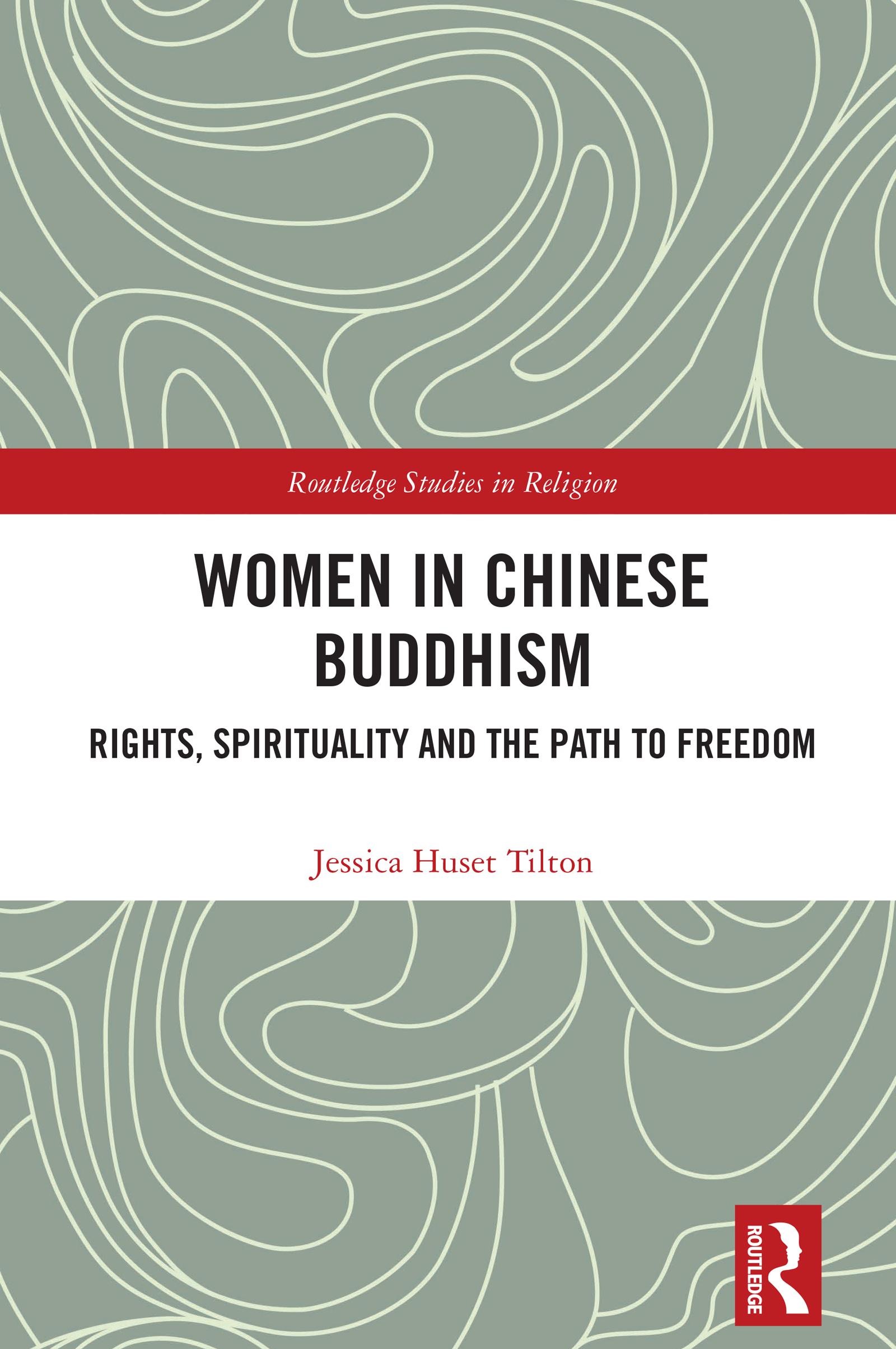
Tilton examines how cultural, political and economic forces exert pressures on the levels of freedom and equality for female Buddhists within the Buddhist community as well as women’s rights within society.
The book charts women’s spiritual paths over four periods, beginning with the Buddha and his revolutionary stance on women, to the creation of a fully ordained female Saṅgha in China—which peaked during the Tang dynasty—and finally to its resurgence in the late Qing and early Republic period, ending with a sharp decline to near extinction during the Mao Zedong years (1949–1976). As the nun and lay communities arise directly from the broader female community, Tilton argues that there is a direct correlation between women’s rights issues and those of liberties for Buddhist women within the Saṅgha. Specifically, women’s equality within “this world” as well as their right to achieve liberation from “this world,” or saṃsāra.
Charting the evolution of Buddhist women in China across multiple centuries, this book is a valuable resource for academics, researchers and students of Asian Studies, Buddhist Studies, as well as those interested in the intersection of gender and religion.
Betaal eenvoudig met kaart, Klarna, Apple Pay of Google Pay. Niet tevreden? Je hebt altijd 14 dagen bedenktijd. Lees meer in onze voorwaarden. Heb je vragen, mail ons dan via hello@memmo.org.
Memmo maakt studeren makkelijker – waar je ook bent ter wereld. Wij brengen je cursusboeken en slimme studietools samen op één plek: samenvattingen, quizzen, podcasts en flashcards. En Ted, je studievriend die antwoord geeft op alles wat je je afvraagt. Meer dan 50.000 studenten studeren hier al – gebouwd om je sneller te laten leren en minder stress te geven.