
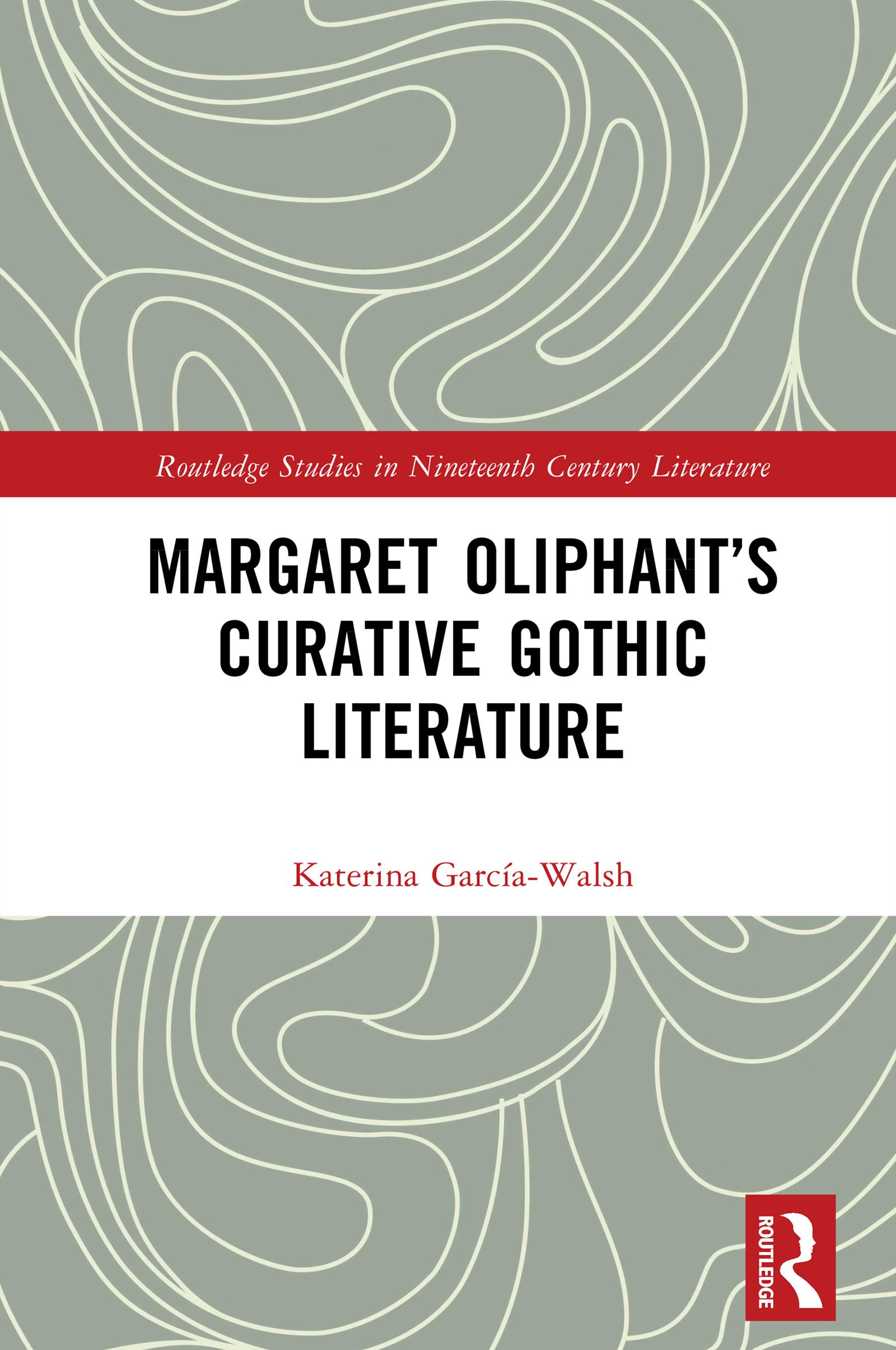
Prolific Scottish novelist Margaret Oliphant (1828–1897), remembered chiefly for her realist fiction and biting literary criticism of contemporary authors, also wrote nineteen supernatural tales. This monograph offers a comprehensive exploration of Oliphant’s Gothic literature, in the light of her religious beliefs, cultural context and experiences of death and mourning, as she survived her husband and all six of her children.
Oliphant’s stories set in the afterlife depict the dead as inhabiting a new existence characterised by spiritual growth, while her tales set on earth attempt contact between the mortal and immortal planes. García-Walsh illustrates Oliphant’s unique theological conception of “afterliving”, which ultimately seeks to eradicate the divide between the living and their deceased loved ones, reimagining death as a liminal passage towards God and divine self-development. This book thus suggests a new direction for Gothic studies by showing how Oliphant’s supernatural fiction provided a means of “curative” writing, transforming the traumatic reality of death into a source of hope. The volume is suited for students, researchers and academics in the disciplines of literature and history, particularly the fields of nineteenth-century studies, Victorian studies and Gothic studies with an interest in women’s writing, theology and mental health/trauma studies.
Betaal eenvoudig met kaart, Klarna, Apple Pay of Google Pay. Niet tevreden? Je hebt altijd 14 dagen bedenktijd. Lees meer in onze voorwaarden. Heb je vragen, mail ons dan via hello@memmo.org.
Memmo maakt studeren makkelijker – waar je ook bent ter wereld. Wij brengen je cursusboeken en slimme studietools samen op één plek: samenvattingen, quizzen, podcasts en flashcards. En Ted, je studievriend die antwoord geeft op alles wat je je afvraagt. Meer dan 50.000 studenten studeren hier al – gebouwd om je sneller te laten leren en minder stress te geven.