
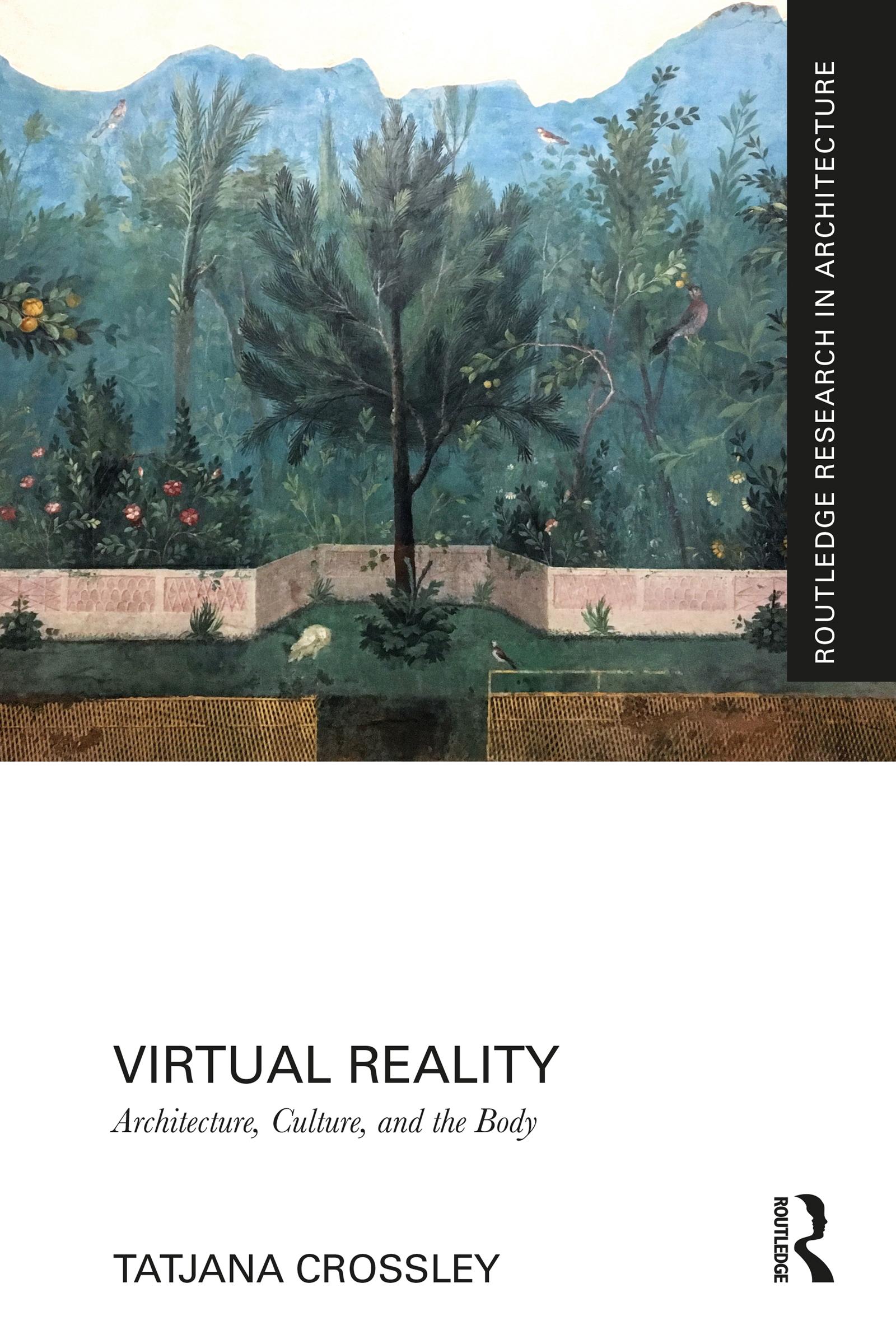
This book investigates how immersive environments, across architecture, art, and media, shape spatial perception, cultural identity, and the construction of reality. It offers a spatial-psychoanalytical reading of virtual reality (VR), examining how architecture and representation engage with the body, sensorial experience, and subjectivity.
Redefining VR as an experiential and spatial condition rather than simply a digital construct, the book traces its lineage from ancient fresco rooms to contemporary digital landscapes. Grounded in theoretical frameworks from psychoanalysis, phenomenology, and media theory, it explores how immersive environments function as extensions of the body and reflect a collective identity. Case studies, from Pompeii to the Metaverse, illustrate how architecture and representation shape our virtual experience. Rather than viewing VR as a new phenomenon, the book positions it as part of a longer trajectory in design and representation, shaped by evolving tools and technologies. It argues that the virtual spaces we create and the artifacts we choose to represent encode insights about identity, memory, and social conditions.
This book is written for theorists, practitioners, academics, and students of architecture, art, and design. It situates architectural practice within the unfolding discourse on virtuality, identity, and the cultural implications of space-making.
Betaal eenvoudig met kaart, Klarna, Apple Pay of Google Pay. Niet tevreden? Je hebt altijd 14 dagen bedenktijd. Lees meer in onze voorwaarden. Heb je vragen, mail ons dan via hello@memmo.org.
Memmo maakt studeren makkelijker – waar je ook bent ter wereld. Wij brengen je cursusboeken en slimme studietools samen op één plek: samenvattingen, quizzen, podcasts en flashcards. En Ted, je studievriend die antwoord geeft op alles wat je je afvraagt. Meer dan 50.000 studenten studeren hier al – gebouwd om je sneller te laten leren en minder stress te geven.