
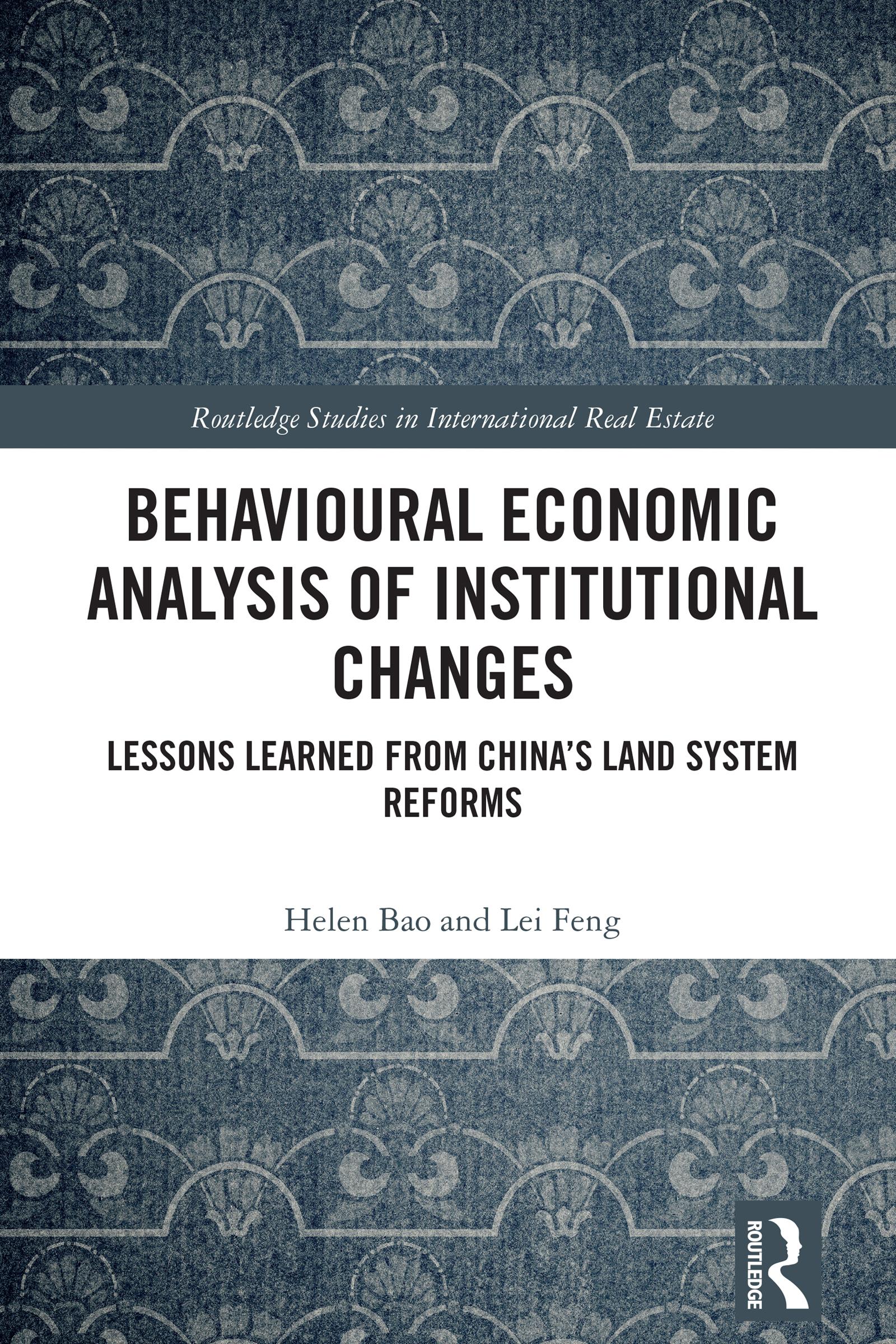
This book examines the evolution of China’s rural land system through an integrated lens of institutional and behavioural economics. It traces seventy years of reform, from collective farming to market-oriented land transfers, to explain how central policy, local implementation and farmers’ responses interact to shape institutional change. Moving beyond standard accounts focused on property rights and transaction costs, the book introduces a dynamic framework based on Prospect Theory, incorporating cognitive biases, social norms and bounded rationality. Drawing on two large-scale rural household surveys, the book combines empirical analysis with historical case studies to explore how reforms were received, adapted and resisted.
This book will benefit researchers, policymakers and graduate students interested in institutional change, land policy or Chinese rural development. It offers new tools to understand policy implementation in environments marked by uncertainty, decentralisation and informal constraints. By highlighting how behavioural factors mediate formal rules, the book provides insights that extend beyond China, informing the design of effective land and property rights reforms globally.
Betaal eenvoudig met kaart, Klarna, Apple Pay of Google Pay. Niet tevreden? Je hebt altijd 14 dagen bedenktijd. Lees meer in onze voorwaarden. Heb je vragen, mail ons dan via hello@memmo.org.
Memmo maakt studeren makkelijker – waar je ook bent ter wereld. Wij brengen je cursusboeken en slimme studietools samen op één plek: samenvattingen, quizzen, podcasts en flashcards. En Ted, je studievriend die antwoord geeft op alles wat je je afvraagt. Meer dan 50.000 studenten studeren hier al – gebouwd om je sneller te laten leren en minder stress te geven.